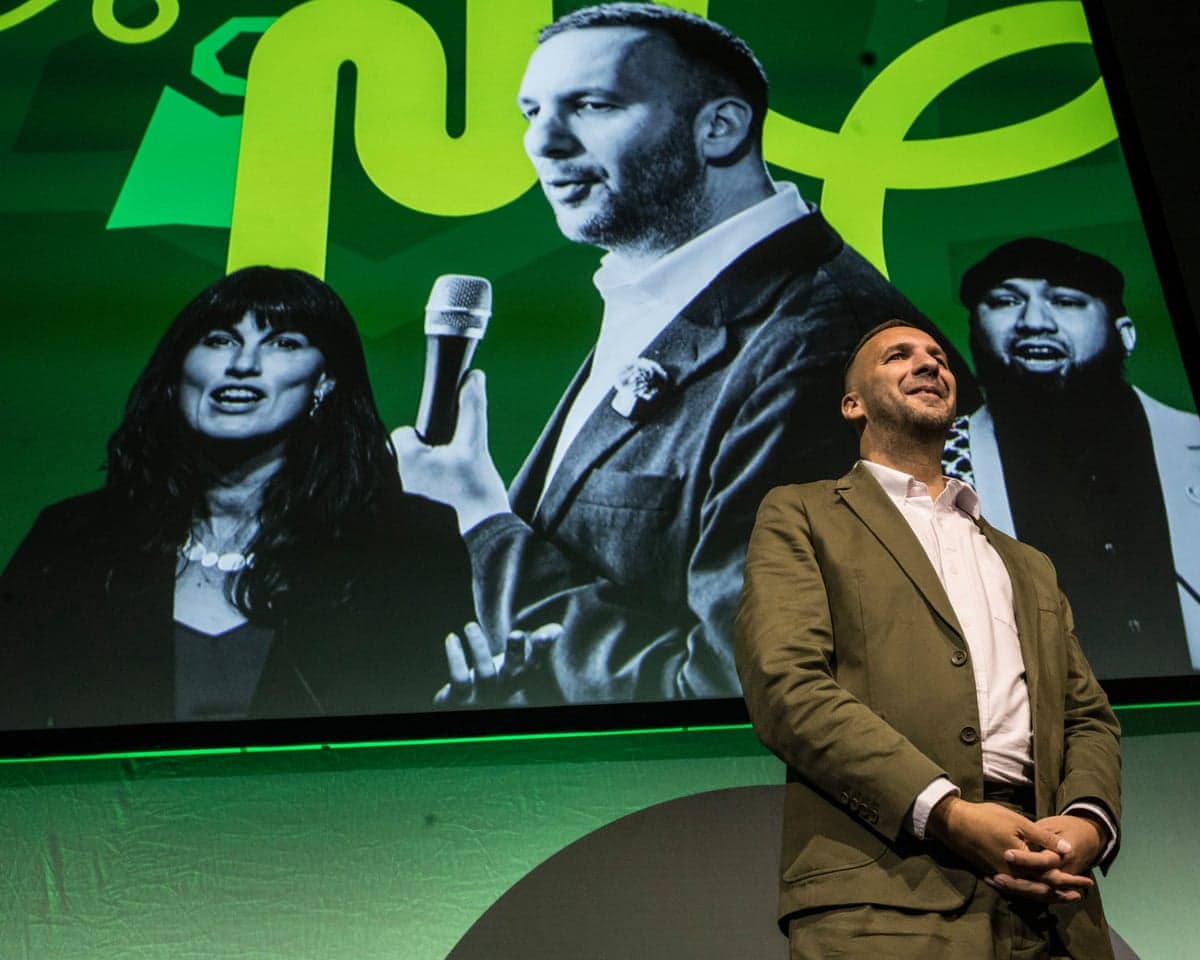
Zack Polanski, leader of the Green Party, has declared himself an anti-Zionist. As his party conference prepares to debate a motion that "Zionism is racism", the meaning and contested history of the term have become subjects of intense scrutiny and disagreement within the party and beyond.
What is Zionism?
The modern movement emerged during the late nineteenth century from multiple intellectual traditions concerning the future of Jewish identity and collective life. It drew on a centuries-old religious aspiration, rooted in Jewish scripture, to return to Zion. The term became most closely linked with Theodor Herzl's conception of political Zionism—a movement advocating for Jewish self-rule and an independent state, born from the context of intensifying antisemitism across Europe.
Despite often being portrayed as a single unified ideology, Zionism has historically encompassed diverse and frequently contradictory intellectual currents. Before Israel's establishment, the philosopher Martin Buber proposed a binational Arab-Jewish state in Palestine as an alternative vision.
Following Israel's founding in 1948, internal Israeli debate over Zionism has primarily revolved around competing visions: liberal interpretations and right-wing or "revisionist" approaches, exemplified by Benjamin Netanyahu's Likud party. Questions about Jewish settlements, military occupation, and whether Israel should be constitutionally defined as an ethno-nationalist Jewish state have become central to this political contest.
For many Jewish people, however, Zionism carries meanings that transcend political definition. According to Dov Waxman, a professor of Israel studies at the University of California, the concept encompasses "Jewish liberation and sovereignty, a safe haven from persecution, a revival of the Hebrew language, and a renewed sense of collective pride, especially after the Holocaust."
What are the main criticisms of Zionism?
Critics—including sections of the political left, movements across the Arab world, and some anti-Zionist Jewish figures such as Polanski—characterise Zionism as a "colonial" project. They advance three principal arguments in support of this characterisation.
First, they point to the violent displacement of Palestinians during the Nakba, or "catastrophe," which occurred alongside the creation of the Jewish state. Second, they contend that Israel has established an apartheid-like system of differentiated rights in occupied Palestinian territories, preventing Palestinians from achieving statehood and exercising self-determination. Third, they argue that Palestinians living within Israel's borders face systematic discrimination.
Before 1948, Palestinians maintained a developed society across British Mandatory Palestine. However, significant strands of Zionist thought have historically downplayed or rejected Palestinian historical connection to the land.
A key point of academic contention concerns the prevalence among early Zionist thinkers of the slogan "a land without people for a people without land." Critics cite this rhetoric as evidence that Zionism was fundamentally colonial from its inception. Conversely, Zionists emphasise the historical Jewish presence in the Holy Land and, for many, a biblical claim to a homeland from which Jewish people were historically expelled—a territory they regard as essential refuge in a historically hostile world.
When did the claim that Zionism is racism emerge?
The assertion that Zionism constitutes racism, though contentious, carries considerable historical precedent. The phrase gained widespread prominence during the Cold War era when the United Nations adopted resolution 3379 in 1975. This resolution drew a comparison between "the racist regime in occupied Palestine" and apartheid South Africa. Sponsored by the Arab League and championed by the Soviet Union, it secured support from numerous developing nations but was subsequently rescinded in 1991 following pressure from then-US President George HW Bush.
Advocates for this framing argue that Zionism privileges Jewish rights in Israel above those of non-Jewish inhabitants through institutionalised discrimination. Critics of this argument contend it constitutes antisemitism, asserting that it singles out Jewish people as the only group denied the right to self-determination. They maintain that by undermining the legitimacy of Israel's establishment as a Jewish homeland, such framing functions as a vehicle for antisemitic sentiment.
The conflict in Gaza has intensified these disputes about Zionism's nature, particularly following the 7 October 2023 Hamas attack on southern Israel and subsequent Israeli military operations. Senior Israeli political figures have employed explicitly racist language when describing Palestinian society, further polarising the debate.
What does British law establish about this claim?
A tribunal determined that the views of David Miller, a former professor of political sociology dismissed by the University of Bristol in 2021, qualified as a protected philosophical belief under the 2010 Equality Act. Miller had stated that "Zionism is and always has been a racist, violent, imperialist ideology premised on ethnic cleansing." This decision was upheld on appeal.
Miller has additionally contended in social media communications that Zionists have functioned as "infiltrators and subversives" and have secured positions not only across all UK political parties but also "the media, entertainment industries, the law, financial institutions, sports and all sorts of apparently obscure parts of the UK." Miller holds a prominent position within the anti-Zionist movement and maintains connections to Greens for Palestine, the group advancing the Green Party motion.
What is the Green Party motion and what happens next?
The motion, designated E02, explicitly targets Zionism as a political ideology and practice rather than the religious or ethnic identity of individuals who identify as Zionists, according to reporting on the party's policy debate. The proposal calls for a single democratic Palestinian state encompassing all of historic Palestine, with Jerusalem as its capital—a position that diverges from the party's current endorsement of a two-state solution.
The motion was not debated at the Green Party's spring conference due to technical failures and procedural disagreements that consumed available time; it was therefore deferred to the autumn gathering. The debate and vote are scheduled for Sunday, 4 October, though the conference agenda remained subject to the Standing Orders Committee's determinations at the time of reporting.
Polanski has proposed amendments designed to safeguard Jewish party members, including those affiliated with Zionist synagogues. However, senior party figures have already signalled opposition. Former leaders Caroline Lucas and Adrian Ramsay, along with co-deputy leader Rachel Millward, announced they would not support the motion in its current form. Additionally, Jewish Greens stated that its membership remained divided on the motion and the group would adopt no official position.
Polanski's conference speech called for the ban on Palestine Action to be lifted but did not directly address the motion itself. Meanwhile, the Board of Deputies, Jewish Leadership Council and Community Security Trust have warned Green leaders that the motion "fuels hatred of Jews."
Key Facts
- Zionism emerged in the late 1800s as a political movement advocating Jewish self-determination, encompassing multiple and often contradictory intellectual strands throughout its history.
- Critics characterise Zionism as colonial, citing Palestinian displacement, unequal rights systems in occupied territories, and discrimination against Palestinians within Israel.
- The UN resolution 3379 in 1975 compared Zionism to apartheid but was revoked in 1991; the claim remains legally protected as a philosophical belief under British law.
- The Green Party motion E02 targets Zionism as political ideology and practice, not religious or ethnic identity, and proposes a single Palestinian state rather than a two-state solution.
- Senior Green figures including former leaders have signalled opposition to the motion ahead of the scheduled 4 October vote at the party conference in Brighton.