

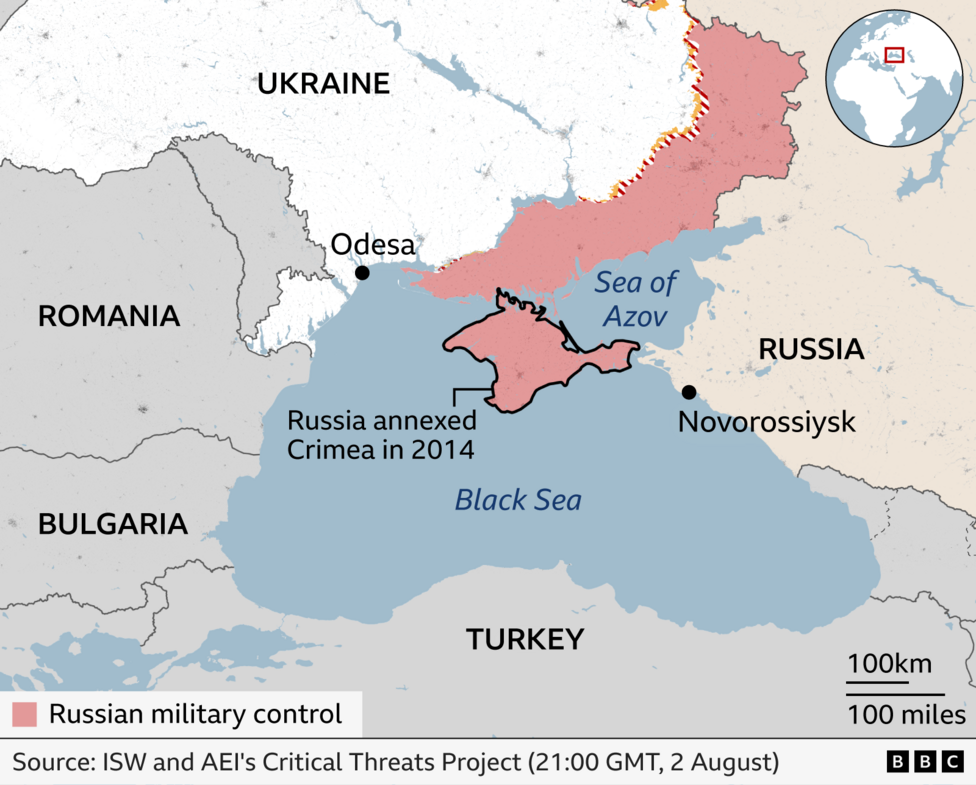
A large-scale Ukrainian drone and missile assault on the Russian port city of Novorossiysk has damaged two significant grain export terminals and struck the last major Russian naval base remaining on the Black Sea, according to multiple reports. Local officials said three people were killed, including an eight-year-old child, and 24 others were injured in the overnight attack.
Ukrainian President Volodymyr Zelensky confirmed that Kyiv had deployed rockets, jet-launched weapons and naval drones in what he called a "unique operation" targeting the Russian base, though he made no mention of grain infrastructure being struck. Ukraine's military said separately that four Russian warships, including two frigates, were hit during the operation. Russia's defence ministry has not issued a public response.
What did Ukraine say about the attack?
Zelensky framed the strike as a warning to Moscow that its naval assets remain vulnerable while the war continues.
"The occupying fleet and all the infrastructure that supports it will not be safe as long as Russian aggression continues," Zelensky said in a post on social media.
Novorossiysk has become the primary anchorage for most of Russia's Black Sea fleet after ships were relocated from Sevastopol, in Russian-occupied Crimea, because that base had become too exposed to Ukrainian strikes.
How has the strike affected Russia's grain exports?
A major grain trading firm told Russia's TASS news agency that its terminal at the port had sustained damage, while a separate company gave a similar account to and the Russian outlet RBK. On 6 August 2026, Russia's agriculture ministry said it was working to reroute cargo to ports on the Baltic and Caspian Seas, as well as overland routes, citing "current logistical constraints" without directly referencing the Ukrainian strikes.
The disruption extends beyond Novorossiysk. According to , a Ukrainian drone strike on the nearby port of Taman caused significant damage to a major grain export terminal there, citing an agricultural market source. Three of Russia's largest Black Sea grain terminals — NZT and KSK in Novorossiysk and ZTKT in Taman, which together can ship more than 20 million tons of grain annually — had already restricted truck deliveries because of escalating shipping risks, reported. Russian grain exporters have separately warned that continued attacks on ships and ports could shut down Black Sea exports altogether, driving up global prices and worsening hunger risks in parts of Africa and the Middle East, according to the same reporting.
What is the wider toll from the overnight fighting?
Repeated explosions were reported over Novorossiysk through the night as air defence systems engaged incoming aerial targets. City authorities declared a state of emergency on 6 August 2026 after drone strikes near the port damaged pipelines and cut off the water supply. Regional Governor Veniamin Kondratyev said a man was killed elsewhere in the region by falling drone debris, and that several hundred drones struck locations across the wider Krasnodar region overnight, damaging dozens of buildings, including homes.

Russia's own overnight strikes on Ukraine killed at least 11 civilians between 5 and 6 August 2026, with most deaths occurring when ballistic missiles and glide bombs hit the southern city of Zaporizhzhia.
How has the Black Sea conflict escalated in recent months?
Since the start of the summer, both Kyiv and Moscow have resumed a pattern of strikes on each other's ports and shipping following a period of relative calm at sea. Ukraine's remaining maritime export corridor has been repeatedly hit by deadly Russian strikes on cargo vessels and on the port of Odesa, a campaign Moscow appears to be using to discourage foreign firms from trading with Kyiv; the Ukrainian Agribusiness Club reported a 23% drop in exports in July 2026. has reported that Ukraine has already lost roughly a third of its Black Sea grain export capacity because of the intensified Russian strikes.
Ukraine, meanwhile, has become increasingly capable of conducting long-range strikes deep into Russian territory. In earlier coverage, Ukraine said it had hit a major Russian oil refinery and the Engels airfield in an overnight operation, while Moscow reported eight deaths and the interception of 635 drones, according to our earlier report. Kyiv also struck an oil terminal and naval base in St Petersburg in July 2026 as part of a broader intensification of drone strikes on Russian energy infrastructure, as detailed in this earlier coverage. Separately, a Russian strike on a cargo ship near Odesa killed 10 people in July 2026, part of an intensifying campaign against Black Sea merchant vessels described in our previous report.
Russia remains the world's largest wheat exporter, but a Moscow-based analytics firm has estimated that August 2026 exports could fall by more than half compared with the same month over the previous five years because of the disruption in the Black and Azov seas. On 14 July 2026, Russia accused Ukraine of terrorism over escalating attacks in the Sea of Azov, a route that carries roughly a quarter of Russia's grain exports, according to . The port of Taman, one of Russia's largest bulk commodity hubs, handles not only grain but fertilisers, coal and petroleum products, according to Supply Chain Brain.
What has Russia said in response?
Russian Foreign Ministry spokeswoman Maria Zakharova accused Ukraine on 6 August 2026 of deliberately targeting Russian grain and agricultural infrastructure, arguing this had driven up global food prices and worsened grain shortages. She said Moscow intended to keep striking facilities Ukraine's armed forces use to disrupt shipping in the region.
Zakharova said Russia would continue striking "facilities that [Ukraine's armed forces] use on the Black Sea to destabilise the navigation situation" until "the full elimination of threats to security projected to the Sea of Azov and the Black Sea."
Concerns over how the war might disrupt global food supplies have persisted since Russian President Vladimir Putin launched the full-scale invasion of Ukraine in 2022. Russia and Ukraine together account for a substantial share of world grain trade, and buyers in North Africa, the Middle East and parts of Asia rely heavily on both countries. The 2022 Black Sea Grain Initiative, under which Russia agreed to lift its blockade on Ukrainian agricultural exports, collapsed the following year when Moscow resumed attacks on vessels using the maritime corridor to Odesa.
What happens next?
Russia's transportation ministry has said it is stepping up protection for ships operating in the Azov-Black Sea basin and forming a joint task force aimed at rerouting freight and shifting cargo to alternative transit methods following the latest wave of attacks on maritime targets, according to a report from the Moscow Times. No specific date has been set for further decisions on rerouting exports or expanding naval protection, and both sides have signalled they intend to continue their respective campaigns in the Black and Azov seas.
Key Facts
- Three people died, including an eight-year-old child, and 24 were injured in the overnight strike on Novorossiysk on 6 August 2026.
- Ukraine's military said four Russian warships, including two frigates, were hit during the operation.
- Russia's agriculture ministry is redirecting cargo to Baltic and Caspian Sea ports and overland routes.
- Three major terminals — NZT, KSK and ZTKT — capable of shipping over 20 million tons of grain a year had already restricted truck deliveries.
- Russian strikes on Ukraine killed at least 11 civilians, mostly in Zaporizhzhia, over the same period.


