

The Ulster Farmers' Union (UFU) has called on Agriculture Minister Andrew Muir to resign after 51 cattle were shot dead in County Tyrone in June, an operation that took place within sight and earshot of members of the public. The union has also demanded the immediate resignations of the department's permanent secretary, Katrina Godfrey, and the Chief Veterinary Officer, Brian Dooher, after concluding it no longer has confidence in how the Department of Agriculture, Environment and Rural Affairs (Daera) is handling its review of the incident.
UFU President John McLenaghan said the union's Executive Committee met on 6 August 2026 to discuss the matter and voiced serious doubts about the independence of the departmental review announced earlier that month. In a statement issued on 7 August 2026, the union said:
Does not have the confidence in the independence of the review as presently constituted, including the scope of the Terms of Reference and appointment of a single person to conduct it.
The UFU has consistently maintained that an investigation into an incident of this seriousness must be demonstrably independent, robust and capable of commanding the confidence of farm families and the wider public.
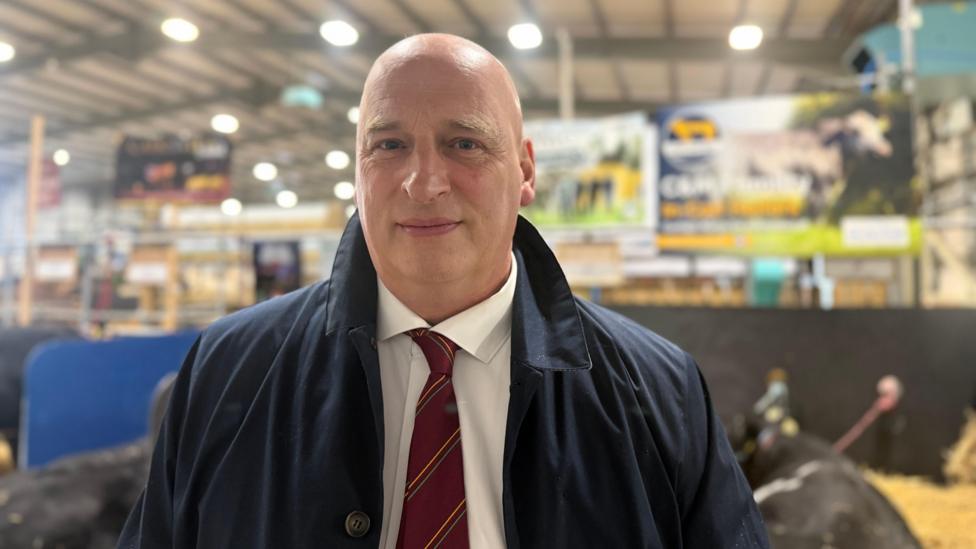
McLenaghan stressed that pushing for resignations was not something the union did casually, describing a broader breakdown in trust between farmers and the department.
However, confidence has been severely damaged and the most recent event is just one of many instances where farmers feel that the Department has lost touch with farmers.
We no longer have confidence that the Department can deliver.
What led to the cull near Fivemiletown?
The case originated with a series of animal welfare inspections on a farm near Fivemiletown that began in 2022. According to details given to the Stormont Agriculture, Environment and Rural Affairs (AERA) committee, those inspections ran from 20 January 2022 to 30 January 2024 and uncovered 33 animal carcasses, feed contaminated with urine and faeces, and emaciated livestock, according to a national broadcaster's report. In May 2026 the farmer was convicted of a string of animal welfare offences and disqualified from keeping animals for life.
The convictions included thirteen charges of failing to dispose of an animal carcass, one charge of failing to comply with an Animal By-Products notice, six charges of causing unnecessary suffering to an animal, and one charge of failing to produce medicine records. The court issued a deprivation order on 8 June 2026 requiring the farmer to give up ownership of his remaining livestock. Following standard practice, he was allowed two weeks to appeal or to sell, transfer or otherwise dispose of his stock, and was later given a further week on top of that.
Muir told MLAs that the original herd owner had in fact been given three weeks in total to sell or dispose of the animals following his conviction, but that 51 cattle were still on the farm when departmental staff arrived, according to a broadcaster account of the minister's evidence. By 29 June 2026, when the extended grace period had lapsed, the department's Humane Slaughter Team arrived at the farm near Fivemiletown to begin destroying the remaining animals by shooting them, with the operation completed the following day, 30 June 2026.
What went wrong during the operation?
Some members of the public witnessed part of the cull, which took place across one of three separate areas of the farm where the cattle were being kept. Concerns about how the operation had been carried out were first raised by a local councillor before spreading to politicians and farming leaders, prompting the AERA committee to recall Muir and veterinary officials for questioning.
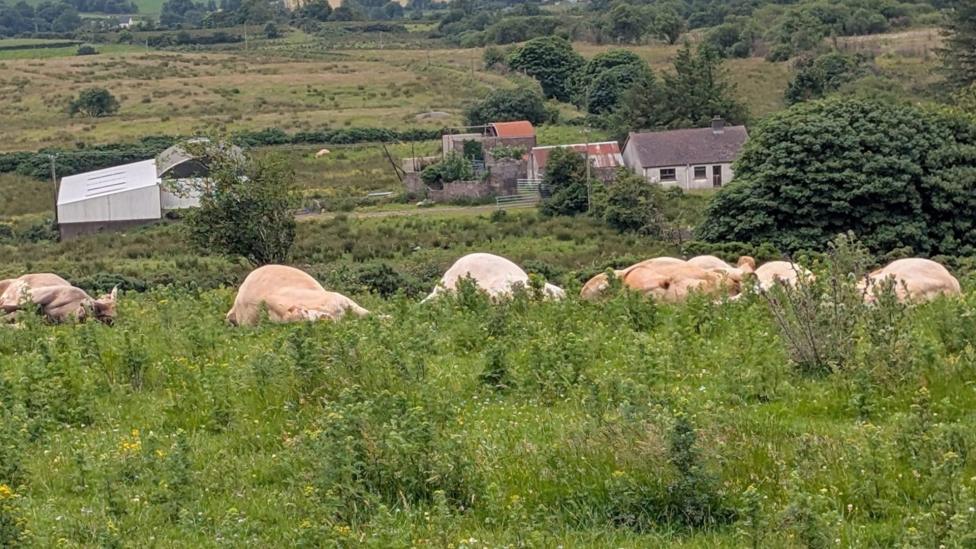
Officials told the committee that cattle in two of the three areas of the farm had been dealt with by 13:30 on 29 June 2026. In the final area, the slaughter operation was paused when a local farmer offered to buy some of the remaining cattle, but the animals could not be safely rounded up and escaped onto the road. They were eventually herded back, at which point a vet recommended they be destroyed. One further animal was put down on 30 June 2026, and the carcasses were removed later that day.

What did the minister and vets tell the Stormont committee?
Muir told the committee that repeated inspections since 2022 had revealed what he called a deeply troubling situation on the farm.
That order legally required the department to deprive the individual of any livestock.
And so my officials took the necessary steps to fulfil this legal obligation.
He described the conditions found on the farm as "grotesque" and said a large number of animals had been caused unnecessary suffering, which led directly to the court's deprivation order. According to separate reporting from a national broadcaster, Muir told the committee the cattle were "essentially starving to death" on land with limited feed contaminated by urine and dung, and that the cull was required to comply with the court order.
Deputy Chief Veterinary Officer Gemma Daly described the animals as "semi-feral" and said staff had long been concerned about how to handle them without causing distress or risking injury to themselves. Senior Principal Veterinary Officer Elsie McGarvey acknowledged the department was "technically" potentially in breach of the court order by extending the grace period, and said officials were "always prepared" for the farmer's disqualification and "knew" removing the animals would present significant difficulties. She added that roughly half of the cattle were unsuitable for the food chain and others were too young for slaughter for consumption. Separately, the broadcaster report noted that veterinary staff had judged remote euthanasia was not feasible in the circumstances, and that silenced firearms were used in an attempt to reduce distress to the animals and limit public exposure to the operation.
Why is the minister facing a no-confidence motion?
Scores of farmers gathered outside Parliament Buildings at Stormont to protest while Muir answered questions from MLAs on the cull, according to a national broadcaster's coverage of the emergency committee session. During that session, Muir said he had received a threat that he would be shot over the controversy and raised the matter directly with the committee.
The Democratic Unionist Party has tabled a motion of no confidence in Muir, which requires 30 signatures before it can be debated on the floor of the Assembly. Analysts covering Stormont note that any change at the top of the department would ultimately depend on the minister's own party, or Muir himself, and point out that only seven months remain in this Assembly term for the minister to progress a substantial number of significant policies. The relationship between Daera and the UFU has been strained before: the union's Executive passed a vote of no confidence in the department itself, rather than in the minister, in October 2025, following an outcry over the initial consultation document for the Nutrients Action Programme. That document has since been revised with input from a stakeholder group made up of farmers, agri-food representatives, conservationists and environmental groups.
How will the independent review be carried out?
Before the AERA committee met, Muir announced that an independent external review of the incident would take place, to be led by Dr Martin Blake, a former Chief Veterinary Officer for Ireland. Dr Blake's remit includes examining the decision-making, risk assessments and communication surrounding the operation, and he is expected to make recommendations based on departmental records and any interviews he conducts.
Muir told the committee he expected the review to be thorough without dragging on.
Thorough but not prolonged.
He said he expected the review to conclude by early autumn 2026. The UFU has pushed back on the format of the inquiry, arguing that it should be conducted by a panel of experts rather than a single reviewer, given the seriousness of the incident and the level of public concern it has generated.
This dispute follows earlier scrutiny of the incident. Stormont's agriculture committee had already questioned Muir on 10 August 2026 over claims the cull was carried out in public view, as detailed in our earlier report on the committee session. Days before that, Muir had defended the department's actions, insisting there was no reasonable alternative to euthanising the animals, as covered in our coverage of the minister's earlier remarks. The review itself was first ordered in late July 2026, shortly after the shooting, amid criticism from councillors and MLAs about how the Daera operation was conducted, as reported in our initial report on the review announcement.
What is a deprivation order?
A deprivation order can be issued by a court when someone is convicted of animal welfare offences. It legally requires that person to give up ownership of the animal in question and for the animal to be disposed of, with the court either specifying the method of disposal or delegating that decision to whoever is appointed to carry out the order. Under the relevant legislation, the term "disposal" explicitly includes the destruction of an animal.
What happens next?
Dr Blake's review remains under way, with Muir having told the AERA committee he expects it to report by early autumn 2026, though no firm completion date has been confirmed in subsequent coverage. The DUP's no-confidence motion against Muir still needs 30 Assembly signatures before it can be debated, and it remains unclear whether that threshold will be reached. The UFU has said it wants the terms of the review changed to include a panel rather than a sole investigator, a demand Daera has not yet publicly addressed.
Key Facts
- Fifty-one cattle were shot dead near Fivemiletown, County Tyrone, on 29-30 June 2026, following a court deprivation order.
- The farmer involved was convicted in May 2026 of multiple animal welfare offences, including causing unnecessary suffering, and was disqualified from keeping animals for life.
- The Ulster Farmers' Union has called for the resignations of Agriculture Minister Andrew Muir, permanent secretary Katrina Godfrey and Chief Veterinary Officer Brian Dooher.
- An independent review led by former Irish Chief Veterinary Officer Dr Martin Blake is examining the decision-making and conduct of the cull, with a report expected by early autumn 2026.
- The DUP has tabled a no-confidence motion against Muir, which requires 30 Assembly signatures to be debated.


