

Nigel Farage secured a commanding win in the Clacton by-election he himself triggered, with Reform UK declaring victory after he polled 22,239 votes against a field of unopposed and largely token challengers. The contest, in which none of the other major parties fielded a candidate, took place on 13 August 2026, and Farage did not attend the count in person, choosing instead to address supporters overnight rather than wait for the official declaration hours later.
Speaking to a rally of Reform UK supporters before the result was confirmed, Farage said he had been warned of an
"organised campaign to disrupt and degrade the result"and that he wanted to avoid being
"demeaned and humiliated by nobodies". He later said voters in Clacton had
"stuck two fingers up at the entire political establishment".
How decisive was the result, and what does it change?
Farage won convincingly, but the scale of the victory was inflated by the absence of any serious opposition, since the main parties declined to put forward candidates. Reform UK allies say the leader emerges from the contest emboldened, pointing to his personal popularity in the seat, his party's sustained lead in national polling over the past 18 months, and the transformation of Reform from a fringe outfit into a mass-membership movement with a realistic path to government.
Even so, the outcome does nothing to halt the separate investigations swirling around Farage's finances: a Metropolitan Police inquiry into donations made to Reform UK, questions over his relationship with a convicted fraudster, and a parliamentary standards investigation into an undeclared £5 million gift from a billionaire donor.
Given that Farage called the by-election himself and the result was never seriously in doubt, critics have questioned its purpose. When he announced last month that he would resign the seat he already held in order to fight to keep it, he said
"the people of Clacton should be the judges of my actions"and that he intended to
"fight to continue the political revolution that Reform has started". Few could have predicted that revolution would produce a ballot paper roughly 90 centimetres long carrying a record 34 candidates, with a man dressed as a bin among his highest-profile rivals.
Labour has accused Farage of trying to
"dodge scrutiny", while the Conservatives have dismissed the whole exercise as the product of a
"hissy fit".
Who is paying for the by-election, and how much will it cost?
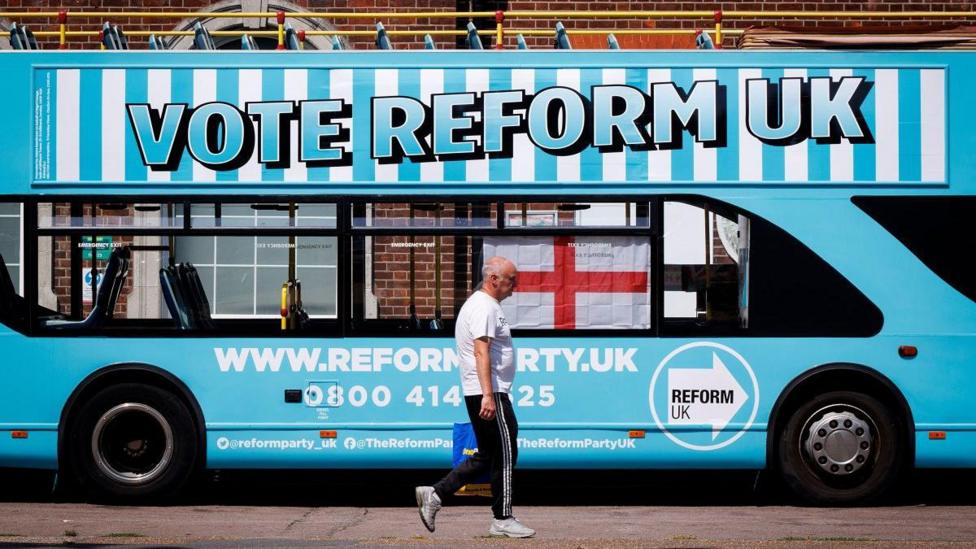
One consequence Farage could certainly have foreseen is the bill facing local taxpayers. Clacton council, in an area that includes the most deprived neighbourhood in England, estimates the by-election will cost around £250,000 to run. Reform UK offered to cover the expense itself, but electoral law does not permit a party to fund the administration of a parliamentary election. According to Metro, the government said such an arrangement would be illegal because parliamentary elections must be paid for out of public funds, with some estimates putting the eventual cost as high as £275,000.
What is the £5 million gift row about?
The most prominent controversy surrounding Farage concerns the revelation that, shortly before the 2024 general election, he secretly accepted £5 million from Christopher Harborne, a Thailand-based cryptocurrency entrepreneur and Reform donor. Farage has called the payment an
"unconditional gift"and has offered shifting explanations for it, at various points describing it as a reward for his role in delivering Brexit and as funding for lifelong personal security.

Parliament's standards commissioner is examining whether Farage should have declared the gift in his register of financial interests, according to a national broadcaster's report. Farage maintains he was not obliged to register it, insists he has done
"nothing wrong", and has described the inquiry as
"being used as a political tool".
Separately, the Metropolitan Police has spent more than a year investigating large donations to Reform UK, reportedly examining allegations of concealing or disguising money from an impermissible source, or supplying false information about a donation. Two people have been interviewed, though no arrests have been made, and Reform UK sources say no party officials have been questioned. According to background reporting from an encyclopedic account of the by-election, bankers submitted a suspicious activity report to the National Crime Agency over the Harborne payment on the same day Farage's resignation as MP took effect, and the scrutiny of his finances also extends to reported concerns about possible gifts in kind, alleged lobbying connected to cryptocurrency, and the declaration of several properties.
What is the George Cottrell connection?
Farage has also received financial support for his security and social media staff from George Cottrell, a convicted fraudster known to colleagues as "Posh George". Cottrell, 32, was arrested at a US airport while travelling with Farage and pleaded guilty to a count of wire fraud in 2017; according to the same broadcaster's coverage, he was jailed for eight months in the United States over the offence.
The Sunday Times first reported Cottrell's support for Farage, including his use of a luxury flat near Buckingham Palace. Parliament's standards watchdog has not confirmed whether it is investigating this arrangement, but Farage has said there was
"no wrongdoing", that he followed the rules, and that he is considering legal action against the newspaper.
How did this by-election come about?
Farage's resignation and the contest that followed built directly on events from earlier in the summer. He first announced on 7 July 2026 that he would give up the Clacton seat in order to re-contest it, framing the move as a chance to let voters settle the growing questions over his finances, and his resignation was accepted the following day, according to the same background account. That earlier decision was covered in detail in our reporting on Farage's resignation to trigger a 'people versus establishment' by-election and in our account of Farage's claim that the contest was an 'establishment stitch-up' after rivals declined to stand against him.
Is Farage's personal popularity slipping?
Despite the scale of his Clacton win, Reform UK's bigger challenge may be a softening of Farage's standing nationally. Pollster Luke Tryl of More in Common said:
"This time last year Farage had the highest approval of the main party leaders. Yet earlier this month he fell to his worst score since the general election."
Tryl added:
"What will worry Farage is not only that his negative approvals have risen, which may signal greater willingness to vote tactically against the Reform leader, but there are also fewer people expressing a positive view suggesting an erosion in his base."More in Common's research suggests roughly 80% of voters are aware of the questions surrounding Farage's finances, though opinion on their significance is divided. As Tryl put it:
"Farage's strongest supporters often take the view it's an 'establishment stitch up'. And for his opponents, it is a further reason to dislike him."
Farage has nonetheless succeeded in professionalising Reform UK, securing significant funding and recruiting high-profile figures such as Robert Jenrick and Zia Yusuf, in an effort to show that the party is not simply a vehicle for one man.
What happens next?
The Metropolitan Police investigation into Reform UK donations and the parliamentary inquiry into Farage's undeclared £5 million gift are both expected to continue for months without a firm resolution date. Should the standards commissioner ultimately find that Farage breached parliament's rules, the resulting sanctions could theoretically trigger a second by-election, a prospect Reform UK sources say they would welcome given the confidence built from this contest.
The writ formally setting the by-election in motion was moved in the Commons by Reform MP Lee Anderson on the Thursday before polling, fixing the date as 13 August 2026, according to a national broadcaster's report, though it had not been formally confirmed at the time the writ was moved. Beyond the immediate aftermath in Clacton, campaign officials say the contest has given Reform UK valuable local voter data that could prove useful if a future by-election in the seat is contested by the mainstream parties.

Key Facts
- Nigel Farage won the Clacton by-election on 13 August 2026 with 22,239 votes, facing no candidates from the other main parties.
- The council estimates the by-election cost taxpayers around £250,000, with some estimates as high as £275,000; Reform UK's offer to pay was ruled illegal under electoral law.
- Parliament's standards commissioner is investigating an undeclared £5 million gift to Farage from donor Christopher Harborne.
- Farage has also received support from George Cottrell, who was jailed for eight months in the US in 2017 after pleading guilty to wire fraud.
- Pollster Luke Tryl says Farage's approval ratings have fallen to their worst level since the 2024 general election.


