Erin Patterson, the 51-year-old Victorian woman convicted of murdering three relatives of her estranged husband with a poisoned beef wellington lunch, is in the second day of a Court of Appeal challenge to overturn her convictions, while prosecutors separately argue her life sentence is too lenient and are now seeking to have her jailed for life without the possibility of parole. Three judges of Victoria's highest court are hearing both appeals together, with proceedings scheduled to run over two days.
A jury previously found Patterson guilty of murdering Don and Gail Patterson, her estranged husband's parents, along with his aunt Heather Wilkinson. She was also convicted of the attempted murder of Heather's husband, Ian Wilkinson, who survived the meal after weeks of hospital treatment. Patterson was handed a life sentence with a non-parole period of 33 years last September.
When and where is the appeal being heard?
According to the Supreme Court of Victoria's hearing schedule, the appeal opened on 19 August 2026 and is continuing for a second day on 20 August 2026. The court had planned to broadcast the hearing publicly via livestream from Court 1 at 210 William Street in Melbourne. A separate court notice states the sessions are being livestreamed and are scheduled to begin at 10:15am on both days, as reported by the Supreme Court's own announcement, which also notes the hearing is taking place in the Court of Appeal at the Supreme Court building on William and Lonsdale streets in Melbourne's central business district. The court's own live-stream listing identifies the two matters formally as DPP v Erin Patterson and Erin Patterson v DPP, both set down for 10.15am in Court 1.
Who is deciding the case, and how is Patterson taking part?
The panel hearing the matter consists of Justice McLeish, Justice Taylor and Justice Kidd, per the same court listing. Rather than appearing in the courtroom, Patterson is expected to follow proceedings from prison via video link, as reported by the national broadcaster's explainer on the case. Coverage of the hearing itself indicates Patterson watched proceedings by videolink from the Dame Phyllis Frost Centre, Victoria's maximum security women's prison, and did not speak during the session, while members of the extended Wilkinson and Patterson families were present in court.
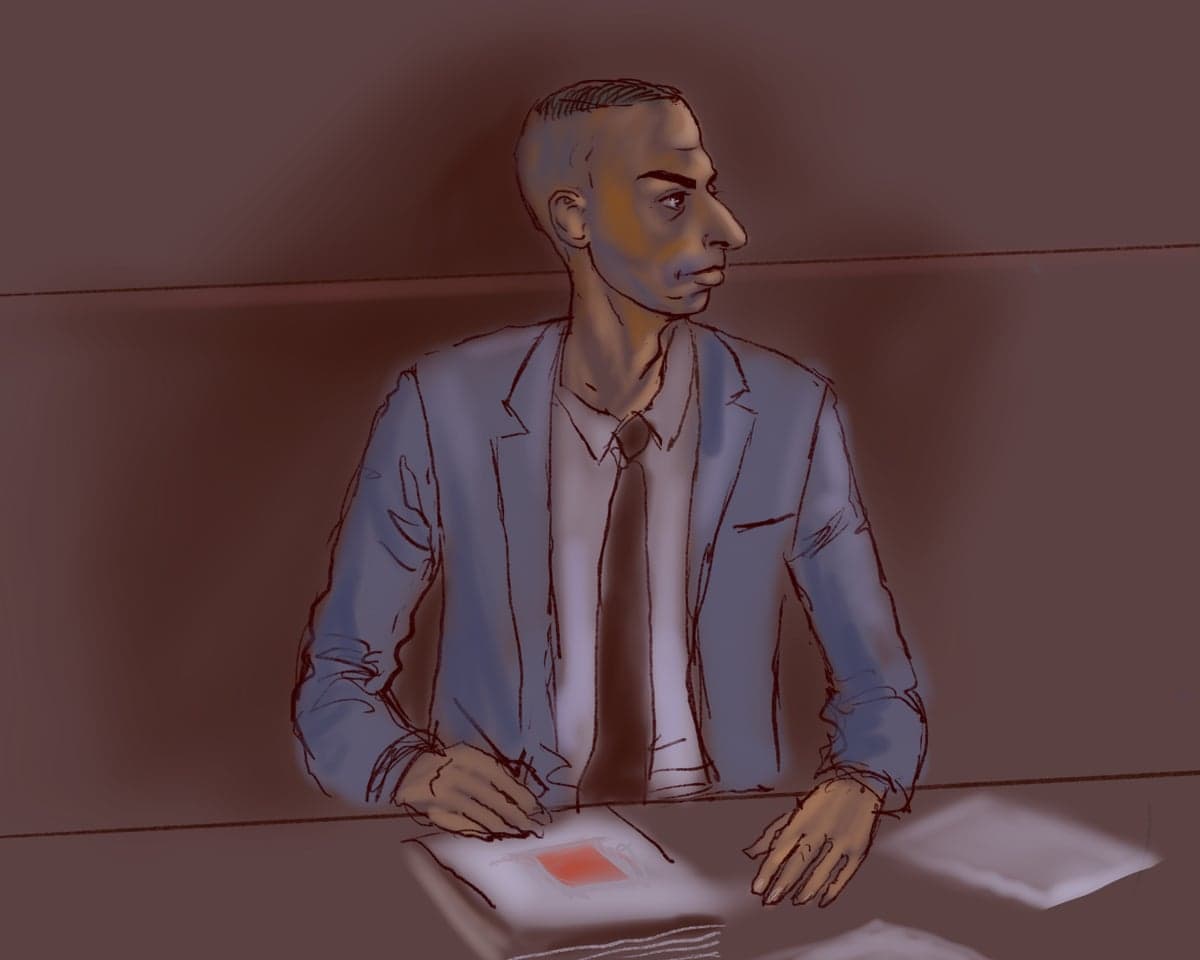
On the second day of the hearing, Patterson again joined by video link from the Dame Phyllis Frost Centre, wearing the same royal blue jumper, jeans and black reading glasses she had worn on the first day, with her hair tied back. Ian Wilkinson, the sole surviving lunch guest, returned to court for day two accompanied by his daughter, Ruth Dubois.
What are the two sides arguing?
Patterson is seeking to have her convictions quashed, while the state's director of public prosecutions is appealing on the grounds that her sentence does not adequately reflect the gravity of her crimes. Reporting from the Straits Times indicates Patterson's legal team will contend that errors during the original trial amounted to a miscarriage of justice, while prosecutors maintain the 33-year non-parole period set is too soft given the scale of the offending. According to the court's announcement, Patterson's appeal application contains seven separate grounds, while prosecutors have filed a distinct sentence appeal focused specifically on the length of the non-parole period. Prosecutors are now specifically asking the court to impose life imprisonment without any prospect of parole, rather than simply lengthening the existing 33-year minimum term.
One ground centres on the decision to allow jurors to stay in the same hotel as the police informant leading the case and lawyers from the office of public prosecutions while they deliberated. Patterson's barrister, Richard Edney, told the court this failure to properly separate, or sequester, the jury undermined the principle that justice must be seen to be done in one of the most closely watched trials in Victorian history.
"We would describe the sequestration and what occurred during it as catastrophic. There has been a fundamental failure here to comply with the dictum I've been referring to."
Edney argued there was "an evidentiary vacuum" around the arrangement, since no CCTV footage was available from the hotel and jurors could not be questioned about any interactions during deliberations. According to the Independent's coverage of the hearing, Patterson's lawyers accept there is no evidence jurors actually spoke with police or prosecutors at the hotel, but argue the arrangement created an unacceptable risk of improper influence. Justice Peter Kidd pushed back during the hearing, noting there was no evidence of any communication, verbal or otherwise, and that jurors remained under the supervision of the jury keeper throughout.
Patterson's team also argued that cell tower evidence and reports of death cap mushroom sightings posted to a citizen science website should not have been admitted, and that photos and videos of mushrooms found on an SD card at Patterson's home — evidence the trial judge ruled inadmissible — should have been allowed to support her account that she foraged for mushrooms regularly. On this second ground, crown prosecutor Jeremy McWilliams told the court before proceedings adjourned on the first day that the mobile phone tower evidence and reports of death cap sightings on the citizen science website iNaturalist should not be excluded, arguing that the material, "taken together" with other evidence, showed Patterson had the opportunity to deliberately source death cap mushrooms before the fatal lunch. That phone tower evidence, given at trial by expert witness Dr Matthew Sorell, was used by the prosecution to draw an inference that Patterson could have visited two locations where death cap mushrooms had been sighted and logged on iNaturalist.
A further ground contends that Patterson's cross-examination, which stretched over roughly six days, was unfair and oppressive, while another argues that the prosecutor's closing address caused a substantial miscarriage of justice by misstating the evidence on 36 separate occasions, according to written submissions referenced during the hearing. The same broadcaster explainer cited above notes the appeal is likely to focus heavily on the excluded mushroom-related evidence, and that a retrial could be ordered should Patterson's challenge succeed.
How long has this appeal been in the pipeline?
Patterson signalled her intention to challenge the verdict almost a year before the hearing date was locked in, according to the broadcaster's reporting. An earlier report from the national broadcaster's November 2025 coverage of Patterson's appeal filing noted that her application also raised a claimed "fundamental irregularity" over jurors being housed in the same hotel as a police witness and two members of the prosecution team, and that her legal challenge described the trial as involving a "significant miscarriage of justice." A wire report from international news agency coverage published in May confirmed that the Supreme Court of Victoria had already fixed the hearing for 19 and 20 August 2026 well in advance, with the conviction appeal and the prosecution's sentence appeal set to be heard together before the same panel; the same report noted the director of public prosecutions is arguing the original sentence is "manifestly inadequate." The dates were separately confirmed by the Supreme Court on 28 May 2026, according to the national broadcaster's report at the time.
What was the original sentence, and what could change?
Patterson was sentenced in September 2025 to life imprisonment with a non-parole period of 33 years, a term which, according to a national broadcaster's report, would have left her ineligible for parole until 2056, when she would be in her 80s. The director of public prosecutions' sentence appeal argues that this non-parole period was too lenient and, according to a national broadcaster's report, could see it increased or replaced entirely with a sentence of life imprisonment without parole if the challenge succeeds.
What happens next?
The hearing is due to conclude on 20 August 2026, after which the three-judge panel will need time to deliberate before ruling on whether Patterson's convictions or her sentence should be altered. According to the Supreme Court's schedule, argument on the prosecution's sentence appeal is not expected to begin until Thursday afternoon, following completion of submissions on the conviction appeal. Should Patterson's challenge succeed, the court could quash her convictions and order either a retrial or an acquittal, while the broadcaster's explainer cautions that a decision is unlikely to be announced immediately once the two days of argument wrap up. Should the prosecution succeed instead, Patterson's sentence could be increased, potentially to life imprisonment without any prospect of parole, with a judgment to be handed down at a later date rather than at the close of the hearing.
Key Facts
- Patterson was convicted of murdering Don Patterson, Gail Patterson and Heather Wilkinson, and of the attempted murder of Ian Wilkinson.
- She received a life sentence with a 33-year non-parole period in September of the previous year, meaning she would not have been eligible for parole until 2056.
- The appeal opened on 19 August 2026 before Justices McLeish, Taylor and Kidd and is scheduled to run two days, with sessions livestreamed from 10:15am as DPP v Erin Patterson and Erin Patterson v DPP.
- Patterson's appeal contains seven grounds, including claims about jury sequestration, excluded mushroom evidence, phone tower and iNaturalist sighting evidence, and an unfair cross-examination and closing address.
- Prosecutors are now seeking a sentence of life imprisonment without parole rather than simply a longer non-parole period.
- Patterson is following the hearing by video link from the Dame Phyllis Frost Centre, with Ian Wilkinson and his daughter Ruth Dubois attending court in person on day two.
- A ruling is not expected immediately after the hearing concludes, with sentence arguments not due to be heard until Thursday afternoon.