A Hong Kong court has found the publisher of the Wall Street Journal guilty of deterring a journalist from assuming a leadership position at a trade union, marking a significant development in ongoing concerns about press freedom in the territory.
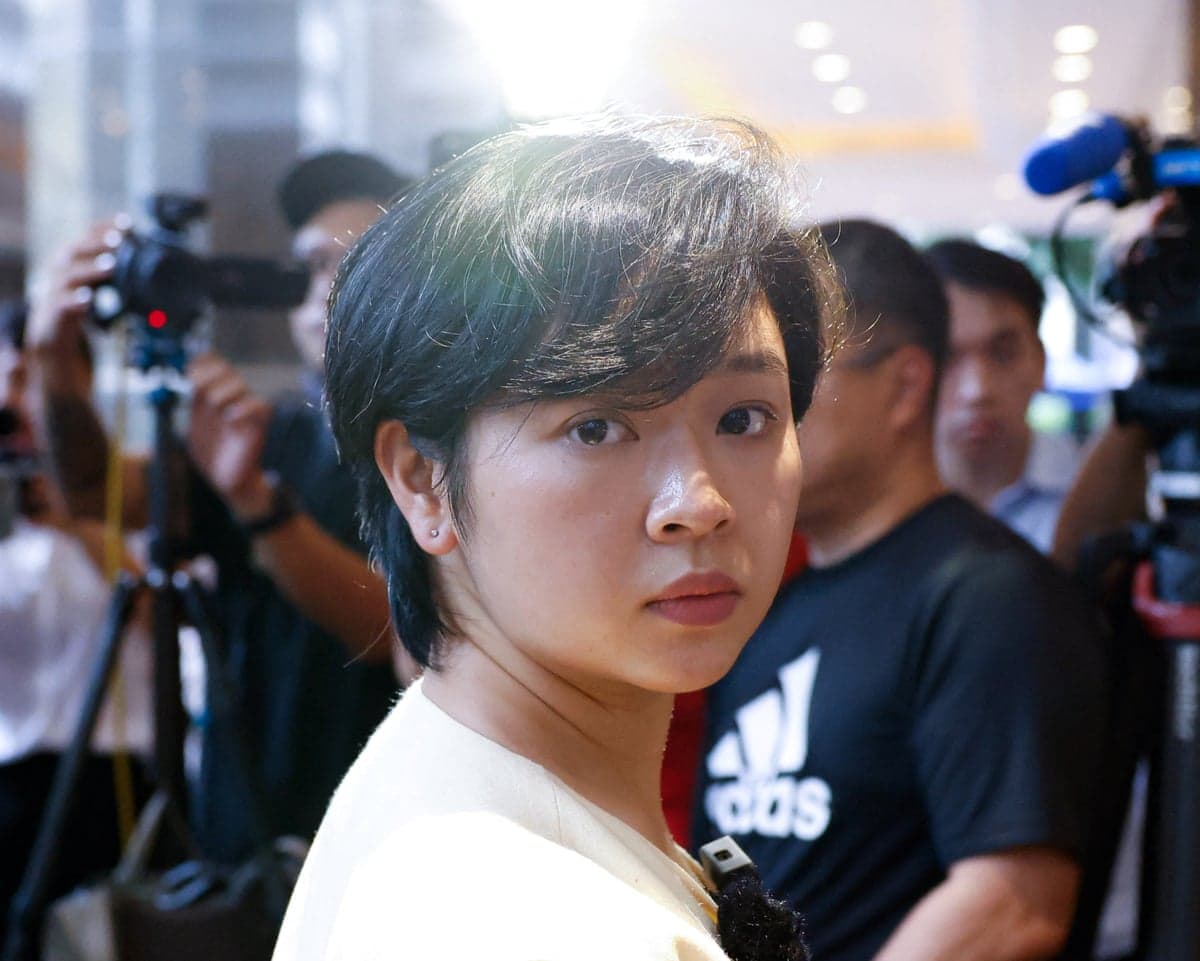
On 10 September 2026, Principal Magistrate David Cheung ruled that Dow Jones Publishing, the parent company of the Wall Street Journal, had committed the offence of "preventing or deterring an employee from exercising trade union rights." The court acquitted the company of a second charge of "dismissing or discriminating against an employee because she exercised those rights." The conviction relates to the termination of Selina Cheng, who had been appointed chair of the Hong Kong Journalist Association (HKJA) in June 2024.
Cheng, a reporter who covered China's automotive and energy sectors for the WSJ, was dismissed in July 2024, just weeks after taking up her position leading the union. The company initially attributed her termination to restructuring, but the court found otherwise. According to reporting from July 2024, Cheng was appointed HKJA chair on 22 June 2024 and announced her termination days later after refusing requests to cut ties with the association and avoid advocacy for media freedoms.
During the trial, Cheng testified that her editor had instructed her that employees should not be perceived as advocating for press freedom in "places like Hong Kong", characterising such activity as a potential conflict of interest. According to reporting from the Associated Press, Cheng's supervisor told her that her participation in the union election was problematic and required discussion with management in New York and in-house lawyers. She alleged that the company had attempted to prevent her from taking the union role by requiring her to seek formal approval for outside activities and requesting she step down from her then-board position at the association.
Magistrate Cheung concluded that Cheng's dismissal "was motivated by wrongful and unjustified application of their code of conduct" when the company insisted she needed prior approval to serve as HKJA chair. He described Cheng as "honest and reliable" and noted she was clearly motivated by "the wish to see justice." The defence had argued that Cheng was terminated due to redundancy and that the prosecution had not sufficiently demonstrated that firm management had instructed her supervisor to act. The defence also accused Cheng of acting in bad faith during earlier proceedings.
Cheng initiated a private prosecution against Dow Jones Publishing after losing her job. The company pleaded not guilty to both charges, each carrying a maximum fine of HK$100,000 (approximately $12,750 USD). Sentencing is expected to be handed down at a later date.
Why does this case matter for press freedom?
Cheng's termination has alarmed journalists operating in an increasingly constrained media environment in Hong Kong. The case arrives amid a broader crackdown on press freedoms following the introduction of national security legislation. According to , Cheng's firing came during a wider national security crackdown that had already resulted in journalist arrests and the closure of progressive media outlets in Hong Kong.

Hong Kong's press freedom rankings have deteriorated sharply since the National Security Law took effect in 2020. Reporters Without Borders ranked the city 73rd globally in 2019, but by 2026 it had fallen 67 places to 140th out of 180 countries and territories. In September 2024, reported that two editors in Hong Kong had been convicted of sedition, described as the first such conviction of any journalist or editor since 1997. That same month, Cheng stated that the harassment of journalists in Hong Kong appeared to be the most extensive the city's press corps had faced to date.
Eric Lai, a senior fellow at the Georgetown Center for Asian Law, commented on the implications of the case:
The WSJ set a very bad precedent by punishing an employee who was exercising her constitutionally protected rights in Hong Kong.
The conviction is particularly significant because foreign news outlets have traditionally faced less pressure than local media organisations in Hong Kong. The HKJA, established in 1968 and registered as a trade union representing journalists and news workers, has faced mounting pressure since the 2020 national security legislation took effect.
What has the Wall Street Journal said?
The company has maintained there was no connection between Cheng's role at the Hong Kong union and her termination. When Cheng's dismissal was announced, the WSJ issued a statement declaring:
The Wall Street Journal has been and continues to be a fierce and vocal advocate for press freedom in Hong Kong and around the world.
What is the broader context?
Cheng's case reflects a pattern of legal pressure on journalists and activists in Hong Kong under the national security framework. In May 2026, Hong Kong's High Court upheld a separate conviction and five-day prison sentence of former HKJA chair Ronson Chan, with Cheng noting that the decision demonstrated police had disproportionate power during routine checks. The territory has also seen high-profile prosecutions of activists under national security provisions, including convictions related to organising Tiananmen vigils and charges of foreign collusion.
The legal environment has become more restrictive following the March 2024 passage of the Safeguarding National Security Ordinance, which added another layer of legal risk for speech-related activity in the territory.
What happens next?
Sentencing in Cheng's case is expected to be handed down at a later date following the 10 September 2026 verdict. The conviction on one count represents a partial victory for Cheng, though the acquittal on the discrimination charge means the court stopped short of finding that the company dismissed her specifically because of her union activities.