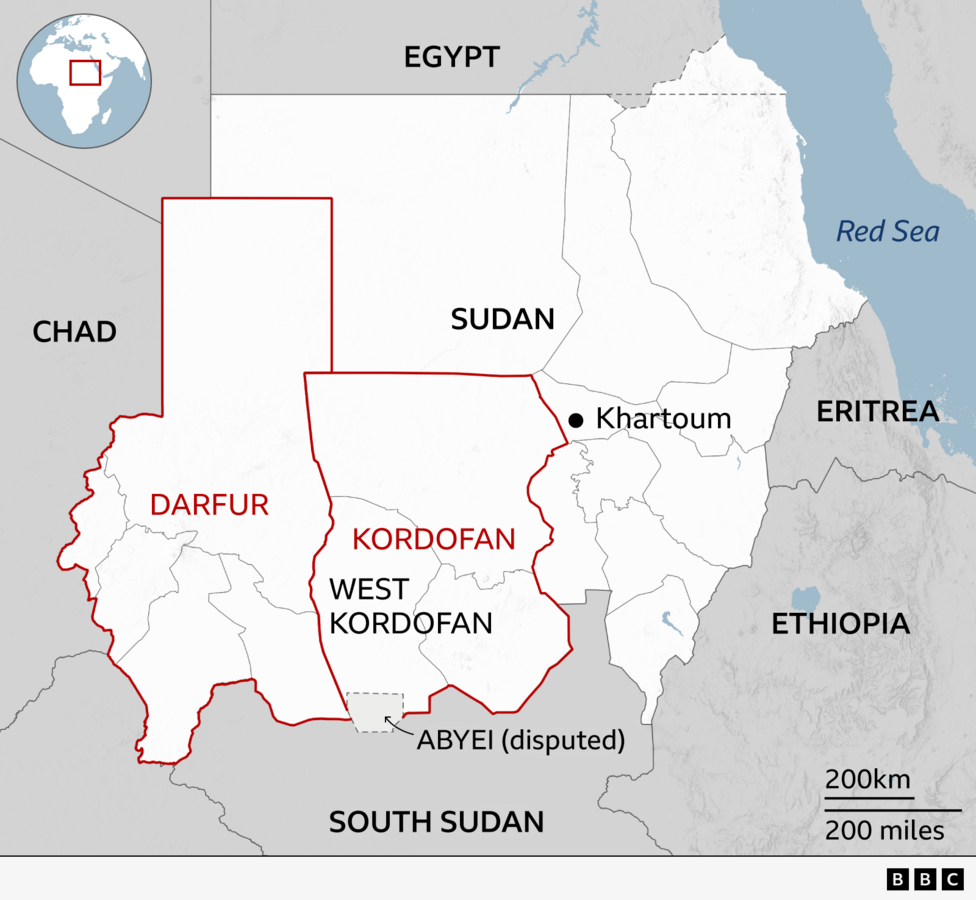
Sudan's military has been accused of launching multiple drone strikes that killed more than 300 people across two regions, including dozens travelling to a funeral ceremony. According to BBC News, the strikes occurred in West Kordofan state and the disputed border region of Abyei on Sunday and Monday, marking a significant escalation in the conflict between the army and the paramilitary Rapid Support Forces (RSF) that began in 2023.
The Sudan War Observatory, which monitors the ongoing conflict, reported that 150 people died in strikes across two areas of West Kordofan state on Sunday evening. In Abyei, a territory jointly administered by Sudan and South Sudan, a separate attack on Monday killed 153 people when drones targeted a market, according to the region's information minister Yohana Akol Ngor. A military source confirmed to the BBC that the army had carried out the Abyei operation, claiming the market functioned as a fuel supply point for the RSF.
The truck carrying approximately 200 mourners that had travelled from an area north of Abyei was struck as it arrived in the town of Al-Dabab in West Kordofan, the Sudan War Observatory stated. According to the monitoring group, 145 people died in that strike, while an additional five were killed when a tent sheltering funeral attendees was hit. A further 150 people sustained injuries in the attacks across both locations.
Army drones also bombed a market in the town of Al-Mujlad in West Kordofan on the same evening, though the Sudan War Observatory said precise casualty figures for that location remained unclear. The wave of drone attacks began on Sunday evening and likely originated from the army-controlled city of Kadugli in South Kordofan state, according to the monitoring group.
What happened in Abyei?
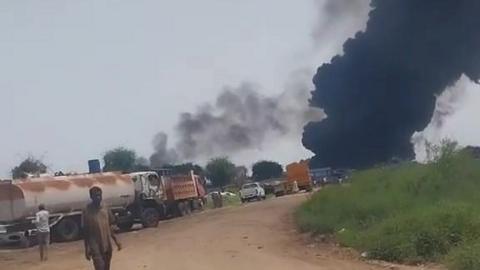
The Abyei market strike took place on Monday around 11:30 local time, targeting Amiet Market approximately 10 kilometres from Abyei town. The attack ignited a fire at a nearby fuel depot that was still burning the following day; according to reporting from the region, the depot supplied local businesses rather than military forces. Information Minister Ngor initially reported 73 deaths but confirmed to the Associated Press and Reuters on Tuesday that the death toll had risen to 153 people.
BBC Verify examined satellite imagery showing extensive burnt buildings in the north-east corner of Amiet Market, also known in Arabic as Al-Na'am Market. Older satellite images from the area show it is typically crowded with trucks. Verified footage filmed near the market captured a large plume of smoke, at least one petrol tanker, and audio of someone describing five missiles being fired. Additional verified video showed two massive, separate fires emanating from buildings in that section of the market.
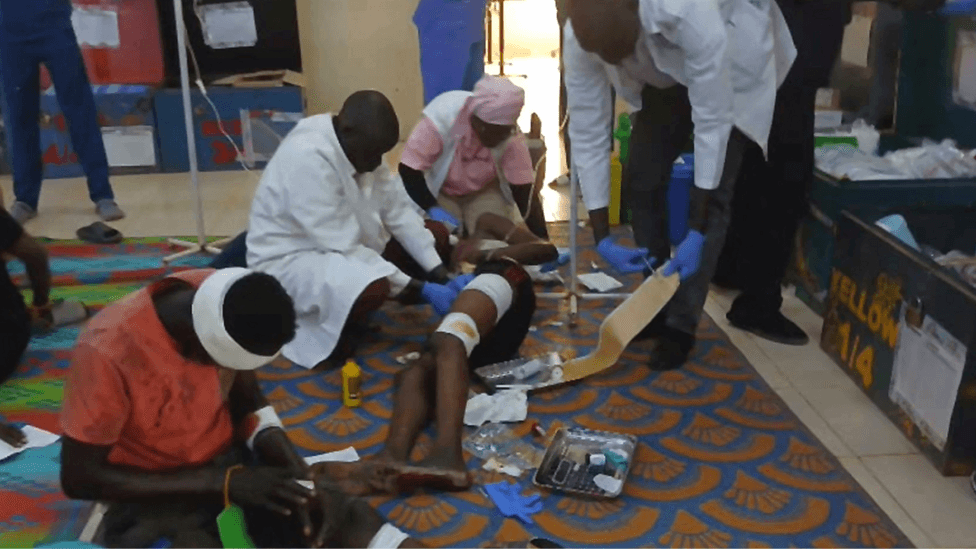
Emergency workers faced significant challenges retrieving bodies because fires caused by the strikes continued burning, Information Minister Ngor told Reuters. Medical charity Médecins Sans Frontières (MSF) reported receiving wounded patients at Ameth Bek Hospital in Abyei town. MSF said it had received more than 20 wounded people, including several critical cases and patients with burns, with its teams working alongside South Sudan's Health Ministry staff. Christian Lindauer, MSF's manager at the hospital, stated:
So far we received over 20 patients, including several critical cases. Patients with burns were also admitted. We are providing surgical services and wound dressing, along with other emergency care.
How does this affect Sudan-South Sudan relations?
The attack has intensified tensions between South Sudan and Sudan, which jointly administer Abyei under a disputed arrangement. Both nations claim ownership of the oil-rich region, a dispute that has remained unresolved since South Sudan's independence in 2011. South Sudan has summoned Sudan's ambassador to lodge a formal diplomatic protest. International observers have expressed concern that the conflict could spill across the border, destabilising the broader region.
What is the broader context of drone use in Sudan?
Despite a partial arms embargo on Sudan, foreign countries have continued supplying both the army and the RSF with drones, which have become the weapon of choice in the conflict. The strikes represent part of a broader pattern of aerial bombardment affecting civilian populations across Sudan. Earlier incidents have demonstrated the scale of the humanitarian toll: a drone attack by the RSF killed 41 people at a displaced persons camp in the Blue Nile region near Ethiopia on 10 October 2026, while at least 72 civilians prospecting for gold were killed in airstrikes on Sudan's border with Egypt on 11 October 2026.
UN spokesperson Stéphane Dujarric expressed alarm at the pattern of attacks:
We are alarmed by the continued deadly drone strikes across the country that are killing civilians, including children, and that are disrupting essential services.The rising use of armed drones coincides with a severe humanitarian crisis, as 20 million people face acute hunger, with a rising risk of famine in parts of the western region of Darfur and Greater Kordofan. Greater Kordofan comprises three states and serves as a vital axis linking Darfur, controlled by the RSF, to the capital Khartoum, now in army hands.
What happened in Khartoum?
A separate drone strike near Khartoum's airport on Monday killed four people, including three children aged two, four and six, according to the AFP news agency citing a medical source. A rights group blamed the RSF for that strike, though the group did not immediately comment. A military source told AFP that air defences in the Sudanese capital had downed several other drones launched by the RSF towards the airport.
What is the scale of Sudan's conflict?
The war between the army and the RSF has created one of the worst humanitarian crises in the world. The conflict has killed hundreds of thousands of people and forced more than 14 million from their homes. Fighting in Kordofan, a strategic area rich in gold and oil, has intensified over the past year following the army's regaining control of Khartoum from the RSF. The UN has called on outside actors to cease fuelling the violence and drone use, and urged the warring parties to return to negotiations.
Sudan's military has not responded to allegations it carried out the West Kordofan strikes, but stated it does not attack civilians even if it believes RSF fighters are among them.