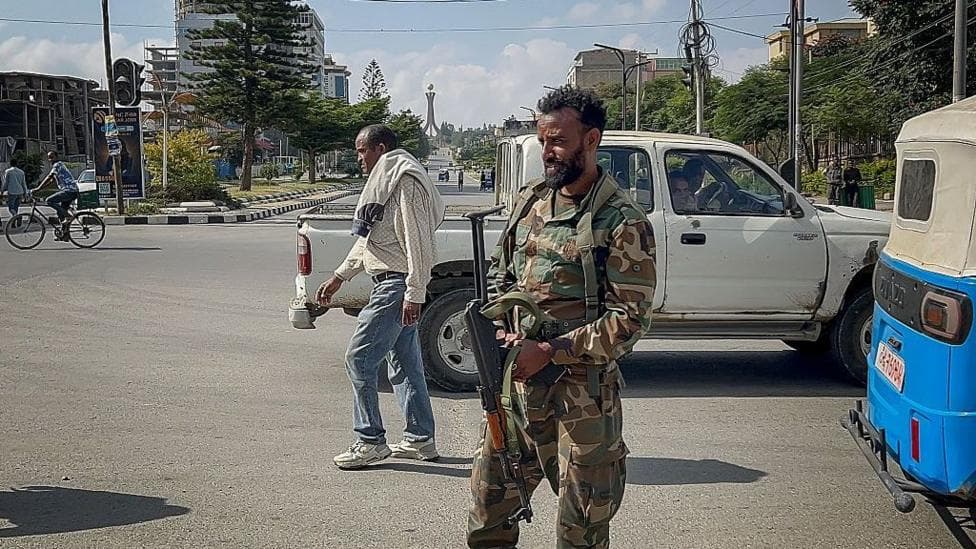
Rebel forces controlling Ethiopia's northern Tigray region announced they have temporarily withdrawn from Mekelle, the regional capital, as fighting between the Tigray People's Liberation Front (TPLF) and federal government forces intensifies around the city.
The TPLF, which has governed the region, stated that its decision to relocate was driven by concerns over civilian safety. According to the group's statement on social media late Saturday, it had
temporarily moved out of Mekelle to operate from somewhere else. Two residents in Mekelle confirmed to a national broadcaster that pro-government forces now control the city and that TPLF forces have departed. Mobile phone services have also resumed in parts of the city, one resident reported.
Federal forces recaptured Mekelle's main airport hours before the TPLF announced its withdrawal, marking a significant military advance. According to regional reporting, Ethiopian federal forces and allied fighters had entered Mekelle by Saturday, with humanitarian sources and residents confirming government control of the city.
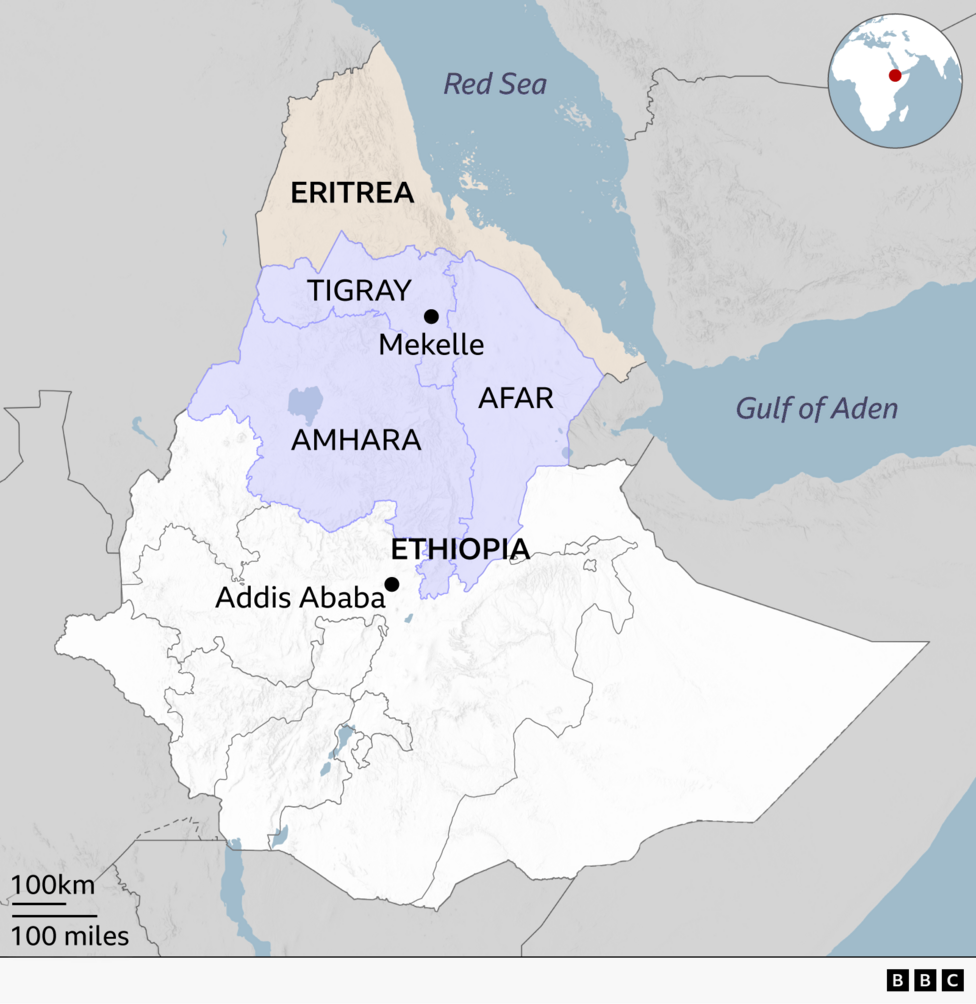
The conflict has escalated dramatically in recent weeks, with fighting erupting across Ethiopia's northern regions of Tigray, Afar and Amhara between the TPLF and federal government forces alongside allied militias. The renewed fighting began on September 23, when the TPLF attacked neighbouring states. This development represents a major shift in the conflict and has raised concerns among international observers that the fighting could further destabilise the Horn of Africa, potentially drawing in neighbouring countries.
Why did fighting restart after a peace agreement?
Tigray residents have been attempting to recover from a devastating two-year civil war that concluded in 2022 when the African Union brokered a peace deal, known as the Pretoria Agreement, between the two sides. However, over the last six months relations have deteriorated significantly, with both sides accusing each other of breaching the agreement's terms.
Last month, the TPLF formed an alliance with six other armed movements, including the Fano militia from Amhara, with the stated goal of removing Prime Minister Abiy Ahmed's government from power. The TPLF leader, Debretsion Gebremichael, implied in a video message on Thursday that the group would continue guerrilla-style attacks.
What was the scale of the previous conflict?
The earlier civil war was among the deadliest conflicts of this century. The African Union's mediator estimated approximately 600,000 people lost their lives as the fighting pushed the region towards famine conditions and widespread humanitarian catastrophe.
How have neighbouring countries responded?
The escalating conflict has triggered diplomatic tensions across the region. On Friday, Ethiopia and Eritrea severed diplomatic relations after Addis Ababa accused Asmara of supporting the new rebel alliance—an allegation Eritrea denied. Ethiopia has also accused Egypt of backing the rebels, leading to the expulsion of an Egyptian diplomat; Cairo responded by ordering an Ethiopian embassy official to leave within the same timeframe.
The United States Department of State called for
restraint and dialogueon all sides ahead of diplomatic discussions. Egypt was scheduled to host a summit in Alamein on Sunday, October 4, bringing together the leaders of Egypt, Eritrea and Somalia alongside Sudan's army chief to address regional issues stemming from the Ethiopia conflict.
What impact is the fighting having on humanitarian access?
The deteriorating security situation in northern Ethiopia is severely disrupting humanitarian operations. The United Nations has warned that access to vulnerable populations is being severely compromised and has called on all parties to guarantee safe and unhindered humanitarian access to people in need.
Commercial aviation has also been affected by the conflict. Ethiopian Airlines suspended commercial flights to Mekelle, Axum and Shire after Tigrayan fighters seized the airports on September 23, further isolating the region.
Key Facts
- The TPLF announced its temporary withdrawal from Mekelle as federal forces advanced into the regional capital
- The renewed conflict began on September 23 and marks a major escalation following the 2022 peace agreement
- The previous civil war killed an estimated 600,000 people and brought the region to the brink of famine
- Regional tensions have intensified, with Ethiopia severing diplomatic ties with Eritrea and expelling an Egyptian diplomat
- Humanitarian access and commercial aviation services have been severely disrupted by the fighting