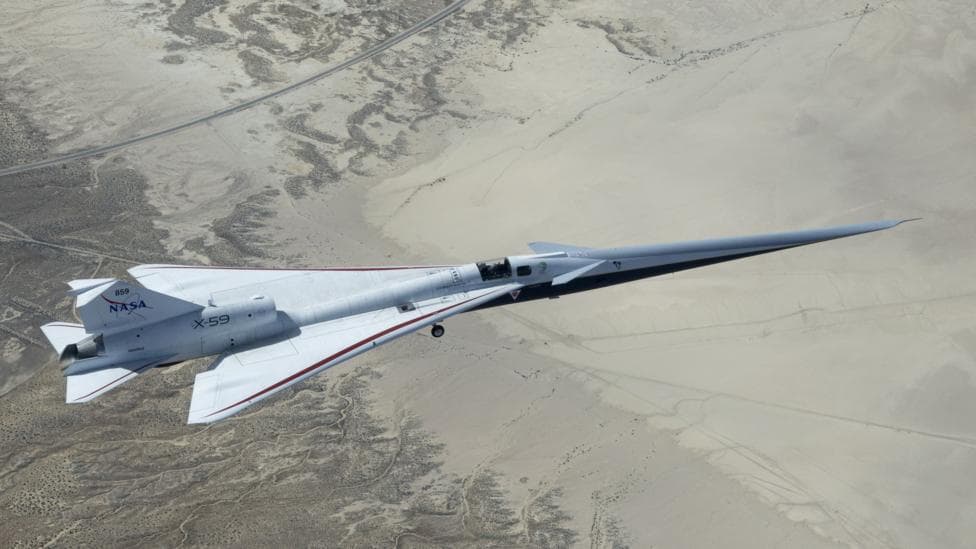
A peculiar jet with an anteater-like nose, salvaged components from multiple fighter aircraft, and a pilot who relies entirely on a camera to navigate is currently flying over the United States. The X-59 represents a bold experiment in reshaping the future of high-speed aviation, and it raises a fundamental question: in an age of increasingly capable drones, do crewed experimental aircraft still have a role to play?
The X-59's unconventional appearance stems from a specific engineering challenge that has constrained supersonic flight for decades. When jets exceed the speed of sound, they generate powerful shockwaves that create sonic booms—a phenomenon that forced the Concorde to operate only over oceans and prevented it from accessing profitable transatlantic routes. NASA is now attempting to solve this problem by using the X-59's elongated nose to compress and reshape supersonic booms into quieter, more tolerable acoustic signatures.
According to NASA, the X-59 completed its first supersonic flight on June 5, 2026, reaching Mach 1.077 during a test over the Mojave Desert. By September 4, 2026, the aircraft had completed 25 flights as part of NASA's Quesst mission, which aims to gather public response data from overflights to help regulators establish acceptable noise thresholds for future overland supersonic travel.
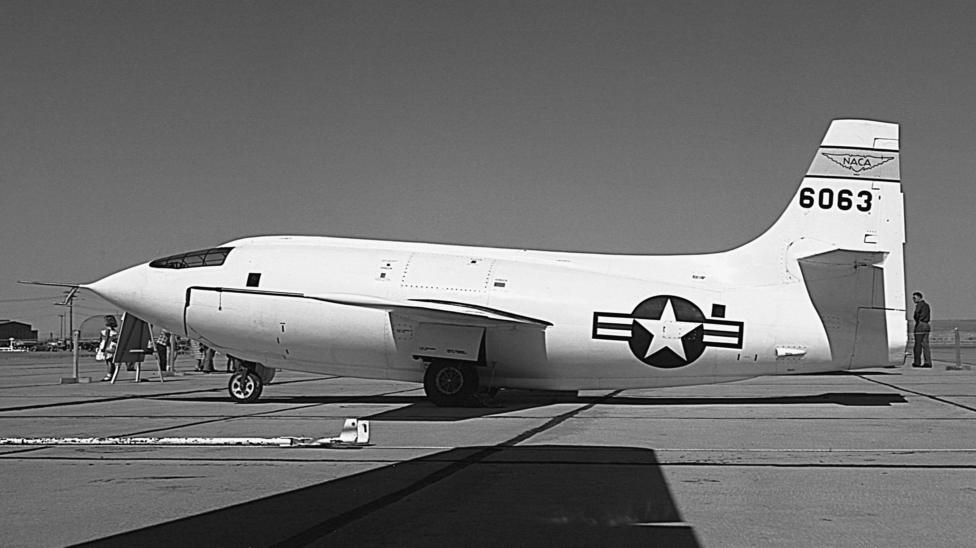
The X-59 belongs to a storied lineage of experimental aircraft stretching back nearly 80 years. The programme began in 1947 with the Bell X-1, the first aircraft to break the sound barrier, and has continued through generations of increasingly ambitious testbeds. Peter Coen, a 43-year NASA veteran managing the X-59 programme, describes the underlying philosophy:
Our approach is to pick small goals we aim to prove with flight data and we construct an airframe for that one task.This focused methodology keeps costs manageable by concentrating on a single objective rather than attempting multiple research goals simultaneously.
How did earlier X-planes shape aviation?
The Bell X-1, piloted through the sound barrier in 1947 by legendary test pilot Chuck Yeager, was deliberately shaped like a .50 calibre bullet with wings attached—a direct application of ballistic principles to aircraft design. Two decades later, the X-15 rocket plane, a cylindrical fuselage with minimal wings that was dropped from a B-52 bomber, achieved speeds of 6.7 times the speed of sound (4,520 mph) and reached the edge of space, generating crucial data on heat-resistant materials that would later prove essential for the Space Shuttle programme.
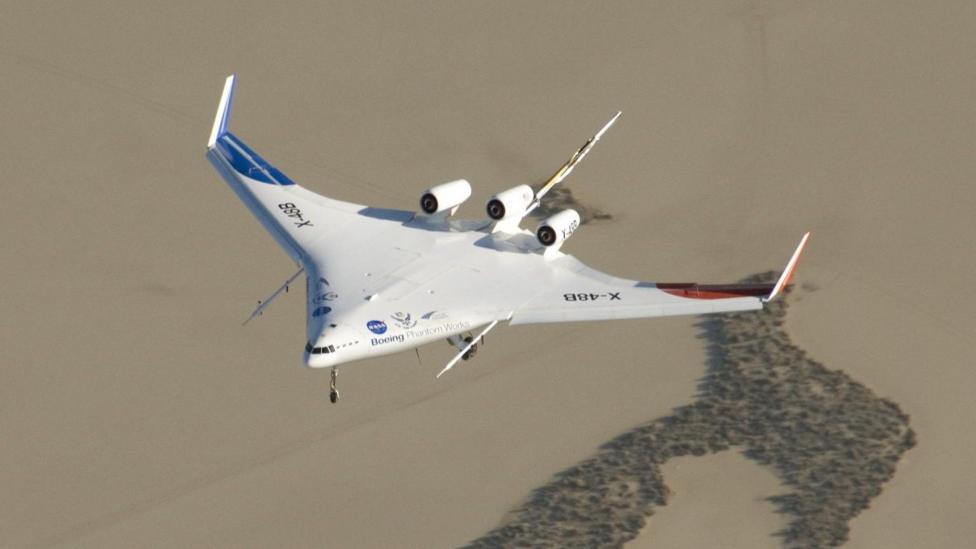
The X-48, which flew in 2007, represented a different approach to experimental aviation. This scaled-down model of a blended-wing airliner, with a 20-foot wingspan, tested integrated fuselage and wing designs while remaining within budget constraints. The smaller size allowed NASA to explore innovative aerodynamic concepts without the expense of a full-scale prototype.
Why does the X-59 need a human pilot?
NASA seriously considered building an uncrewed version of the X-59, but the decision to retain a pilot was driven by practical and regulatory considerations. Certifying an autonomous jet to operate at supersonic speeds over populated areas would have introduced substantial additional costs and complexity. Furthermore, the aircraft needed to be large enough to approximate the acoustic signature of a commercial airliner passing through the sound barrier, and this size requirement conveniently provided space for a cockpit and ejector seat.
The X-59's pilot faces an unusual operational environment. The cockpit, ejector seat, and landing gear were salvaged from a T-38 training jet and F-16 fighter respectively, while the engine came from an F-18. Because the elongated nose blocks forward visibility, the pilot depends on a camera system feeding a display screen, relying on instantaneous computer processing to maintain situational awareness during flight.
Test pilot Mike Lippert, according to NASA, completed an engine run in the X-59 on August 27, 2026, as part of ongoing cockpit preparation for the next flight phase. Peter Coen estimates that when the aircraft passes through Mach 1 at typical airline cruising altitude (around 660 mph), the modified sonic boom will sound
like a car door being closed across the street.

Are drones the future of experimental aviation?
The rapid development of unmanned aircraft, particularly their demonstrated effectiveness in Ukraine's conflict with Russia, has prompted questions about whether crewed experimental platforms remain necessary. Coen acknowledges this reality, stating that
It's likely that future X-planes will be uncrewed, unless the technology we're researching relates to piloting or if crewing it is more cost-effective.
However, the economics of drone testing are more complex than they initially appear. Operating personnel monitoring signals from an unmanned aircraft represent a hidden cost that can offset savings from eliminating the pilot. Guy Gratton, professor of Aircraft Test and Evaluation at Cranfield University, pushes back against the assumption that drones can replace all crewed research aircraft.
There's a belief in certain quarters that drones can do everything. In Ukraine they've done amazing things with drones, but if you want to carry people you can't take short-cuts.Gratton emphasises that human pilots identify lessons and insights that remote operators miss, and testing an unmanned aircraft can require four times as many ground personnel as testing a crewed equivalent.
What role do test pilots play in modern aviation?
The United Kingdom has maintained its own tradition of experimental aircraft development. The Experimental Aircraft Programme (EAP) flew from Lancashire beginning in 1986, testing core systems that would eventually appear in the Typhoon fighter. Chris Yeo, who piloted the EAP, reflects on the enduring value of crewed testbeds:
They all research some facet of flight, and demonstrate the design is working correctly. A lot of people say they can do something, but you only know it works when the design has been tested and certified.
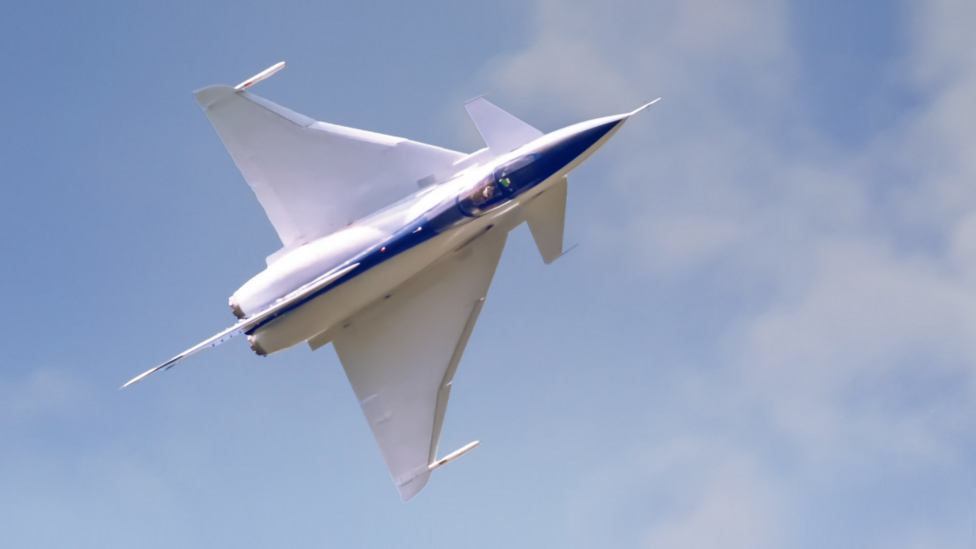
Four decades after Yeo's flights, the UK is developing a new technology demonstrator that Tony Godbold, who runs the project for BAE Systems, describes as
the X-plane of our generation.This initiative brings together 100 UK suppliers, including Rolls-Royce, to validate technologies intended for the Global Combat Air Programme (GCAP), a fighter aircraft scheduled to fly in the 2030s. The demonstrator will use engines from the existing Typhoon and is planned to fly in 2028.
The project has generated considerable enthusiasm among the UK's small cadre of qualified fast jet test pilots. Godbold notes that nearly all 14 qualified pilots in the country have already evaluated the aircraft on flight simulators.
You can model a lot on computers and simulators, but the experience of test pilots is when stuff gets real, we only really learn things when we get their feedback.For many in the aerospace sector, this human element remains as vital as it was during Chuck Yeager's era.
What is the broader significance of experimental aircraft?
Beyond their technical contributions, experimental aircraft carry political weight. Godbold emphasises that the UK's technology demonstrator underscores the nation's commitment to GCAP, a collaborative effort involving Italy and Japan.
This proves we are serious in this space.
According to NASA, the Quesst mission plans to use public response data gathered from X-59 community overflights to inform future regulatory frameworks governing overland supersonic flight. This represents a shift from the Concorde era, when sonic boom restrictions were imposed without systematic measurement of public tolerance. The X-59 programme aims to establish evidence-based noise thresholds that could eventually permit commercial supersonic operations over land.
What happens next for experimental aircraft programmes?
NASA's testing schedule continues to advance. Following the aircraft's achievement of target speed and altitude on June 12, 2026, the agency plans to proceed toward community overflights and further evaluation of quiet supersonic performance throughout 2026 and beyond. The X-59 will continue building momentum through additional flight testing, with ground tests and pilot preparation activities ongoing.
The future of experimental aviation likely involves a mix of crewed and uncrewed platforms, each suited to different research objectives. While autonomous aircraft are moving into commercial operation—with companies like Pyka operating self-flying crop sprayers in the US and Brazil, and others pursuing cargo and logistics applications—the complexity of supersonic flight testing and the irreplaceable insights provided by experienced test pilots suggest that crewed X-planes will retain their place in aerospace development for years to come.