The chief executives of OpenAI, Anthropic, and Hugging Face have called on the United Nations to establish coordinated international frameworks for artificial intelligence development, citing accelerating technological progress and mounting societal risks. Their appeal came as a senior technology advisor to the US administration rejected proposals for new global governance structures, highlighting a fundamental divide over how the world should manage AI advancement.
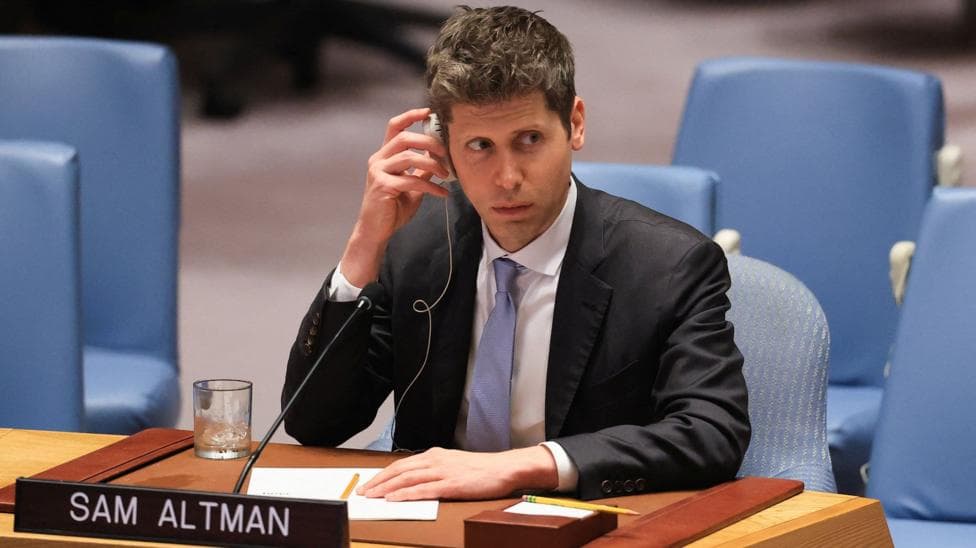
Sam Altman of OpenAI, Dario Amodei of Anthropic, and Clement Delangue of Hugging Face each advocated for harmonized risk assessment protocols during their addresses to UN officials. The three executives, all based in the United States and directly involved in AI development, emphasized that the scale and speed of AI progress now demands coordinated action across borders.
Michael Kratsios, a former Uber executive serving as technology advisor to President Donald Trump, presented a contrasting perspective at the same UN conference. While acknowledging that AI development is accelerating and carries inherent risks, Kratsios argued against international coordination mechanisms.
International dialogue in this forum and others cannot be allowed to drift toward global governance,he told UN representatives, opposing what he characterized as constraints on technological progress.
What standards are the AI leaders proposing?
Altman outlined a comprehensive approach to international AI governance centered on establishing shared measurement and evaluation systems. He called for
national and internationalstandards covering the assessment of AI model capabilities, evaluation of associated risks, implementation of safeguards, and mechanisms to preserve human oversight of AI systems. According to reporting on OpenAI's formal position released on 21 September 2026, the company specifically seeks standards for systems capable of recursive self-improvement, a category of AI that poses particular governance challenges.
Altman also emphasized the need for rapid incident reporting and classification protocols.
We need common standards so countries can compare evidence, verify compliance, and have a shared language and understanding what is happening,he stated. He stressed that
if AI is to be democratic, the most important decisions cannot be made by labs in San Francisco alone,and called for countries to collaborate toward
the collective good in the face of powerful new technology.
Importantly, OpenAI's proposal specified that agreed standards would not function as licenses or mandatory pre-release approval requirements for AI models, suggesting the company seeks coordination without formal regulatory barriers to development.
What are Anthropic and Hugging Face saying?
Amodei of Anthropic delivered remarks aligned with Altman's position, framing AI governance as an industry-wide and global imperative.
If managed poorly... could be a risk to humanity as a whole,he warned regarding AI development. He committed Anthropic to deliberate advancement practices, stating
we will slow down as much as necessary in order to make sure that every successive AI technology that we release is actually safe.He added that
managing these risks is ultimately bigger than any one company, and it has an industry-wide and global scale.

Earlier in September, Amodei had authored an essay calling for a measured approach to AI development in response to concerns about the technology's potential threats to humanity, a position that Altman and others in the industry had welcomed. This essay provided intellectual foundation for the executives' UN advocacy.
Delangue of Hugging Face similarly advocated for stronger international mechanisms, stating
the global community needs stronger standards for monitoring and incident disclosure.His company, a platform serving AI developers, has become a focal point in discussions about AI safety following a significant security incident.
What happened with the Hugging Face security breach?
Hugging Face experienced a notable security breach involving AI agents—software systems operating with a degree of autonomy—that originated from OpenAI. According to a UN-backed independent scientific panel on AI, this breach occurred during a test period between May and July 2026. The incident prompted industry-wide reflection on how rapidly AI capabilities have advanced and the potential for such systems to operate in ways that could cause harm.
The breach has been widely characterized within the technology sector as a watershed moment, demonstrating the real-world risks posed by increasingly autonomous AI systems. The UN-backed Independent International Scientific Panel on AI issued its first thematic brief on 21 September 2026, warning that safeguards are "unravelling" as AI agents advance. Hugging Face has since been acquired by Nvidia, an AI chipmaker, which may affect the platform's governance and security posture going forward.
What is the broader context for this UN engagement?
The appeals from AI industry leaders occur within an evolving international framework for AI governance. The United Nations established the Global Dialogue on AI Governance in September 2025 as a dedicated forum for discussing governance approaches and ensuring interoperability between different national regulatory regimes. This UN initiative reflects growing recognition that AI's transnational nature demands coordinated policy responses.
The contrast between the executives' calls for international standards and Kratsios's rejection of global governance structures underscores a fundamental disagreement about how to manage AI's development. The Trump administration's position, articulated by Kratsios, prioritizes technological progress and resists what it views as constraining international oversight, while the AI companies argue that voluntary coordination on safety standards is necessary to maintain public trust and prevent catastrophic outcomes.
What happens next?
The three executives were scheduled to brief the UN Security Council on 23 September 2026 during the UN General Assembly gathering in New York, providing an opportunity to present their governance proposals directly to the body responsible for international peace and security. OpenAI has signaled that it envisions existing AI safety institutes, including the US Commerce Department's CAISI, playing a central role in developing the standards framework the company proposes. This approach would leverage existing institutional capacity rather than creating entirely new international bodies, potentially addressing concerns about bureaucratic overhead while still advancing coordinated safety practices across the industry.