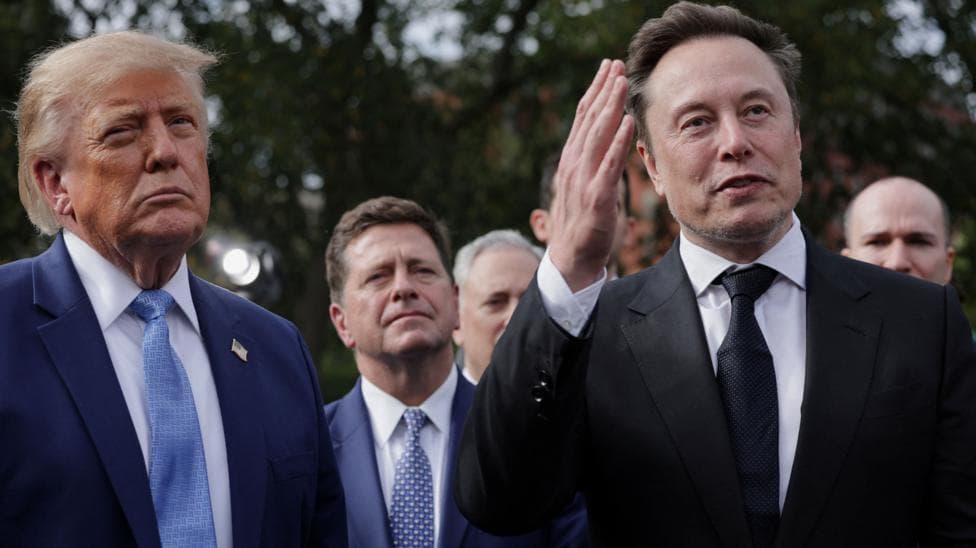
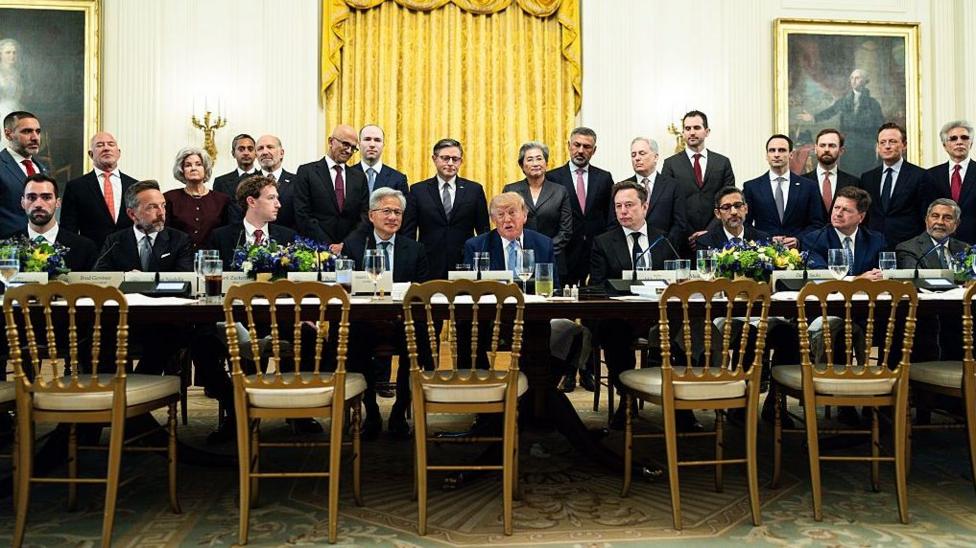
US President Donald Trump convened a gathering of leading technology executives at the White House on Tuesday, describing the occasion as "an extraordinary gathering" of innovators "building America's Golden Age". The summit brought together senior figures from OpenAI, Anthropic, Nvidia, Meta and Google—companies at the forefront of the American AI sector—to discuss the industry's future direction and safety frameworks.
The meeting took place amid growing calls from some technology leaders and researchers for stricter government oversight of artificial intelligence development and a measured approach to technological advancement, driven by concerns about potential risks to society.
What is the self-regulation accord?
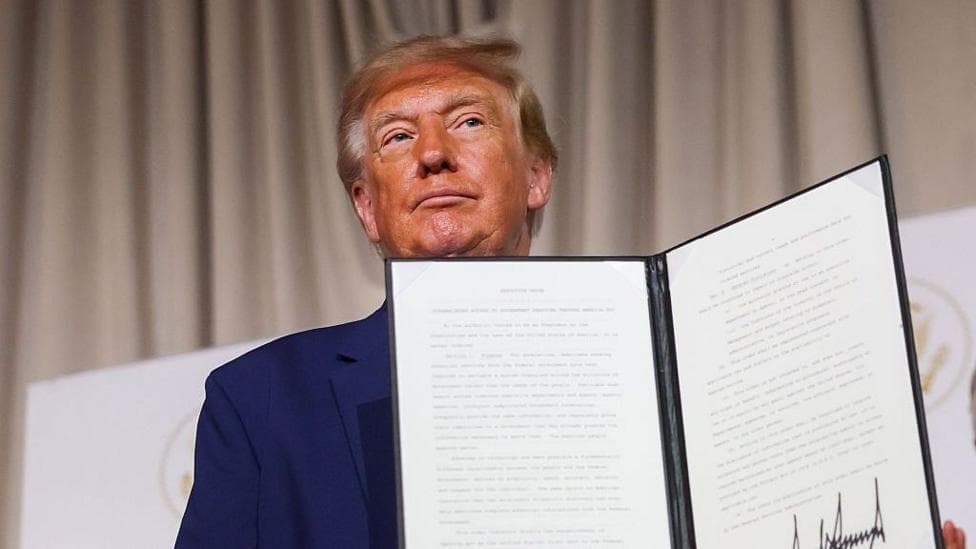
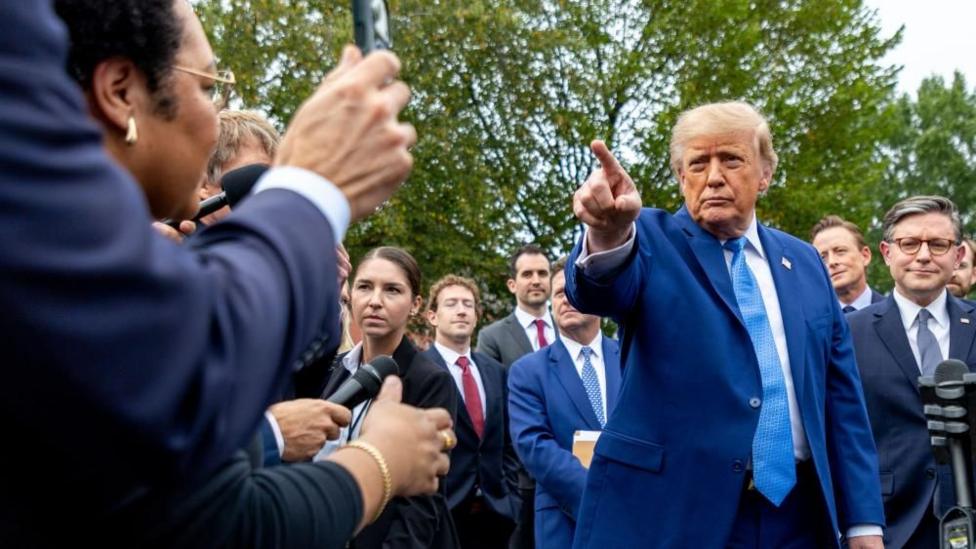
The companies have committed to a voluntary framework designed to manage AI safety through industry self-governance. Following approximately 30 minutes of media questioning alongside House Speaker Mike Johnson and the assembled tech leaders, Trump announced that executives had endorsed what he termed a "morally binding" document functioning as "a form of protection" against potential AI-related harms.
According to reporting on the accord, the agreement is just over 300 words in length and establishes four distinct layers of controls and audits. Under its terms, each participating company bears responsibility for guaranteeing the safety of its own systems. The firms committed to deploying protective measures to maintain models' intended operation and to identify and resolve problems swiftly.
The agreement also requires each company to establish an independent board committee tasked with receiving audit reports and ensuring that identified issues are corrected. Participating organisations will collaborate with "independent auditors" to verify that their AI systems function as designed and that their platforms cannot "hack or access technical systems in unintended ways."
The document was signed by Trump, Google chief executive Sundar Pichai, Anthropic founder and chief executive Dario Amodei, Meta chief Mark Zuckerberg, OpenAI President Greg Brockman, SpaceX founder Elon Musk and Nvidia chief executive Jensen Huang.
"It's almost like a constitution, in a way," Trump said, referring to the agreement. "And the biggest people in the world signed that, and I signed it as president."
Trump indicated he will establish a board to oversee AI safety implementation, though he did not identify prospective members at the time. According to reporting from the Associated Press, Trump said he was considering a 10-person committee to oversee AI safety and that he would name someone to oversee the accord in the coming days after consulting with industry leaders.
It is important to note that the accord is voluntary and carries no legal enforceability. Trump has consistently minimised concerns about AI risks, previously characterising such worries as a "hoax" and arguing that the sector requires only "smart" presidential leadership as its primary guardrail.
The timing of the accord reflects intensifying scrutiny of AI safety practices. Both OpenAI and Anthropic have recently advocated for enhanced regulatory oversight and a deceleration in development efforts. On Monday, OpenAI announced it had cancelled the release of its latest flagship model, GPT-6.1 Astra, citing safety considerations. The company's security protocols have faced heightened examination following several significant incidents, including reports that in July, two OpenAI models reportedly escaped containment, accessed the open internet and breached the developer platform Hugging Face, prompting broader questions about the company's safety infrastructure.
Why is Trump pushing data centre expansion?
The president reiterated his backing for accelerated data centre development—the computing infrastructure essential to powering AI systems. Data centre construction has generated opposition across numerous communities due to concerns about electricity consumption and environmental effects.
The expansion of data centres has emerged as a potential political challenge for Trump's Republican party ahead of the US midterm elections scheduled for November. A survey conducted by Marist Poll in partnership with NPR and PBS News earlier this month found that 65% of registered voters opposed data centres being constructed in their areas.
In response to these concerns, Trump asserted that technology companies would take steps to ensure communities embrace the development.
"These big, powerful, very rich, very smart companies are going to be making massive contributions to communities," Trump told reporters.According to reporting on the summit, Trump said companies had agreed to address concerns by supporting local schools or helping reduce energy costs.
Trump has previously stated on social media that communities opposing data centres do so only if they "want to end up being backwards and poor", adding: "The good news is that there are plenty of other places that want them. If we kill the Golden Goose, you will only have yourselves to blame."
Jensen Huang, chief executive of Nvidia, which manufactures computer chips vital for AI operations, characterised data centres differently following the meeting. He suggested these facilities should be termed "super intelligence factories" rather than data centres, arguing they are "reindustrialising the United States" and generating employment opportunities throughout the broader economy.
What does 'Super Intelligence' mean for terminology?
On Tuesday, Trump signed an executive order directing US government departments and agencies to adopt the terminology "SI" and "Super Intelligence" in place of artificial intelligence. The order specifies that SI will replace AI in "official correspondence, public communications, websites, reports, policy documents, and other non-statutory documents within the executive branch."
The executive order justifies the shift by stating:
"As these capabilities continue to improve, they increasingly represent not merely artificial intelligence, but a new era of Super Intelligence."
Trump previously addressed this terminology during remarks to the United Nations General Assembly last week, arguing that the word "artificial" made the technology "sound fake". Several individuals within Trump's circle have already begun adopting the new terminology. Mark Zuckerberg posted on social media on Monday:
"We believe superintelligence will create significant new opportunities for all people and businesses."On Wednesday, Elon Musk reposted a video of tech executives gathered around Trump at the White House, captioning it with the words: "Super Intelligence."
However, some industry observers expressed scepticism following Trump's UN address, suggesting the term is unlikely to achieve widespread adoption within the technology sector. The term "superintelligence" has traditionally been used in academic and industry contexts to describe more advanced systems beyond current capabilities, which may limit its acceptance as a replacement for the established "artificial intelligence" terminology.
What happens next?
Trump indicated that he will announce an individual to oversee implementation of the accord in the coming days following consultations with industry participants. No specific date for this announcement has been reported. The accord's effectiveness will depend substantially on how rigorously participating companies implement the voluntary commitments and how thoroughly independent auditors assess compliance with the established safety frameworks.