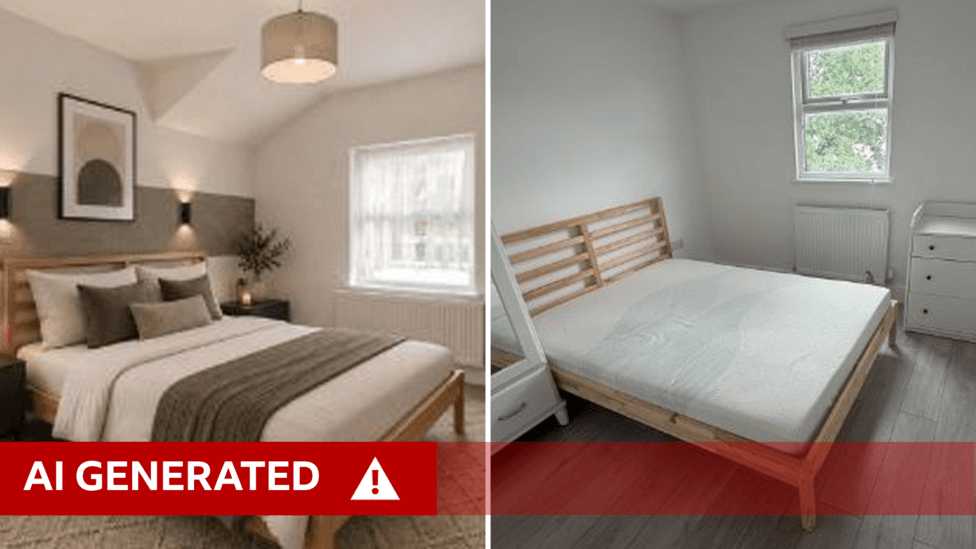
Property hunters increasingly encounter images of homes that look dramatically different in person from what appeared online, a phenomenon now dubbed "housefishing" as estate agents deploy artificial intelligence to enhance listings. According to BBC News, the technology is being used to repaint walls, add imaginary lawns, and alter room dimensions, raising questions about where legitimate enhancement ends and consumer deception begins. Experts and regulators warn that while some AI adjustments help buyers visualise potential, others breach consumer protection law by misrepresenting fundamental property features.
The trend reflects how accessible AI image-editing tools have become for estate agents. Where traditional methods like wide-angle photography or Photoshop required specialist skills, AI can now accomplish dramatic transformations with minimal effort, making the practice far more widespread than older enhancement techniques.
How common is AI enhancement in property listings?
Quantifying the scale of the practice remains difficult, though the Guild of Property Professionals acknowledges it is occurring and has issued guidance on responsible use. A recent survey of 906 UK homebuyers found that one in five who had purchased a home in the past year reported viewing a property where listing photographs had been digitally enhanced to make the home appear better than reality.
Jack Bushrod, who reviews quirky property listings on his social media channel Housing Horrors, has observed a marked increase. "I've seen a surge of AI-enhanced images over the last six months," he says. "Most of the enhanced images I've seen weren't clearly labelled as AI-generated." His analysis reveals that alterations range from minor cosmetic changes to structural misrepresentations: removing pillars, adding windows, eliminating stains and cracks, or completely emptying rooms of furniture and personal items.
What happened when buyers discovered the alterations?
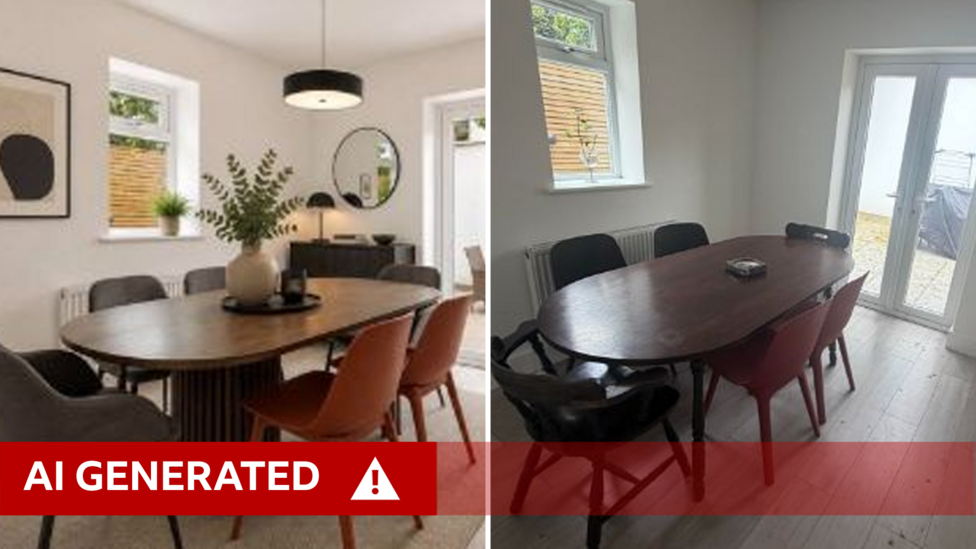
Olivia Nicole, 29, experienced the disconnect firsthand when viewing a five-bedroom property in south-west London that she had found on Rightmove earlier this year. "The rooms were much smaller than they were in the pictures and the decor was totally different," she told BBC News. "Some structural features were also different." She noted that a raised section of wall behind the sofa was absent from the images, and the windows appeared noticeably smaller in reality. The listing, which also appeared on Zoopla and Winkworth, had used AI enhancement without clear disclosure. Olivia took her own photographs for comparison and expressed frustration at having taken several hours off work for a viewing that felt misleading.
More recent complaints have emerged following a BBC follow-up published on 7 November. Brighton renter Jessica Otterwell reported that a listing displayed an attractively furnished interior, but the property she viewed contained minimal furniture and a stained mattress. Another Brighton renter, Leyla Ledwith, found that only two of the 12 properties she viewed matched the furnishings shown on Rightmove, according to BBC reporting.
Rightmove responded by stating that AI imagery is permitted when clearly identified and that the platform can require corrections or remove listings it deems misleading. All three companies involved in Olivia's case subsequently removed the enhanced images.
Where do estate agents draw the line?
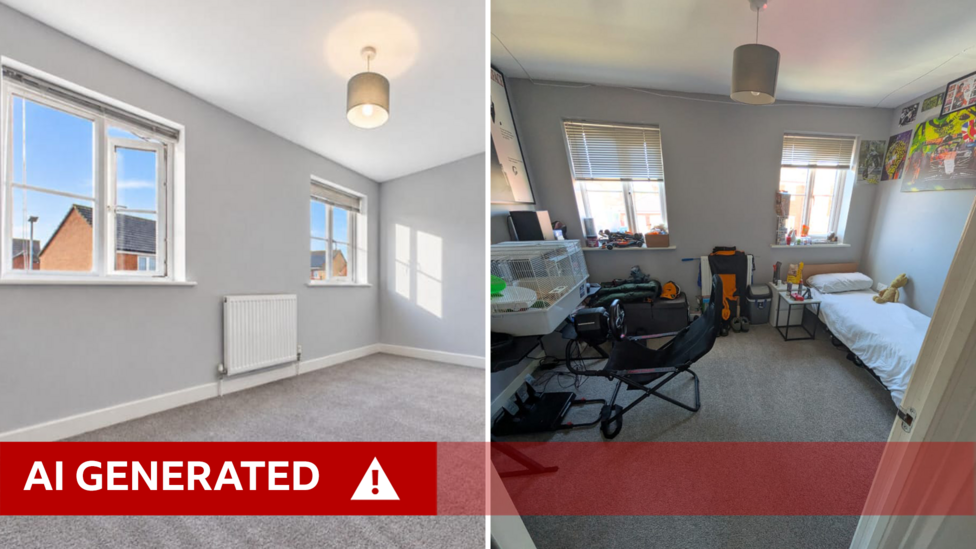
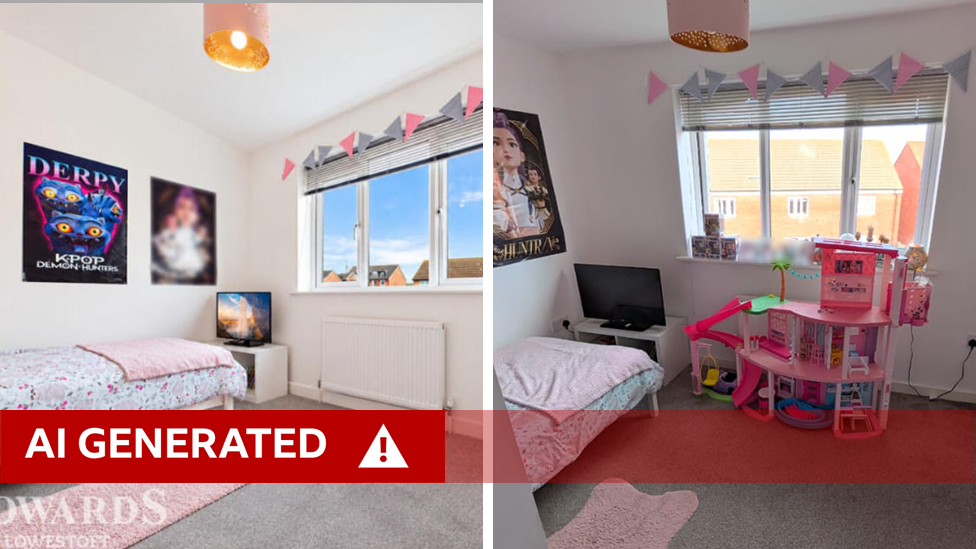
Cara, 38, who is selling her home in Lowestoft, Suffolk, discovered that her estate agent, Howards, had used AI enhancement on her property listing without her prior knowledge. In one photograph, her son's room was completely emptied of toys and clutter. In another image of her daughter's room, the agent removed a doll's house, brightened the space, and altered the shape of a rug using AI—though that image was subsequently taken down. Despite these alterations, Cara has received several viewings and only one visitor commented on the differences. She expressed conditional acceptance of the practice: "If they'd changed something structurally or it was really wild and didn't look like our home at all then I would put my foot down."
Howards acknowledged its use of AI and introduced a policy labelling all AI-enhanced photos. A company spokeswoman told BBC News that the firm never uses AI "to misrepresent the fundamental features of a property. It's about helping people imagine the possibilities, not changing the reality of what's being sold."
What do regulators say about AI-enhanced property photos?
Trading Standards confirmed to BBC News that estate agents may use AI for basic enhancements—decluttering, virtual furnishing of empty rooms or gardens—provided they clearly indicate the technology has been used. However, structurally altering a room by adding a window, or concealing features, can mislead consumers and potentially breach consumer protection law.
The Advertising Standards Authority's existing rules apply to AI-edited images, and its guidance states that merely disclosing AI use does not make an otherwise misleading advertisement acceptable. The Digital Markets, Competition and Consumers Act 2024, which took effect in April 2025, strengthened consumer protections; according to property-industry commentary, CMA guidance clarifies that misleading property information can influence a consumer's decision to arrange a viewing.
What solutions are being proposed?
Jack Bushrod advocates for mandatory clear labelling of all AI-enhanced photos and prominent disclosure of the technology in a property listing's key features section. Industry commentary published on 12 November recommended keeping original photographs alongside edited versions and ensuring that edits do not alter structural features or apparent room dimensions, effectively creating a "viewing test" for digital enhancements.
The cost differential between physical and virtual staging may partly explain the appeal of AI enhancement. Sussex agent David Vaughan noted that physical staging can cost between £5,000 and £50,000, whereas virtual staging offers a far cheaper alternative. However, Bushrod warns that as more agents adopt AI, others will follow the trend. "My worry is the more estate agents use AI, others will see the trend and jump on the bandwagon," he says, suggesting that without stronger regulation or industry standards, housefishing may become increasingly prevalent.