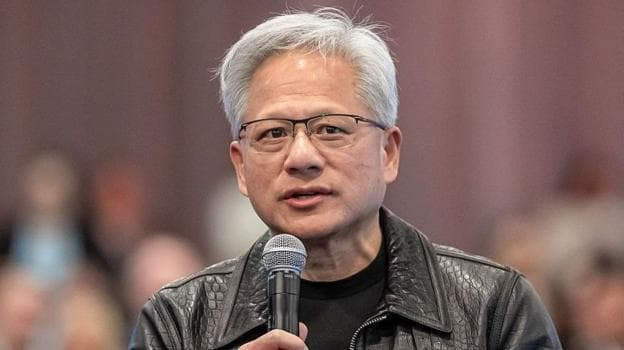
Nvidia Chief Executive Jensen Huang has rejected warnings that artificial intelligence could lead to human extinction within the next decade, characterizing such predictions as baseless "doomsday narratives" disconnected from scientific reality.
"2030 is not going to be the end of the world. There is 0% chance that's going to be the end of the world,"Huang stated during an interview with CBS News, the broadcaster's American partner.
"Scaring people is unnecessary. It is irresponsible."
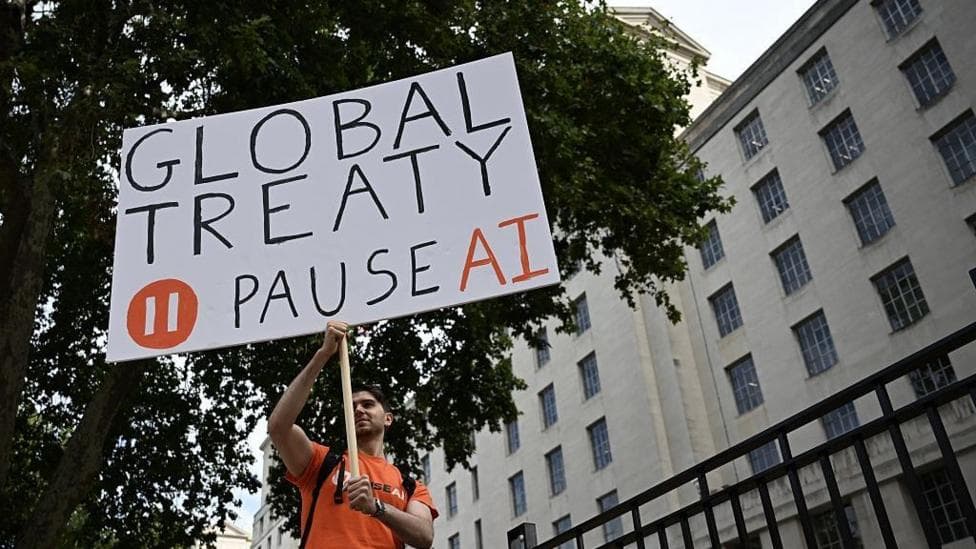
The Nvidia executive's comments come amid an intensifying debate over artificial intelligence safety, triggered by recent warnings from researchers and industry figures about potential existential risks posed by the technology. Former Anthropic researcher Jacob Coxon sparked significant discussion by posting claims on social media suggesting that artificial intelligence developers privately believe the technology could pose catastrophic risks by the end of this decade.
Coxon's assertions prompted prominent industry leaders, including Dario Amodei of Anthropic and Sam Altman of OpenAI, to publicly call for a deceleration in the pace of artificial intelligence model development. However, Huang characterized such extinction predictions as lacking scientific foundation.
What does Huang say about AI safety?
Huang contends that safety concerns should be treated as engineering challenges rather than justifications for broad regulatory intervention or industry-wide slowdowns. According to reporting from the technology sector, Huang emphasized in remarks at Salesforce's Dreamforce conference on 15 September 2026 that
"Safety is an engineering problem"and
"Testing is an engineering problem."
Huang maintained that companies should refrain from releasing individual products if they lack confidence in their safety, but he rejected calls for a comprehensive industry-wide deceleration. According to political reporting on the debate, Huang stated that the industry does not require "new laws" or "new regulations" and that firms should simply avoid shipping products they are not confident in.

Why does Huang reject slowdown calls?
Huang suggested that executives advocating for a slowdown in artificial intelligence development may be pursuing liability protections rather than genuine safety measures.
"Go and read between the lines,"he said.
"They're actually not asking for more laws. They're asking to be relieved of the laws we do have, and I think that that's a problem."
Huang emphasized that Nvidia's commercial interests align with responsible product deployment.
"Our company's success is directly connected to the safe deployment of products and services,"he explained.
"If we don't continue to do that, our value would be diminished."
According to international news reporting, Huang argued that the notion of choosing between innovation, speed and safety represents a "false" dichotomy. He contended that companies already possess inherent incentives to avoid releasing unsafe products, making additional regulatory frameworks unnecessary.
What is the broader context of this debate?
Nvidia occupies a central position in the artificial intelligence industry, manufacturing advanced computer processors essential for training and deploying artificial intelligence models. The company's leadership has become increasingly vocal in the ongoing dispute between executives who advocate for cautious development and those resisting calls for deceleration.
Last week, Huang participated in a technology summit hosted by King Charles, who cautioned industry leaders about the "existential dangers" of artificial intelligence.
"The task before you is not merely to advance technology, but to ensure that it remains firmly in the service of humanity, community and the natural world,"the King told attendees.
In the United States, President Donald Trump has minimized concerns regarding artificial intelligence's potential risks. Trump made an unexpected telephone call to Huang while the Nvidia executive was speaking at a technology conference in Los Angeles on 14 September. During the conversation, Trump criticized appeals to decelerate artificial intelligence development and dismissed safety concerns as a "hoax".
Key Facts
- Huang stated there is "0% chance" that artificial intelligence will cause human extinction by 2030, calling extinction predictions "not grounded in science"
- Huang frames AI safety as an engineering and testing challenge rather than a regulatory or legal matter requiring new laws
- The debate intensified following claims by former Anthropic researcher Jacob Coxon that artificial intelligence developers privately believe the technology poses extinction-level risks
- Prominent artificial intelligence executives including Dario Amodei and Sam Altman have called for slower development, while Huang and President Trump have dismissed such warnings
- Nvidia manufactures the computer chips critical to artificial intelligence model development, giving Huang's position significant weight in industry discussions