Europe's battery sector faces a critical juncture. After high-profile collapses at Sweden's Northvolt and Norway's Morrow, the continent risks falling further behind China in a market set to expand dramatically as transport and industry shift away from fossil fuels. Yet a growing number of investors and researchers believe the answer may lie not in building massive factories, but in mastering technology at the smallest possible scale.
The setbacks have been severe. Morrow Batteries filed for bankruptcy in May 2026, and by late August 2026 its bankruptcy estate had signed a memorandum of understanding with Lyten and Innovation Norway for a proposed going-concern sale. According to Benchmark, Europe's battery-cell pipeline fell 29% from 1,180 GWh in January 2025 to 841 GWh in May 2026, reflecting delays, cancellations and the collapse of Northvolt. These failures have dealt a further blow to investor confidence in European battery makers.
Yet within this landscape of struggle, a different strategy is emerging. Rather than attempting to compete directly with Chinese manufacturers in full-scale battery production, European companies are focusing on critical components and advanced manufacturing techniques at the nanometre scale—one-billionth of a metre.
How can nanotechnology strengthen Europe's battery position?
The answer lies in specialised components and processes that require semiconductor-level precision. Dutch tech firm LeydenJar exemplifies this approach. The company uses a technique called plasma deposition to manufacture ultra-thin pure silicon foils for battery anodes—a critical component in all batteries.
Silicon is highly effective and inexpensive for anodes, but pure silicon expands and contracts during battery operation and recharging, causing it to crack and fail. LeydenJar's plasma deposition process builds up the silicon layer by layer to create a material that resists cracking.
Where normally a pure silicon anode would fall apart, this remains stable, so it was a very wonderful invention,says Christian Rood, chief executive of LeydenJar. The company claims its technology can increase battery life, charging speed and energy density by up to 50%, while reducing production CO₂ emissions by 85%.
We address the bottleneck in the battery,Rood explains.
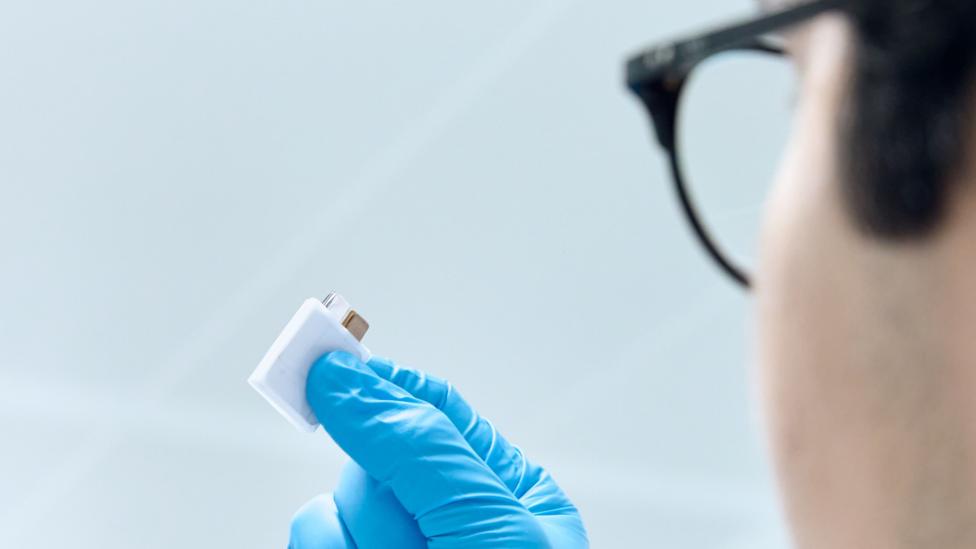
LeydenJar's first factory, PlantOne in Eindhoven, is planned to have an annual capacity of 70 MWh of pure silicon anode foil, enough for approximately four million smartphone batteries. The company was named to Fast Company's 2026 World's Most Innovative Companies list, ranked No. 5 in the EMEA category. Commercial-scale production was scheduled to begin at the end of 2026, though the project has taken a decade to reach this stage—a testament to the time and investment required for deep technology innovations.
The location of PlantOne in Eindhoven is no accident. The city is home to ASML and other major players in the semiconductor industry, creating an ecosystem of expertise and suppliers that gives European companies a competitive edge.
A lot of people talk theoretically about ecosystems; I can tell you this is one of our sources of competitive advantage,Rood says.
It's really the crossover from semiconductors to batteries that makes us different - once you've demonstrated the principle in the lab, industrialization requires you to work with the semiconductor technology and suppliers. That means a lot of risk, but also a lot of opportunity in terms of patenting, in terms of securing your whole intellectual property. And that's much more difficult to do in the US or in China.
In December 2022, the European Investment Bank announced €30 million in quasi-equity financing for LeydenJar's first factory, part of a €60 million plan for PlantOne. More recently, a 2025 funding round for LeydenJar totaled €23 million, including €13 million from Invest-NL and Extantia and €10 million from a major American electronics manufacturer.
What other nanotechnology approaches are emerging?
Across the Netherlands and Europe more broadly, multiple smaller deep technology start-ups are developing nanotechnology solutions for batteries. Powall, a start-up in the Dutch city of Delft, is developing commercial-scale equipment for nanocoating the powders that form the raw materials of today's batteries.
The scale is extraordinarily small. Individual powder granules measure in micrometres, while the coatings applied to them measure in nanometres. The technique, known as atomic layer deposition, was originally developed in the semiconductor industry.

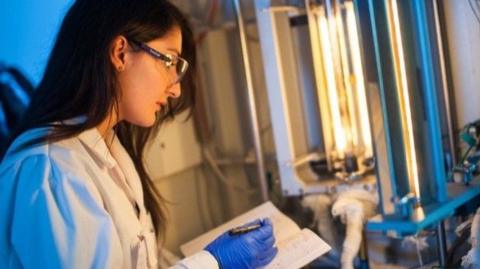
Roderik Colen, chief executive of Powall, explains that the system offers multiple opportunities to improve battery performance.
Your battery works less well than before after using it thousands of times - that degrading or aging can be slowed down when you're using a nanocoating,he says.
You can have an exciting new material with a higher capacity or fast charging, all these novel developments. They typically have one element which is very good, but they suffer on the durability side. That's where we then come in, to give them the protective coating to effectively enable these new materials.
The powders and coating are carried by gas and brought together in a chemical reaction. It is a precise but flexible process that can be adapted almost endlessly.
You have great accuracy in how thick you want to have it. And that makes a difference in performance,Colen explains.
Can these niche technologies help Europe compete globally?
Neither LeydenJar nor Powall are attempting to build entire batteries. Both companies have commercial relationships with customers in Asia, positioning themselves as suppliers of critical components rather than full-scale manufacturers.
Rood believes companies like LeydenJar can fortify Europe's position in the global battery contest by controlling essential parts of the supply chain.
The easy comparison is with semiconductors, where there's really a race for the best chip technology. ASML is not producing chips; it focuses on a critical step in the production of chips, and in that way, has a seat at the table when it comes to the whole semiconductor battle. This is our ambition as well – to have a position where our battery anode is so unique that we have an important position in the supply chain.
Alexander Brown, a senior analyst at the Berlin-based Mercator Institute for China Studies, acknowledges the potential.
I think having one part of the supply chain based in Europe is great and if that can be a very advanced technological part, which offers the opportunity for high margins, that's fantastic,Brown says. However, he cautions that China will continue to work aggressively to reduce its dependence on other regions.
China is working very hard to develop local alternatives for technologies, including these niche technologies. It's no secret that China would love to replace ASML - they're working very hard to do that, and it's not unforeseeable that they will achieve that goal eventually.
Brown argues that Europe's traditional strengths in developing high-quality, specialised products can find markets worldwide, but this cannot be the continent's only strategy.
I also think it's important for that not to be the only strategy from the continent's policy makers.
What obstacles remain for European battery innovators?
Beyond technological challenges, companies operating in this specialised field face significant financial hurdles. Rood notes that raising capital within Europe presents difficulties that do not exist in Asia or the United States.
There is sufficient financing in Europe, but the risk attitude is quite different than in Asia and in the US,he says.
That means for a company like us that you have to work with different sources of funding at the same time.
LeydenJar has assembled funding from government grants, debt financing, support from the European Investment Bank and equity investors.
They set a lot of challenging conditions, and they all want to do their own due diligence. It's hard work,Rood explains.
Powall's Colen characterises Europe, and the Netherlands in particular, as an
innovation powerhouse,and sees battery technology as an opportunity for the continent to make an impact—if the appetite for risk exists.
It's a relatively young industry where factories are being built left, right and centre. They're searching for the right tech. So that's where you can play a big role, because the volumes are huge.
What comes next for European battery innovation?
LeydenJar's PlantOne factory in Eindhoven is scheduled to become operational in 2027, marking a significant milestone for European battery component manufacturing. The company's progress will be closely watched as evidence of whether Europe can establish itself in high-value segments of the battery supply chain.
Meanwhile, the situation at Morrow Batteries continues to evolve. Lyten was selected as preferred bidder for Morrow Batteries' business on 31 August 2026, moving the company toward a possible asset sale. However, the transaction still depends on final documents and conditions outside the estates' control.
Europe's path forward in batteries may not involve competing with China in massive gigafactory construction. Instead, as Colen suggests, the continent's strength may lie in a different approach:
small changes make big differences.By mastering nanotechnology and securing critical positions in the battery supply chain, European companies hope to carve out a sustainable role in an industry that will only grow as the world electrifies.