Madeline, 16, from Bridgend in Wales, juggles caring for her mother and grandfather while attending school and harbouring ambitions to become a paediatric doctor. According to BBC News, she describes feeling burnt out and isolated by peers who do not grasp the demands of her situation. Her experience reflects a broader challenge facing young carers across the UK, where support systems remain inconsistent and the emotional toll often goes unrecognised.
Madeline is among approximately 170,000 young carers aged five to 17 in the UK, though the Carers Trust suggests this figure represents only the beginning of the actual scale. In Wales alone, around 8,200 young people hold caring responsibilities, while the 2021 census identified roughly 120,000 in England and 42,000 in Scotland. The gap between official figures and reality underscores how many young carers remain invisible in national statistics.
What does a young carer's daily life involve?
For Madeline, caring responsibilities permeate every aspect of her routine.
For me, being a young carer involves helping my mum get up in the mornings, making sure my mum and my granddad have had their medication. It also involves cooking meals for my mum, my granddad or my siblings. There's also the cleaning which I'll do, any household job really no matter what it is.These tasks, while essential to her family's wellbeing, leave little room for the social experiences typical of adolescence.
How does caring affect friendships and mental health?
The psychological impact of her role extends beyond physical exhaustion. Madeline explained that peers without caring responsibilities struggle to comprehend her constraints.
I find that my friends that aren't young carers don't tend to understand and that I can't always go out when they want or stay out to a certain time so I get kind of pushed aside and forgotten by my own friends. Then there's the mental like side effects and stuff because obviously I'm caring about everyone else and I don't often tend to have time for myself.This social exclusion compounds the mental health challenges inherent in her situation. Research from Carers UK found that 48% of young carers reported being bullied in 2022/23, while 44% frequently struggled to study for tests or exams. Additionally, a 2026 GP Patient Survey revealed that 59% of young carers aged 16–24 in England had mental or physical health conditions, compared with 44% of non-carers.
The educational consequences are equally stark. Data from England's 2024/25 school statistics recorded 64,359 pupils as young carers, with a suspension rate of 26.61% compared with 10.75% for pupils not declared as young carers. Research published in June 2026 found young carers were more than twice as likely as peers to be persistently out of education or work; they were also less likely to complete further education or attend university.
What support makes a difference?
Madeline credits the Bridgend Carers' Centre, partly funded by Children In Need, with transforming her experience. When referred to the centre at age eight, she gained access to respite care and peer support that she describes as essential to her wellbeing.
The young carers' group is so important to me because all my close friends that actually know what I go through, I get to see in these groups. They take us out places which I don't actually tend to do with my mum and my granddad because they're both so heavily disabled, so it's more for me to get out and express myself to be able to spend some time away from what I do.Without such formal support and backing from her school, Madeline said she
couldn't cope.
Alissa Bevan, who manages the group Madeline attends, observed the transformation in her confidence and social connections.
Min's confidence has grown massively. She was very shy and timid, not that you would believe that now, and she's made so many really good friends from this group as well. It's just a chance for them to be children and not have to worry about all the other responsibilities that they've got a home and come and just have an hour for themselves. They're selfless and they give so much.
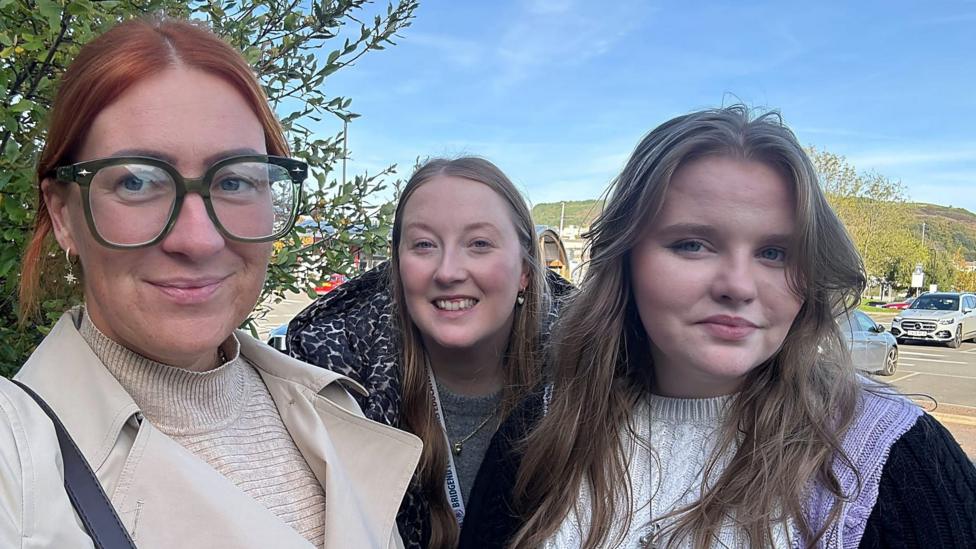
Madeline's mother, Rebecca, witnessed the profound impact of this support on her daughter's development.
It has opened her whole life up. She's learnt lots of new things, mainly it's confidence and friendships, it's definitely made her a more rounded person, other people her age didn't quite fit with her because they didn't understand, but with the young carers groups, they all understand.Rebecca emphasised that her daughter views caring not as a burden imposed upon her, but as an expression of love for her family.
I know that she doesn't ever see it as an extra responsibility, it's just what she does for her family, for us, because she loves me, she loves us, and she likes to be a caring person.
How widespread is the support gap?
Despite the critical importance of services like Bridgend Carers' Centre, access to support remains patchy. Research from Carers UK found that 23% of young carers said their school, college or university offered no support whatsoever. This absence of institutional recognition leaves many young carers navigating their responsibilities without professional guidance or acknowledgement. A 2018 BBC and University of Nottingham study estimated that 22% of children—about one in five—were young carers, far above the number identified in the 2021 census, suggesting that many remain unidentified and therefore unreached by support services.
What recognition and opportunities lie ahead?
Madeline's selection for the annual Children in Need choir represents a rare moment of public recognition.
It's shocking [to be] one of a handful of kids to be chosen, it's like, I'm one of the only people that are gonna be able to say I've sung with Children in Need and I'm so excited to be a part of it. It's going to be such a memorable experience, I just can't wait.The choir brings together young people supported by Children in Need projects from across the UK to perform during the charity's annual appeal.
At the policy level, the Welsh government acknowledged the need for systemic change. A spokesperson stated:
Young carers make a huge contribution to their families and communities. But caring should not affect their education or social opportunities. Our National Strategy for Unpaid Carers, published later this month, has a particular focus on young carers. We have worked with young carers, councils and support services to identify the action required so that young carers are recognised and they and their families get the help they need.
Key Facts
- Approximately 170,000 young carers aged five to 17 live in the UK, with 8,200 in Wales, 120,000 in England, and 42,000 in Scotland according to the 2021 census.
- Young carers face significantly higher suspension rates from school (26.61%) compared to non-carers (10.75%), and are more than twice as likely to be persistently out of education or work.
- Nearly half of young carers (48%) report being bullied, 44% frequently struggle to study, and 59% of those aged 16–24 have mental or physical health conditions.
- One in five children may be young carers according to a 2018 BBC and University of Nottingham study, far exceeding official census figures.
- Access to peer support and respite care through organisations like Bridgend Carers' Centre significantly improves young carers' confidence, social connections, and overall wellbeing.