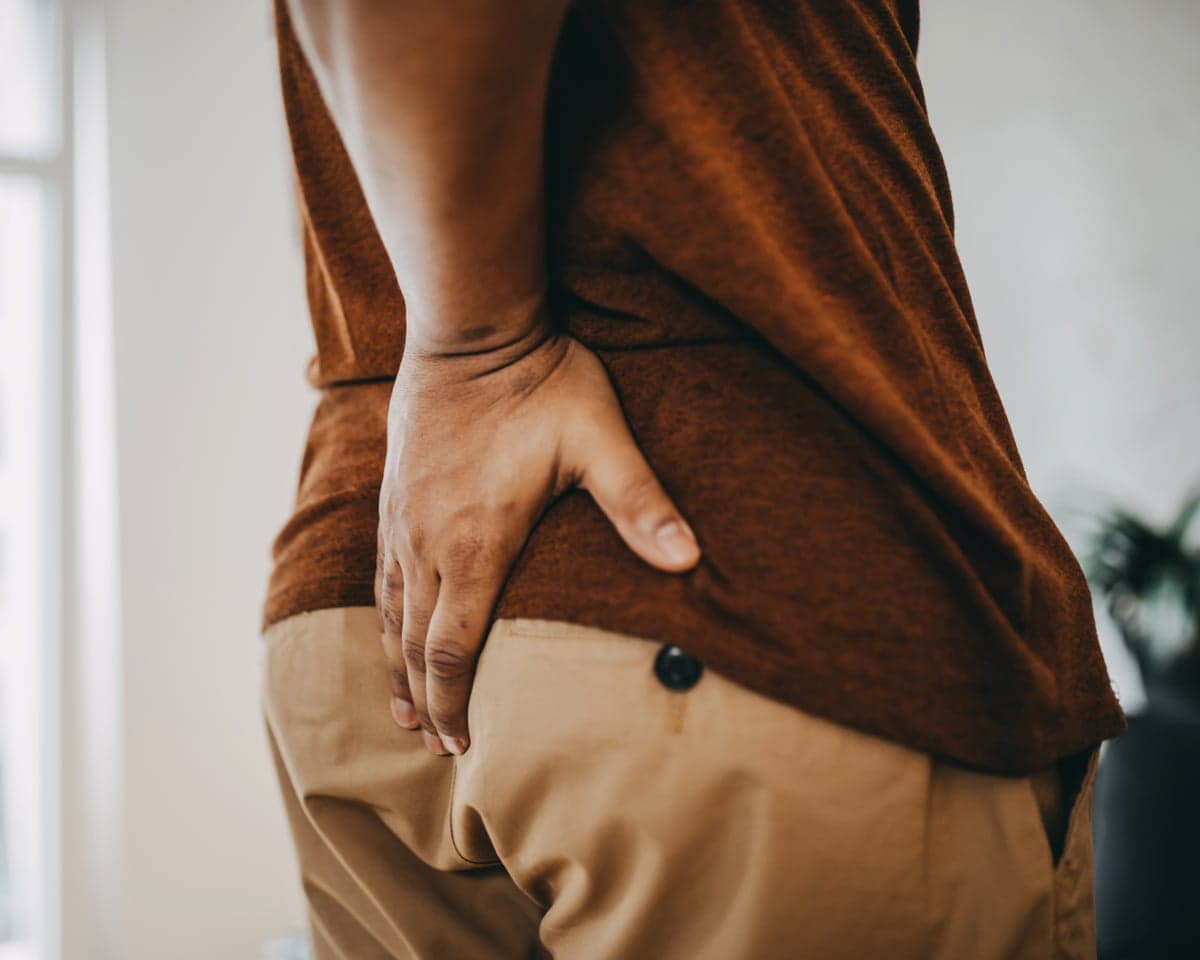
A cycling accident nearly two decades ago left me with persistent tailbone pain that resurfaces whenever I sit in the wrong position, sending electric shocks through my lower back. It was a reminder that even small bones deserve respect—and that understanding their purpose might help us protect them better.
Reaching my late fifties has brought a cascade of physical complaints that my GP cheerfully attributed to middle age. Shoulder pain dominates my list of grievances; both shoulders have become sources of considerable discomfort, transforming simple tasks like retrieving items from high shelves or reaching into the back seat of a car into carefully planned operations undertaken only when truly necessary. Yet among all these accumulated aches, the injury to my coccyx—sustained during an extreme cycling challenge for Sport Relief alongside Alan Shearer—remains one of the most troublesome.
I recently had the opportunity to speak with Prof Alice Roberts, whose credentials span broadcasting, writing, academia, anatomy, archaeology, and medicine. Her expertise in skeletal anatomy is formidable; her PhD thesis examined rotator cuff disease across humans and apes from an evolutionary and pathological perspective. Learning about her research made my own shoulder complaints feel almost noble, connecting me to our evolutionary ancestors who must have experienced similar discomfort reaching upward.
After our conversation, I regretted not asking Roberts about my long-standing coccyx troubles. When I posed the question later, she proved equally knowledgeable on the subject—and revealed she had experienced coccyx damage herself after falling from a table while dancing. Her explanation of the anatomy was illuminating.

What exactly is the coccyx?
The coccyx is the terminal segment of the vertebral column, consisting of typically 3 to 5 fused vertebrae that vary in fusion and angulation between individuals. It is anatomically linked to the sacrum by a sacrococcygeal joint, forming the very bottom of the spine. Given that this remnant of what was once a functional tail cannot be wagged, one might reasonably question whether it serves any purpose at all.
Why do we need a tailbone if we can't use it?
The coccyx is far more functionally important than its vestigial appearance suggests. It serves as a critical attachment point for pelvic-floor muscles and helps support the position of the anus and pelvic viscera. Without it, there would be nothing to anchor the pelvic floor muscles at the back—a situation that would result in your pelvic organs falling out, which Roberts rightly described as catastrophic. The coccyx also provides attachment sites for the gluteus maximus and levator ani muscles, which are essential for sitting, maintaining posture, and supporting pelvic-floor function. In other words, protecting your coccyx is protecting the structural integrity of your entire lower body.
What causes tailbone pain and when should you seek help?
According to NHS guidance updated in September 2026, tailbone pain can follow pregnancy and childbirth, or an injury such as a fall onto the coccyx. My own injury came from the repetitive trauma of extreme cycling, a less common cause but equally damaging. Clinical guidance indicates that coccyx pain often improves with basic measures such as cushioning and postural adjustment, but persistent pain lasting beyond 6 to 8 weeks warrants medical review. You should seek GP attention sooner if you experience bleeding, fever, leg symptoms, or loss of bowel or bladder control.
My experience over nearly two decades demonstrates that coccyx injuries can have remarkably long-lasting effects. The sharp, shooting sensations I experience when sitting incorrectly serve as an unwelcome reminder of that cycling challenge. Yet understanding the anatomical importance of this small bone has given me greater appreciation for why protecting it matters so profoundly.
The lesson is straightforward: treat your coccyx with care. Whether you're cycling, dancing on tables, or simply sitting for extended periods, remember that this tiny, pointed bone at the base of your spine is doing essential work. Damage it, and you may find yourself dealing with the consequences for years to come.