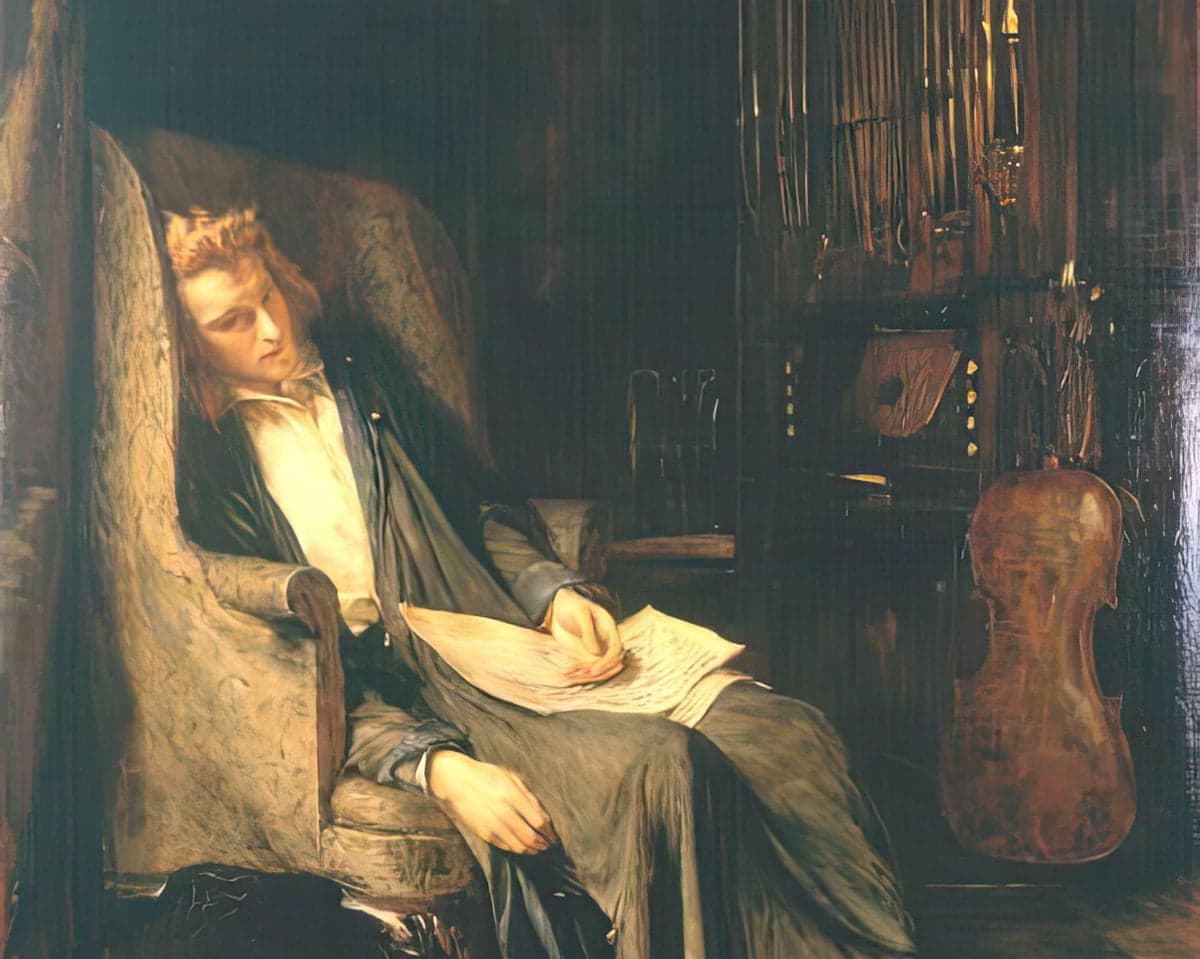
A reader approaching 30 without romantic experience writes to advice columnist Eleanor Gordon-Smith, describing a life marked by depression, anxiety, social isolation, and repeated displacement. Despite these hardships, the reader has resisted the manosphere's pull—but only barely, and is searching for guidance on how to move forward without surrendering to its worldview.
The writer's struggles run deep. Bullying in childhood, a non-supportive family, homeschooling from age 14, and multiple relocations created a sense of rootlessness that persisted through university, which coincided with the Covid-19 pandemic. After leaving, the reader never returned to their university city. Employment has brought some stability and collegial relationships, yet persistent self-doubt clouds these connections. Dating attempts have been tentative, hampered by feelings of imposture, unattractiveness, and invisibility. The reader asks whether connection is even possible, or whether accepting permanent solitude is the realistic path forward.
The manosphere's appeal in this context is understandable. Research shows that loneliness and social isolation are established drivers of radicalization, and the manosphere exploits men's need for connection by offering community. For someone experiencing the reader's degree of isolation, such spaces can feel like the only available refuge.
What makes the manosphere's promise so seductive?
The manosphere frames suffering as targeted injustice rather than a shared human condition. It tells isolated men that their loneliness is not accidental or circumstantial, but a deliberate slight—a violation of entitlements they should possess. This narrative offers something powerful: an explanation that transforms passive suffering into active grievance, and grievance into purpose. It positions the reader as
the temporarily embarrassed fortunate, someone whose rightful place in the social hierarchy has been wrongfully withheld.
Yet this framing contains a fatal flaw. The manosphere's interest in wellbeing is selective.
It is not a desire that these things be fixed. It is a desire that it does not happen to me.The movement shows complete indifference to other people's suffering or other forms of loneliness. It asks not why anyone must lose, but only how to restore one group's position at the top. This is a philosophy of zero-sum competition, not of shared humanity.
The appeal extends beyond ideology. The manosphere can meet men's needs for belonging, purpose, status, and self-improvement, which helps explain its reach beyond those motivated purely by anti-feminist conviction. For someone as isolated as the reader, the promise of community—even a toxic one—can feel like a lifeline.
What does your suffering actually give you?
Gordon-Smith's response pivots away from reassurance about romantic prospects. Instead, she reframes the reader's suffering as a source of genuine understanding. Life has taught this person what loneliness feels like, what overwhelm and self-doubt look like from the inside. That knowledge is not wasted; it is a form of wisdom that most people never acquire, or acquire only through their own pain.
Suffering like yours gives you understanding. Life made you purchase that understanding at great cost, but you now know what it's like to be lonely. You know what it is to feel overwhelmed, adrift, unsure of yourself. That means you can give other people what you yourself are looking for: understanding and acknowledgment.

This is not a consolation prize. The ability to meet another person in their vulnerability—to see them when they are scared, lonely, or uncertain—is among the deepest forms of human connection available. It is not the same as romantic attraction or physical intimacy, but it is not inferior to them either.
Compared to the depth of possible human connection, they are ultimately flotsam.
The manosphere would dismiss this as weakness dressed up as virtue. It would argue that kindness and thoughtfulness do not register in digital spaces optimized for facial structure or banter. This is partly true. But it misses the point entirely. The reader is not seeking to be attractive to people in general; the reader is seeking to be loved by a specific person or small group of people who recognize and value who they actually are.
Where can you find genuine connection?
Real connection emerges in spaces organized around shared interests and values, not in the algorithmic feeds that the manosphere inhabits. Northern Ireland's police are launching a campaign to encourage young men and boys to challenge online misogyny, warning that digital behaviour can normalise abuse and lead to offline harm. The campaign reflects a broader recognition that online spaces designed around engagement and outrage are poor environments for building healthy relationships or stable identity.
The reader's path forward does not require certainty about romantic outcomes. It requires a shift in orientation: from seeking assurance that everything will work out, to learning how to live meaningfully and make things better for others, even without that assurance.
You want to be loved for you.That happens when you are present as yourself in spaces where your presence matters—not when you are performing a version of manhood constructed from other people's fears and ideologies.
Why the manosphere exploits loneliness
The broader context matters here. Men aged 18 to 30 are spending significantly more time alone than they did five years ago. According to recent analysis, men in this age group spent 18% more time alone in 2023 than in 2019, averaging 6.6 nonsleeping hours alone. This isolation is not accidental; it reflects structural changes in work, education, and community that have stripped away the informal spaces where men once built friendships and identity.
The manosphere fills this void by offering narrative, community, and purpose. But it does so by directing men's pain outward, toward resentment of women and society, rather than inward, toward genuine self-examination and growth. Some commentators argue that even technical solutions—such as algorithm opt-outs—may reduce the manosphere's reach without addressing the underlying problem. The issue is not simply platform recommendation systems; it is a broader erosion of community and connection that social media has accelerated but did not create.
What comes next
The reader's immediate task is not to find certainty or assurance. It is to build a life in which uncertainty becomes tolerable—a life organized around contribution, growth, and genuine connection rather than around the pursuit of validation or the avoidance of rejection. This is harder than joining a movement that promises simple answers, but it is also more likely to lead somewhere worth going.
The reader has already demonstrated the capacity to resist the manosphere's pull, even while feeling its gravitational force. That resistance itself is a sign of moral clarity. The next step is to redirect the energy that goes into managing loneliness and self-doubt toward building the kind of life in which those feelings, while perhaps never disappearing entirely, become less central to identity and purpose.