
Lola Baird asked her boyfriend to pull over after 40 minutes on the road, overwhelmed by nausea and unable to prevent herself from vomiting beside his vehicle. The 24-year-old from north London had never experienced motion sickness before he purchased an electric vehicle two years ago, yet she now feels severely nauseous during long journeys as a passenger. The problem has become so acute that she has requested he replace the car entirely.
She is far from alone in this experience. Multiple people have reported to news outlets that they or their children experience heightened car sickness when travelling as passengers in electric vehicles, though many EV owners themselves report no such difficulties.

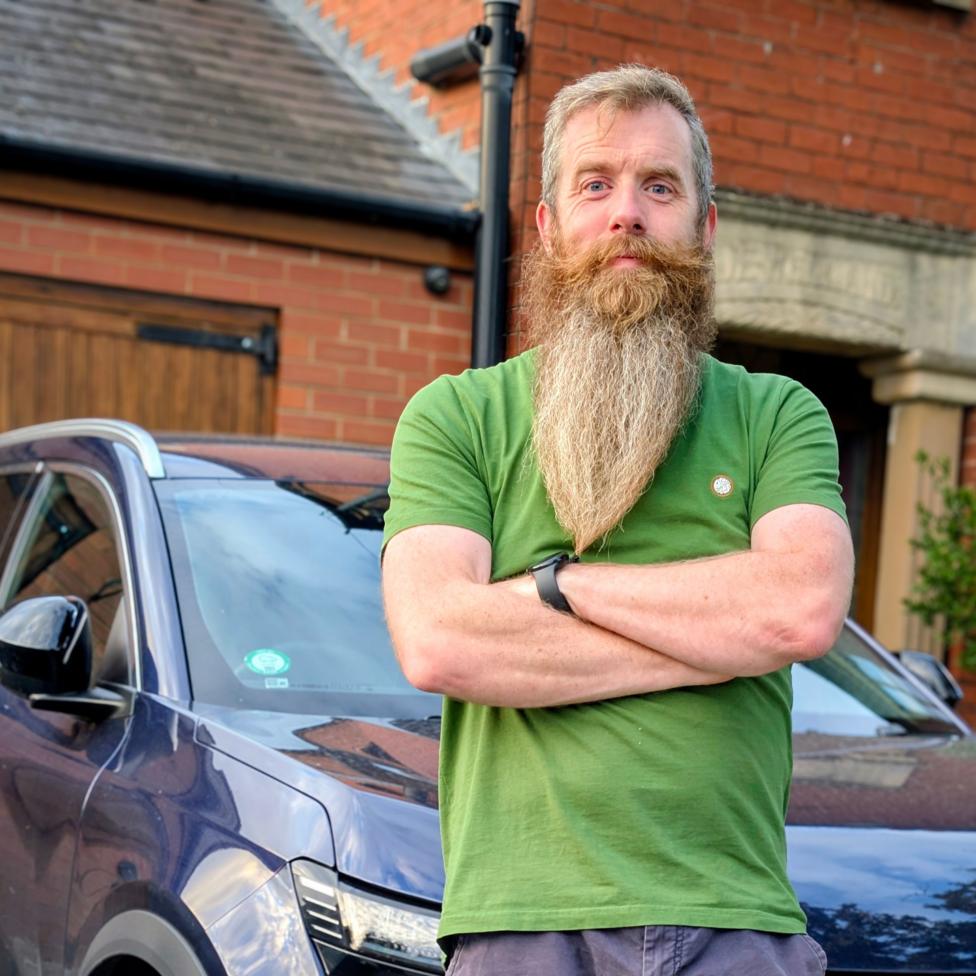
Mark Quigg, 45, from Lincolnshire, purchased an electric vehicle last year for its lower running costs and describes it as "wonderful" to drive. However, he quickly noticed his nine-year-old daughter's motion sickness worsened dramatically in the vehicle. Previously, she felt unwell only during their 600-mile journeys to France during school holidays, but now even a 30-minute drive to the nearest city causes discomfort. On one recent trip, she vomited—something that had never occurred before.
Lucinda Harrison, 24, from London, frequently finds herself in electric vehicle taxis and endures each journey feeling nauseous, sweaty and clammy. The prospect of travelling in an EV fills her with dread, and even a five-minute lift from a colleague to a Tube station recently left her feeling "horrific".
What does the research show?
Dr Irene Di Giulio, senior lecturer in anatomy and biomechanics at King's College London whose research includes motion sickness, indicates that available evidence suggests some passengers experience more acute motion sickness in electric vehicles than in conventional vehicles. Dr Nicholas Hac, a neurologist at Northwestern Medicine in Chicago specialising in dizziness and vertigo, has similarly heard this from patients. He reports that approximately two patients per month specifically mention motion sickness in electric vehicles, stating he has encountered this complaint "many, many, many times".
However, research into any connection remains preliminary. Dr Bill Yates, who has studied motion sickness at the University of Pittsburgh, characterises the existing body of research as "pretty sketchy at this point", noting that while anecdotal accounts exist, "not a lot of really serious, extensive studies done yet" have been conducted.
Recent investigations have begun to clarify the issue. According to a 2025 on-road study, stronger regenerative braking induced motion sickness among 16 susceptible participants, though auditory motion cues reduced symptoms when braking intensity was high. Additionally, a survey of 639 people in mainland China found that fuel vehicles were associated with more frequent motion-sickness episodes, while electric vehicles were linked to more severe symptoms. That research also identified contributing factors including age, gender, sleep habits, in-car activities and road conditions.
Why might electric vehicles trigger motion sickness?
Motion sickness arises from "a mismatch in sensory cues," according to Hac. The body relies on three primary sensory inputs to perceive movement: visual information, the inner ear's balance system, and fibres throughout the body that sense position. When these signals conflict—such as when looking at a phone while the vehicle moves—motion sickness can result.
Several factors specific to electric vehicles may intensify this effect. Humans have become accustomed to associating engine sound and vibration with vehicle acceleration. Because electric vehicles lack these auditory cues and vibrations, passengers may not receive expected signals that the car is accelerating, potentially triggering motion sickness, Di Giulio explains. Research from 2020 found that informative sounds anticipating vehicle movement significantly reduced motion-sickness ratings, suggesting that cues about upcoming motion may help passengers.
Regenerative braking—the process in which releasing the accelerator causes the electric car to slow down while feeding energy back to the battery—presents another challenge. When drivers release the accelerator too abruptly rather than gently, harsh deceleration results.
It forces the person to perhaps feel like they're rocking back and forth for that brief moment when the speed of the car suddenly changes,Hac explains.
Carolyn Le, 24, from California, has experienced this directly. She suffers
horrendousmotion sickness when her friend drives her in his electric vehicle through busy cities, attributing the problem to regenerative braking, which
constantly feels like the car is stopping all the time.

Electric vehicles can also accelerate and decelerate far more rapidly than conventional combustion cars, which Di Giulio identifies as another potential cause of motion sickness. Vicky Edmonds, CEO of EVA England, an association for electric vehicle drivers, counters that recent developments in electric vehicle design have improved acceleration moderation to prevent rapid speed gains. She suggests that motion sickness in electric vehicles stems from
other factorslike driving style rather than the vehicle itself.
Individual susceptibility plays a significant role as well. Genetics exert the strongest influence on motion-sickness proneness, Hac notes. Women and children show greater susceptibility, with motion sickness typically peaking between ages eight and 10 before declining through increased exposure, according to Prof John Golding, who has researched the subject at the University of Westminster, the Royal Navy and the RAF.
How widespread is the issue?
Not all EV passengers experience motion sickness. Many owners contacted news outlets to report that they and their relatives feel no discomfort in electric vehicles, while others stated they felt less sick in EVs compared with traditional combustion engine cars. Vicky Edmonds of EVA England states that motion sickness
has never come up as an issueamong her members.
However, Chinese electric vehicle manufacturer XPeng, which operates showrooms across the UK, has publicly acknowledged the issue, telling customers who noticed a link between electric vehicles and travel sickness that
it's a fair question, and it's not your imagination. The company attributes the problem to
side effects of how electric cars are engineered.
As electric vehicle adoption accelerates, avoiding them becomes increasingly difficult. The number of new zero-emission cars registered in the UK rose by 40.5% in the April to June 2026 period compared with the same quarter in 2025, according to Department for Transport figures. By the end of June 2026, 5.8% of all licensed cars on UK roads were zero-emission vehicles. The sale of new purely petrol or diesel cars faces a ban from 2030.
What can passengers do to reduce symptoms?
Academics recommend several strategies to minimise motion sickness:
Focus on the front window rather than looking at phones or reading materials. Sit in the front passenger seat if possible; if rear seating is necessary, choose the middle seat to maintain forward visibility. Keep the head still by resting it against the headrest. Open the window to allow fresh air circulation. Consider travel sickness tablets if needed, though these may cause drowsiness. Before long journeys, ensure adequate hydration, sufficient sleep and consumption of non-greasy food.

Experts emphasise that desensitisation through prolonged exposure can reduce motion sickness. The more journeys passengers take in electric vehicles, the less likely they become motion sick as their body adjusts, Golding explains.
Vehicle manufacturers can also implement solutions. Prof Cyriel Diels, professor of mobility design at the Royal College of Art, identifies several possibilities: software that smooths rapid acceleration, sound systems and subtle seat vibrations to signal movement to passengers, and adaptive regenerative braking that reduces sudden deceleration. However, recent research suggests limitations to some interventions. According to a 2025 study testing vibration cues in the seat back during electric-vehicle rides with 24 participants, the cues did not significantly relieve symptoms, with participants' feedback highlighting the importance of whether they accepted the intervention.
Matt Adams from BEAMA, which represents UK manufacturers of electric vehicle charge points, expresses confidence that
if future research identifies the reason for car sickness that vehicle manufacturers can respond and improve accordingly.
For Lola, the solution remains straightforward: she wants her boyfriend to replace his vehicle. She says that day cannot arrive soon enough.