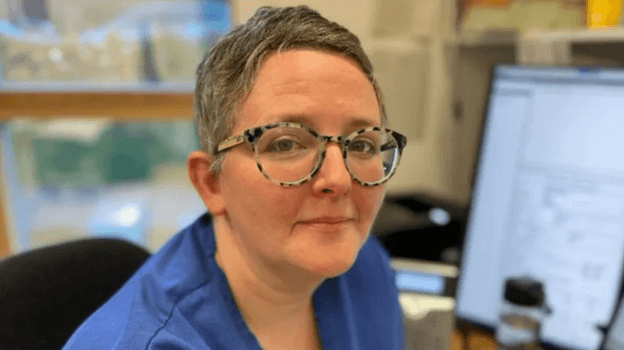
Leading physicians in Scotland are urging the government to abandon its proposal to drastically consolidate the country's health infrastructure by merging 14 regional health boards into just two. The newly appointed head of the British Medical Association's Scottish branch, Dr Nora Murray-Cavanagh, contends that the restructuring would prove expensive and time-intensive while lacking substantive proof that patients would benefit.
First Minister John Swinney introduced the proposal approximately one month prior, framing it as a means to streamline administrative functions and redirect funds toward patient-facing services. Health Secretary Angela Constance has reaffirmed her backing for the initiative and pledged to engage with unions, NHS boards, and other stakeholders as implementation details are refined.
Swinney presented the restructuring as part of his Programme for Government in early September, characterising it as
the "most significant structural reform of our NHS in the devolution era". Under the proposal, the existing 14 health boards would be consolidated into two Strategic Health Boards—one serving the western mainland and another covering the eastern mainland—with separate arrangements under consideration for Scotland's three island-based health boards.
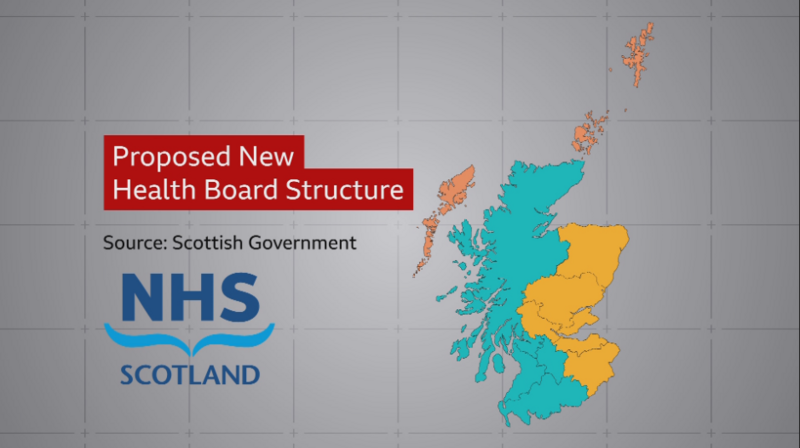
The government has framed the consolidation as a mechanism to eliminate administrative redundancy and streamline care delivery, asserting that resources currently consumed by bureaucratic overhead could be redirected to frontline treatment and that standardised care protocols would be implemented across regions.
However, members of the BMA's Scottish Council expressed substantial reservations and voted to oppose the initiative during a meeting held on Wednesday. Following the vote, Murray-Cavanagh called for the government to
"withdraw and rethink its whole approach"and pursue more immediate interventions to support patients.
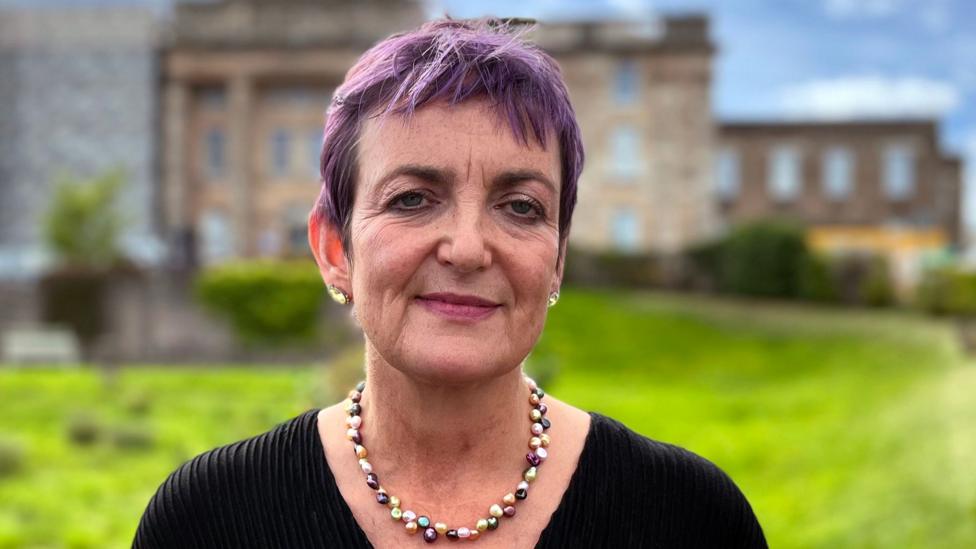
Murray-Cavanagh, a general practitioner based in Wester Hailes in Edinburgh who assumed her position with the BMA only weeks ago, emphasised that the medical profession does not dispute the necessity for NHS transformation. She stated:
"Our position is not one that argues NHS reform isn't necessary – no-one thinks we can simply go on as we are. As doctors, we know better than most the precarious state of services across Scotland. But this is the wrong set of reforms, and it will set Scotland on a path of a costly, time consuming, resource-sapping reorganisation, with no serious engagement with those of us holding the service together and no clear evidence put forward on how it will benefit patients."
Murray-Cavanagh further noted that BMA council members had articulated deep concerns regarding the potential consequences for their own practice and patient outcomes. She underscored:
"At the core of everything is the lack of any evidence on how these reforms will practically make care better."
What is the government's rationale for the changes?
Constance defended the restructuring by emphasising that the reforms target improved service delivery across all regions regardless of geography. She explained:
"They will simplify how people get the care they need and remove the current geographic and bureaucratic barriers that exist between 14 health boards, which we know are currently causing unwanted variation and duplication."She added that the changes would build upon ongoing collaborative efforts involving all Scottish NHS boards to strengthen care coordination.
Constance committed to developing comprehensive proposals supported by a full business case and incorporating engagement with NHS boards, workforce representatives, trade unions, local authorities, integration authorities, social care providers, and the public.
Who else has raised concerns about the plan?
The BMA represents the first major medical organisation to publicly challenge the government's approach. Although the union has historically advocated for fundamental NHS reform and has repeatedly cautioned that without substantial change the system cannot endure, it has now positioned itself in strong opposition to the current consolidation strategy.
The BMA is not isolated in its concerns. Scotland's patient safety commissioner and certain rural advocacy organisations have similarly warned that consolidation could exacerbate health disparities if patients must travel extended distances for treatment. Additional critics have questioned whether structural reorganisation adequately addresses the NHS's broader challenges, particularly regarding integration with social care provision—an issue the government is simultaneously attempting to tackle.
The financial implications remain uncertain. It is unclear whether the new structure will generate cost savings through elimination of senior management positions or departmental streamlining. The government has maintained its commitment to a no compulsory redundancy policy, which it reiterated following the announcement. However, Unite, the union representing thousands of health and social care workers in Scotland, cautioned that it was considering
"all options"should the reorganisation result in job losses or reductions to frontline services.
What developments have occurred since the initial announcement?
According to testimony to a Holyrood committee on 16 September, the Scottish Government confirmed that the two east-and-west strategic board model remained its preferred direction, though other options had not been entirely ruled out. The government has also indicated that the reform is entering a design phase to be shaped collaboratively with staff, unions, local government, communities and service users.
The consolidation initiative is being linked to the government's National Flow Plan, with the combined measures intended to improve patient access through more integrated care delivery. Preparatory work on the east-west regional structure commenced in November 2025, led by the chief executives of NHS Greater Glasgow and Clyde and NHS Lothian.
When questioned about potential job losses, Swinney declined to provide a specific figure, though he reiterated the government's commitment to avoiding compulsory redundancies. The Royal College of Nursing has indicated that the government committed to a three-month intensive consultation with partners, with a shared direction for health-board reform targeted for completion by the end of 2026.

What happens next?
Final determinations regarding the board consolidation will follow the consultation process. The government has not yet disclosed detailed arrangements for the island health boards. The consultation phase will be critical in determining whether the government proceeds with the two-board model, modifies its approach, or pursues alternative restructuring options.
Key Facts
- The proposal would reduce Scotland's 14 health boards to two Strategic Health Boards covering east and west mainland Scotland, with separate arrangements for island boards
- The BMA, Scotland's patient safety commissioner, and rural campaign groups have raised concerns that consolidation could increase health inequalities and require patients to travel further for treatment
- The government has committed to no compulsory redundancies but has not specified potential job losses from the restructuring
- A full business case and intensive three-month consultation with stakeholders is planned before final decisions are made
- The restructuring is linked to the government's National Flow Plan aimed at improving integrated care delivery across Scotland