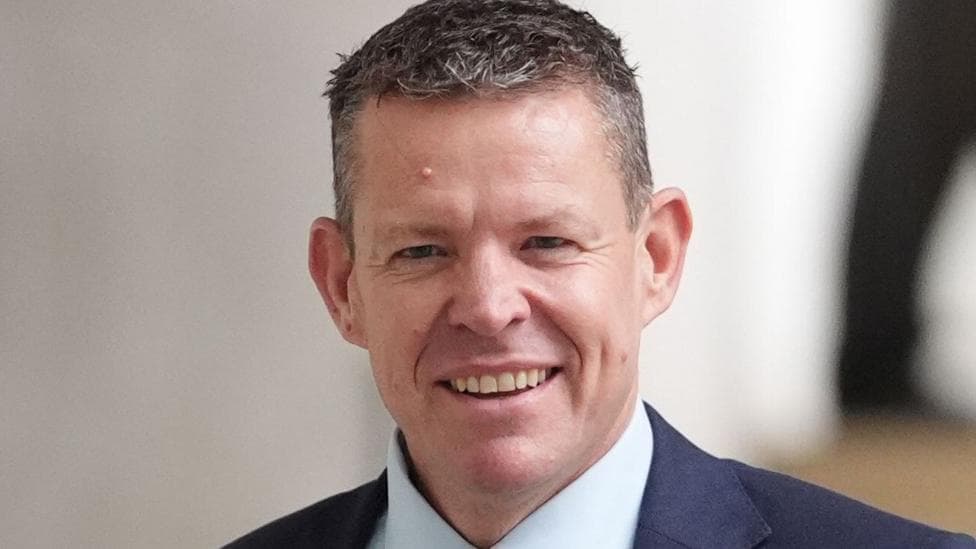
Rhun ap Iorwerth, leader of Plaid Cymru and head of the Welsh government since May's Senedd election, has faced accusations of shifting timelines after stating that the longest NHS waiting times will be eliminated to zero within the first year of his administration.
Since taking office in May, Plaid ministers have committed to swiftly removing waits exceeding two years within a "matter of months", though they have previously avoided specifying an exact deadline. On Tuesday, ap Iorwerth clarified this commitment would be achieved within the first year of his government, as the Welsh administration unveiled its programme for government.
The government's agenda encompasses NHS waiting times, cost-of-living support, child poverty reduction, employment creation and educational improvement. According to the latest available data, 4,700 patients were waiting two years or longer—a 15% monthly increase and 82% higher than the figure recorded at the end of March.
Health Minister Mabon ap Gwynfor reiterated the waiting-list pledge most recently on a national broadcaster's political programme on Sunday, expressing confidence that two-year lists would be cleared "in a matter of months". During a Radio Wales Breakfast interview, ap Iorwerth stated:
"We have said that in months, certainly less than a year, we will bring down to zero the longest waiting times, because it's not acceptable."
When questioned by Reform MS Llŷr Powell about NHS waits, ap Iorwerth elaborated:
"I have said that the most extreme, over two-year waits, they have to go. I said they'll go in months - that goes a year from coming into government - they are gone. That's months... months is not more than a year."The initial ambiguity over when the year-long countdown commenced drew scrutiny from opposition parties.
What is driving the criticism?
Opposition figures argue the government has repeatedly adjusted its commitments without delivering results. Reform's Wales leader Helen Jenner responded:
"The goalposts keep moving while patients continue to wait. Rather than wasting time pursuing independence, something the first minister has no mandate for, his government must get on with the day job and tackle the out-of-control waiting lists in our NHS."
Natasha Asghar, Conservative health spokesperson, added:
"We welcome the first minister's commitment to bring these unacceptable waits down to zero, but ministers had previously promised to eliminate two-year waits 'within months' and failed to do so."

What resources are being allocated?
The Welsh Government's waiting-list strategy is supported by substantial investment. According to the government's NHS reforms announcement, the plan is backed by £145 million, comprising £100 million for day-to-day NHS activity, £25 million for new surgical and diagnostic hubs, and £20 million for NHS estate maintenance. The strategy includes operational changes designed to improve efficiency: patients will no longer receive automatic follow-up appointments unless clinically necessary, aiming to free tens of thousands of appointments across the system.
Health boards are expected to collaborate intensively, including weekend working, to address the longest waits in specialties facing the greatest pressure. The broader context for these measures was established through the government's first-100-days plan, which also commissioned an independent review of NHS performance in Wales.
How does this fit into the government's wider agenda?
During the Radio Wales interview, ap Iorwerth acknowledged that delivering his programme would be "challenging" given current financial constraints. He stated:
"I'm not setting out to try to do easy things so that we can tick them off quickly. We are setting out to do ambitious things. I think that's really, really important. We think absolutely we have a programme here based on [Plaid's election] manifesto, building on the firm foundations of the first hundred days that we can deliver. But it will be incredibly challenging. I mean capital spending is going to be going down between now and the end of the decade."
On council tax reform, a manifesto commitment to "work to make council tax fairer", ap Iorwerth declined to outline specific measures. He outlined potential approaches:
"There are a number of ways that it has been done in other parts of the UK. You can look at revaluation, you can look at different kinds of bands, you can look at how in time you can bring income tax into this. We haven't got the powers to do that right now."
What about childcare and early years support?
Welsh Labour had criticised Plaid the previous week after a government minister declined to confirm whether the Flying Start early years programme would continue unchanged. Ap Iorwerth clarified that Flying Start
"is the basis on which we are building"the government's childcare offer. Ministers intend to expand free childcare eventually to infants aged nine months old.
"We are now building on Flying Start, [we're] going to be rolling out the most generous childcare offer anywhere in the UK,"he said.
What recent political changes have occurred?
Last week, MS Sarah Cooper-Lesadd defected from Reform to Plaid. Ap Iorwerth acknowledged the move was unusual, stating:
"It's a direction of travel that most people wouldn't expect. I'm very comfortable that Sara Cooper-Lesadd has come on a genuine political journey."He added:
"Whether it's Sarah Cooper-Lessad or the wider Welsh electorate, I am always in the business of asking people, have a look at Plaid, and what we stand for, and what our vision is."
What are the next steps?
The Welsh Government's waiting-list strategy extends beyond the immediate two-year target. The overall NHS waiting list is intended to return to pre-pandemic levels by the end of the current Senedd term, according to the government's published plans. The independent NHS performance review initiated during the first 100 days remains an ongoing component of the broader reform programme, with results expected to inform future policy decisions.
Key Facts:
- 4,700 patients were waiting two years or more as of the latest update, representing a 15% monthly increase
- The government's waiting-list plan is funded by £145 million, including investment in new surgical and diagnostic hubs
- Health boards will be required to collaborate across weekends to tackle the longest waits in high-pressure specialties
- The government aims to return the overall NHS waiting list to pre-pandemic levels by the end of the current Senedd term
- An independent review of NHS performance in Wales is underway as part of the government's reform strategy