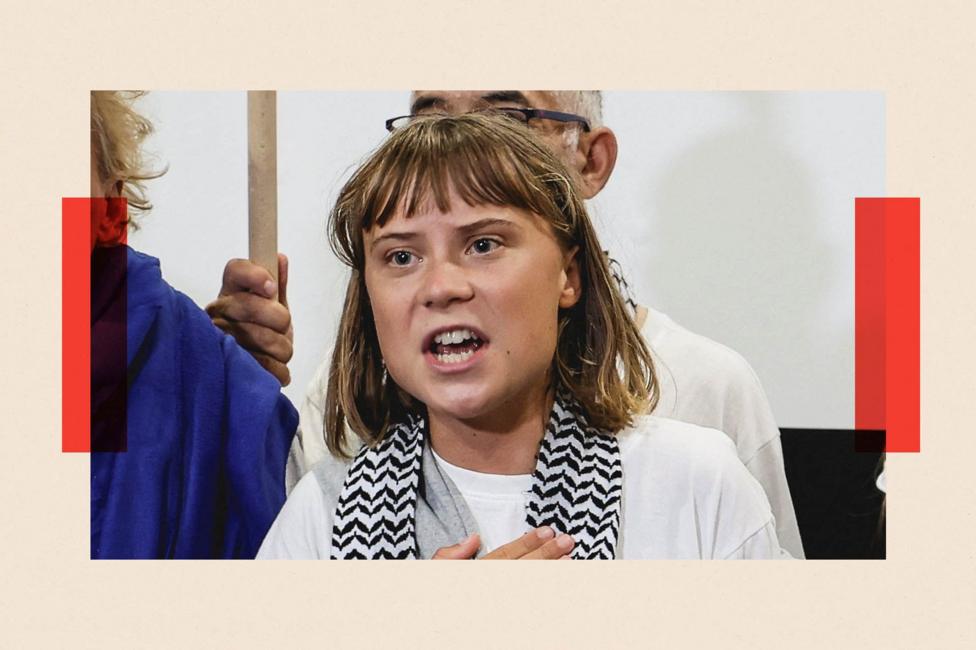
Autism Spectrum Disorder encompasses an extraordinarily broad range of human experiences. The diagnosis might apply to Elon Musk, the world's richest entrepreneur, or to Greta Thunberg, who frames neurodiversity as a strength. It might equally describe Robbie Williams, who recently disclosed his own diagnosis, or 34-year-old James Fitzpatrick, who does not speak, has significant intellectual disabilities, and requires round-the-clock support. This vast spectrum has sparked an intense and sometimes bitter debate among researchers, clinicians, autistic people themselves, and their families about whether the current diagnostic framework remains fit for purpose.
The numbers tell part of the story. In England, autism diagnoses recorded on general practitioner records have surged dramatically, rising from just over 700,000 three years ago to approximately 1.1 million today. The National Autistic Society attributes this partly to genuine underdiagnosis, particularly among women and older adults. Yet the scale of the increase has prompted uncomfortable questions: are all these newly diagnosed individuals truly autistic, or have some received incorrect diagnoses? These questions lie at the centre of a controversy that threatens to reshape how society understands and supports neurodiversity.
According to the UK government's independent review into mental health conditions, ADHD and autism, population-based autism prevalence has remained relatively stable, but self-identification and administrative diagnosis have increased substantially. This distinction—between actual prevalence and recorded diagnosis—sits at the heart of the current dispute.
Who is driving this debate?
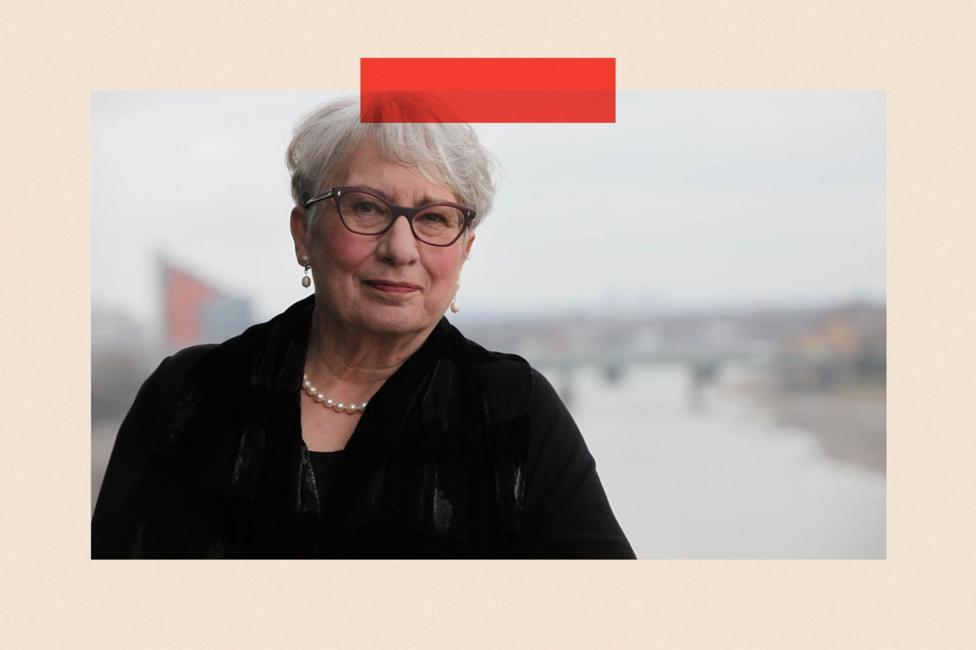
The controversy centres largely on 85-year-old Professor Dame Uta Frith, one of the most influential figures in autism research since the 1960s. Dame Uta has become a lightning rod for disagreement by arguing that the autism spectrum has become so broad that it has lost coherence as a diagnostic category. Her concerns focus on whether people with vastly different support needs and life trajectories should share the same diagnosis.
Dame Uta expresses deep uncertainty about the scale of potential misdiagnosis.
In my worst moments, I think it's a great number, but in my best moments, I think it is a small number.She worries particularly that autistic individuals with the most severe support needs—those with intellectual disabilities and profound communication challenges—are being overlooked in research and policy discussions while attention concentrates on newly diagnosed adults, particularly women.
Her intervention has provoked fierce reactions. Some autism researchers and charities have labelled her views
dangerous,
misinformation, and accused her of pitting
autistic people against each other. Many autistic people themselves have responded with anger, viewing her arguments as a threat to their identity and their rights to support and recognition. Dame Uta has received hate mail, yet she remains convinced of her obligation to speak.
Some people would say it would be better for me to stop. But I want to get at the truth.
How has the definition of autism changed?
Understanding the current dispute requires examining how the concept of autism has evolved. When the term was first coined in 1911, it described a symptom of childhood schizophrenia, characterised by excessive fantasies and hallucinations. By 1943, it had been reframed to describe children with unusual peculiarities who showed little interest in their surroundings. In the 1960s, autism was estimated to affect 0.04% of children, and most were thought to have intellectual disabilities.
The landscape shifted dramatically in the early 1980s when researchers embraced the concept of an autism spectrum, proposing that autistic individuals could possess average or exceptionally high intelligence. This reconceptualisation led to the category known as Asperger's Syndrome, named after a little-known paper from Austria in the 1940s—though that terminology is no longer used clinically.
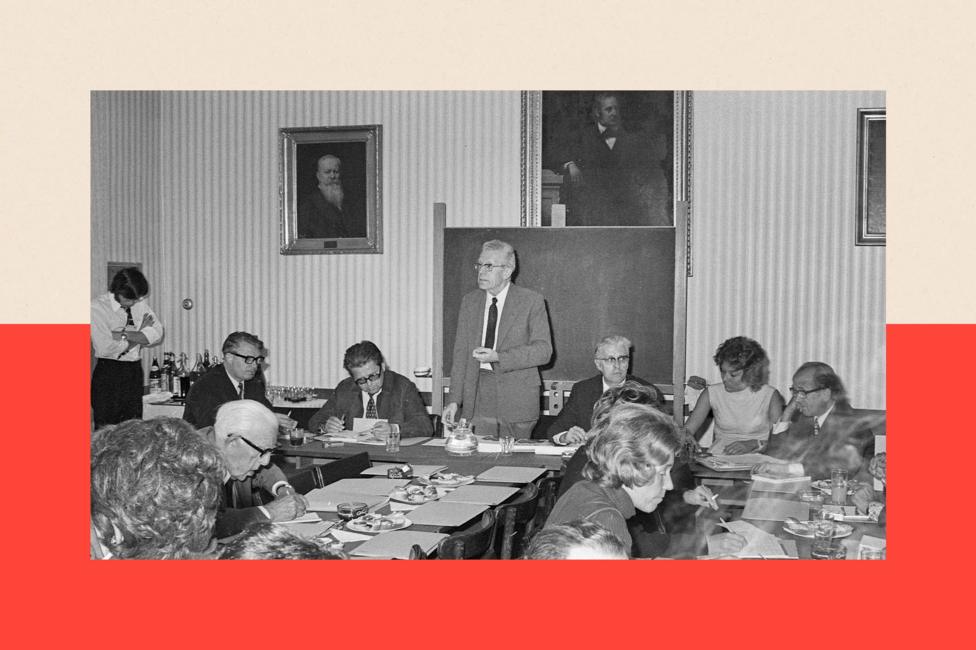
In 2013, Autism Spectrum Disorder became the official diagnostic label for all autistic people. However, some autism experts now question whether this unified framework is too expansive. Dame Uta argues that the spectrum has collapsed under the weight of its own breadth, encompassing people with such divergent needs that a single diagnosis becomes meaningless.
What does Dame Uta propose instead?
Rather than abandoning the spectrum concept entirely, Dame Uta advocates for a
prunedautism spectrum that would include three groups: people with intellectual disabilities, those with what was formerly called Asperger's Syndrome, and those diagnosed during childhood. She attributes much of the recent diagnostic surge to a
late-diagnosed group, mainly females.
While the NHS acknowledges that autism can be difficult to recognise in women, Dame Uta expresses scepticism about late-life diagnoses.
I am sceptical of late diagnosis. That's where I think the diagnostic process has become very superficial.She suggests that many people receiving autism diagnoses in adulthood may actually have other conditions—anxiety, depression, or obsessive-compulsive disorder—that would be better addressed with different interventions.
She points to research from the University of Cambridge showing that people diagnosed with autism in early childhood often display a different genetic profile from those diagnosed later in life. Researchers found that people diagnosed when older show genetic patterns more consistent with ADHD and depression than with early-diagnosed autism. However, the lead researcher, Dr Varun Warrier, interprets this finding differently, suggesting it demonstrates
autism broadening out geneticallyrather than indicating misdiagnosis.
Dame Uta also raises the possibility that researchers might need to develop
a label that doesn't exist yetfor some people currently diagnosed as autistic. She acknowledges that a small number may be
identity seekersinfluenced by misinformation circulating on social media. Yet she emphasises that she does not wish to harm those who have received diagnoses:
If someone has been misdiagnosed, I don't want them to suffer for it. It would be a terrible thing to take away a diagnosis retrospectively. It's the future I'm concerned with, making diagnostic process more precise—targeting very different individual needs rather than a label.
What do autism advocates say in response?
The National Autistic Society has responded to Dame Uta's arguments with strong criticism, publishing a blog post addressing what it characterises as
false narratives and outdated ideasand
misinformation. The organisation maintains that anyone receiving an autism diagnosis will have been assessed against rigorous criteria and will demonstrate
lifelong differences in communication, behaviours and focused interests compared to non-autistic people.
Dr Sue Smith, head of clinical services at the National Autistic Society, frames the debate differently.
We've got a group of people with a genuine need. We're having this weird debate about what they should be called.She warns that re-labelling some autistic people could result in loss of support and points to historical precedent:
Historically a lot of people who weren't properly identified as autistic were given other really unhelpful labels, such as borderline personality disorder or bipolar disorder.
Dr Monique Botha, an associate professor of psychology at Durham University and an autistic person herself, has criticised Dame Uta's position forcefully. Botha argues that
researchers have a duty to be a bit more blunt and upfront about how damaging these kinds of things can be.She contends that Dame Uta's ideas reinforce a harmful narrative suggesting that
there's some magical easy autism where you're just quirky, where everything in your life will eventually work out, and you're just using this as a crutch so that you can feel special, and it trivialises the reality of a whole bunch of people.
Botha identifies core features that unite autistic people across the spectrum: sensory sensitivity, a need for predictability, intense interests, and communication difficulties.
That doesn't mean that we will have the same lives or the same outcomes.

What about people with the highest support needs?
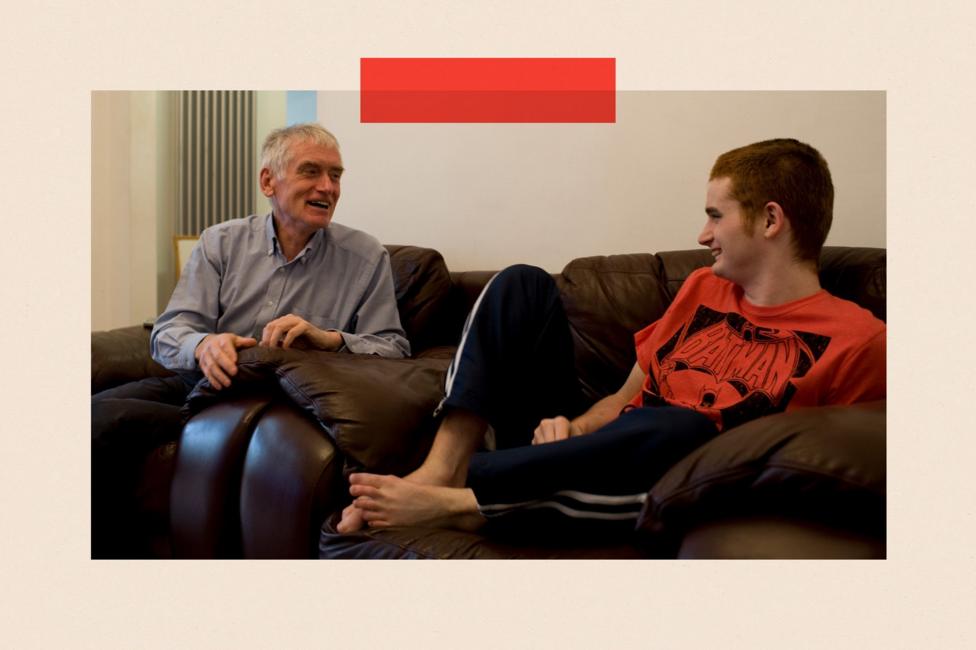
The case of James Fitzpatrick illustrates the stakes of this debate. Now 34, James was diagnosed with autism in the 1990s and does not speak. His father, Dr Michael Fitzpatrick, a retired general practitioner, describes a life of profound complexity.
He would injure himself, bang his head on the floor, bite himself. If you tried to stop him, he would also bite you or scratch you or headbutt you. And as he got bigger, that became more of a problem.Though James has become calmer with age, he can still
attack you randomly for no apparent reason.
Michael Fitzpatrick has been shocked by the response to Dame Uta's position, describing it as
intolerant, strident, abusive discourse that's very redolent of the culture wars. He struggles to understand how the same diagnosis can apply to his son and to someone living independently.
He has never developed the capacity to engage with the world. That's the source of profound sadness to his family and a loss to himself.For Michael, James and an independently living autistic adult represent
extremely different types of people.
Dame Uta's concern for this population is genuine. She notes that approximately one-third of autistic people have intellectual disabilities, yet they remain dramatically underrepresented in research. A 2019 study found that they comprise only about 6% of research participants.
These cases are in great need of support. They have been completely overshadowed.
Is there room for nuance?
Dr Rachel Moseley, an academic from Bournemouth University who was diagnosed with autism in her late twenties, acknowledges that people like James are
incredibly neglected. However, she argues that recognising this reality need not invalidate other autistic experiences.
There's room for all of us, we can still advocate for people with learning disabilities without saying that this group isn't valid.
Moseley cautions against oversimplifying the relationship between support needs and suffering.
Every so often something will totally knock my feet out from under me,she explains, describing episodes of self-harm and suicidal thoughts. She points to research demonstrating that while autistic people overall face elevated suicide risk, these rates are highest among autistic people without learning disabilities.
Everyone's challenges are different. But you can't make the assumption that the person with high support needs is always having a harder time. They will in some regards, but not in all.
Michael Fitzpatrick remains unconvinced by this argument, stating:
I seriously, seriously doubt whether the people with autism and no levels of learning disability have a similar level of pathology and life-threatening problems as the people with profound autism.
What role should autistic researchers play?
A significant flashpoint in this debate concerns the study of masking—the practice of concealing autistic behaviours to conform to social expectations. Academic interest in masking has exploded, with a recent review identifying nearly 400 research papers on the topic, predominantly focusing on autistic women diagnosed in adulthood without intellectual disabilities.
Dame Uta dismisses much of this research, describing the concept itself as
such a vague notionand characterising some papers as
absolutely poor quality. Moseley takes the opposite view, asserting that
there is really high-quality work on masking, and it's startling and upsetting to see such work be denigrated.She frames masking research as part of a
refreshing changeas autistic academics
bring lived experience into research.
Dame Uta questions whether autistic researchers can maintain objectivity or whether they face inherent conflicts of interest. This position places her at odds with most of her peers. Professor Sir Simon Baron-Cohen, director of the Autism Research Centre at the University of Cambridge and formerly Dame Uta's mentee, disagrees with her on this point.
Someone who's got a degree in molecular biology has one kind of expertise, but someone who's got lived experience has got another kind.
Could subtypes offer a solution?
Sir Simon Baron-Cohen proposes an alternative framework: rather than debating whether the spectrum is too broad, researchers could subdivide autism into multiple subtypes. Type one might encompass autism with learning disability; type two could include autism with language needs. Other categories might capture conditions that frequently co-occur with autism, such as ADHD, depression, and epilepsy.
Imagine, we could have dozens or hundreds of subtypes. Why put a limit on it? The more we have, the more precise we can be about what people need.
Dame Uta sees potential in this approach, suggesting that subtypes could provide
a clean division between those who have these very severe needs and those who don't. But it can't go on endlessly.However, the National Autistic Society expresses concern that fragmenting autism into smaller categories could facilitate discrimination or justify withdrawal of support. The organisation argues that subtypes have
no clinical value, diagnostic relevance or practical application.
Sir Simon's response emphasises inclusion:
bring in autistic people so we can choose labels that they're comfortable with. Yet even this seemingly reasonable proposal has not achieved consensus.
What do recently diagnosed autistic adults experience?
Kayleigh received her autism diagnosis in her thirties and has encountered persistent stereotypes about what autism looks like.
Some will assume you can't spell your own name. Or you love trains. Or you're extremely clever. Or you're hyper focused on a boring hobby.Since diagnosis, she has been assigned various labels—Asperger's, high-functioning, and AuDHD (autistic with ADHD)—creating confusion about her own identity.
The goalposts keep moving. As an autistic person, I don't even know what I should be called.
For Kayleigh, the current debate feels like a distraction from pressing practical concerns. She spent her life believing she was
weird, sub-normal or really, really badbefore receiving her diagnosis. She remains angry that society failed to recognise her struggles earlier. Since diagnosis, she has received
zerosupport from professionals. Emotionally, she feels unable to venture into her local town centre without family accompaniment—a situation that has persisted for years.
Kayleigh's priorities are clear: she wants more help and greater understanding. The terminology matters far less to her than tangible support.
You could call it 'silly brain disease'. I still know what I'm going through.
What does the government review reveal?
The government-commissioned independent review into mental health conditions, ADHD, and autism has begun to shed light on these questions. The interim report, released by March 2026, indicates that recorded diagnosis and self-identification have risen substantially while population prevalence has remained relatively stable. This finding suggests that increased diagnosis reflects changing recognition and identification patterns rather than a genuine increase in autism's occurrence in the population.
The Department of Health and Social Care published an easy-read version of the interim report on 10 June 2026, confirming that the review remains ongoing and focused on understanding why demand for assessment and support has increased so dramatically. The Centre for Mental Health has characterised the interim findings as a step toward moving beyond
an often divisive debate about overdiagnosis, framing the issue as fundamentally about policy and resource allocation rather than purely about diagnostic accuracy.