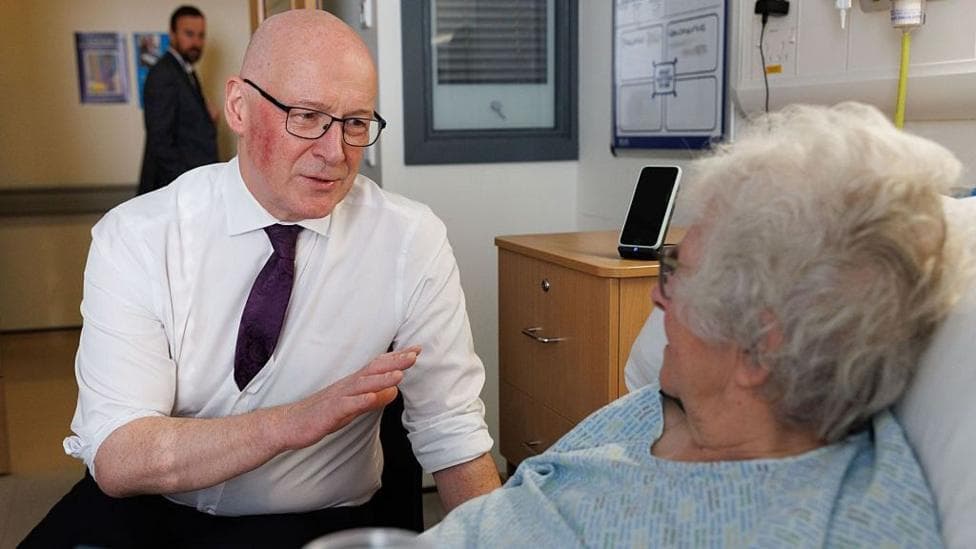
Scotland's first minister John Swinney has insisted that people will not need to travel greater distances to access health care under the government's plan to consolidate the country's 14 territorial health boards into two larger strategic bodies. The restructuring, announced as part of the Scottish Government's Programme for Government, represents what Swinney described as the "most significant structural reform in the NHS in the era of devolution."
When questioned by BBC Scotland's The Sunday Show about the potential impact on patients already facing lengthy journeys—such as women in the far north who currently travel 100 miles down the A9 to reach maternity services in Inverness—Swinney stated it would "not be my intention" for travel distances to increase. He emphasised his commitment to maximising the number of health care services delivered locally, provided they meet safety standards.
"What I want to make sure is that by removing health board boundaries we can maximise the number of local services that can be provided as close to home as possible for individuals in different parts of the country."
The first minister acknowledged that the example of maternity care provision in Caithness illustrates how service decisions are driven by patient safety considerations rather than cost-cutting or efficiency targets alone. He stressed the importance of ensuring "equity of access" regardless of geographic location.
How will the new structure work?
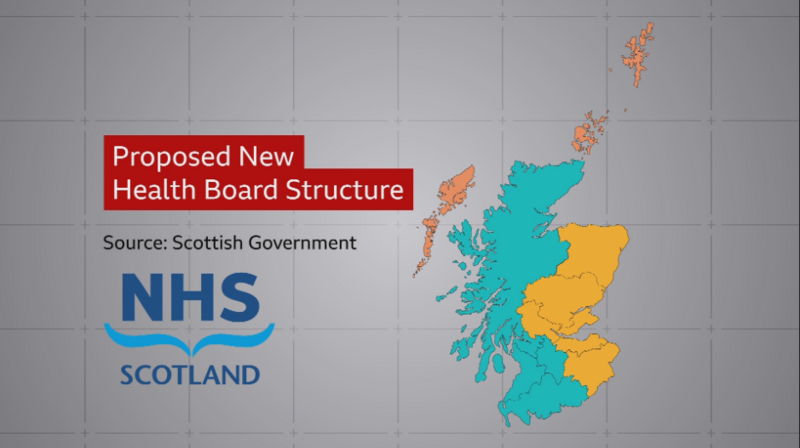
The proposed reform would divide Scotland into east and west health boards, with the Scottish Government's Programme for Government formally setting out the intention to replace the current territorial boards with two Strategic Health Boards. Work on the proposal began in November 2025, with the chief executives of NHS Greater Glasgow and Clyde and NHS Lothian leading the development.
Island communities face a different arrangement. Health and Care Scotland indicates the reform could include separate arrangements for Shetland, Orkney and the Western Isles, potentially through combined island local-government and health organisations, though no final decisions have been confirmed. It has been proposed that health care in the islands would be absorbed by local authorities, but this remains subject to further consultation.
What about job losses?
Swinney declined to provide a specific figure for NHS job losses resulting from the restructuring, stating he could not give a "comprehensive answer" without complete information. He acknowledged that "public sector employment will fall" but resisted repeated questioning from the BBC on the scale of redundancies.
However, BBC reporting on the announcement indicates there will be no compulsory redundancies from the health board cuts. Media reports have suggested that approximately 12 health board chief executives could be affected under the new structure, though comprehensive job-loss figures remain unavailable.
The trade union Unite condemned the plan as a "slash and burn programme for the NHS," reflecting concerns about the potential scale of staffing changes.

What do opposition parties say?
Political opponents have criticised Swinney's reluctance to provide concrete details. Scottish Labour's acting leader Jackie Baillie said:
"It's hard to tell whether John Swinney is being evasive or simply has no idea what he is going to do, but either way it's not good enough. People's jobs are on the line and our public services could be plunged into chaos – Scotland deserves to know what lies ahead."
Scottish Conservative finance and social security spokesman Craig Hoy accused Swinney of refusing to answer basic questions about his own plans.
"He cannot say how many NHS jobs could be lost yet expects Scots to believe he has a grip on the SNP's £5bn budget black hole."
Reform UK Scotland leader Malcolm Offord suggested Swinney was avoiding the question of job cuts through vague language, noting that a government in office for 19 years should be able to provide specific details about such a major reorganisation.
Why is maternity care a concern?
The health board restructuring comes amid ongoing scrutiny of maternity and paediatric services across Scotland. An independent review of maternity services was commissioned in June 2026, with a focus on workforce, culture, safety, and rural and island experiences. The review is chaired by Professor Christine McCourt of City St George's, University of London.
A nine-month investigation into all maternity services was scheduled to begin in autumn 2026 following a BBC Disclosure investigation that revealed poor and sometimes deadly care. The Scottish Government says the review will make a broad assessment of current and future maternity care needs, especially for rural and island services and women at risk of poorer outcomes.
Additionally, all planned paediatric surgery at Dr Gray's Hospital in Elgin was suspended in the previous month due to patient safety concerns, with the suspension potentially remaining in place until December, according to NHS Grampian's chief executive.
What is the broader reform agenda?
The health board consolidation forms part of a wider reform package. The Royal College of Nursing Scotland notes the government's wider reform package includes a stronger emphasis on prevention and early intervention alongside the board reductions.
Swinney declined to provide specifics on how the government would address a potential £5 billion shortfall in public finances by the end of the decade. He cited "lots of variables" in public finances and pointed to the SNP's track record of balancing budgets through previous challenges including Brexit, the Covid pandemic, and the financial crash.
What happens next?
Over the coming three months, the Scottish Government plans a series of meetings to seek a shared direction for reform. The maternity services review is expected to run for nine months after starting in autumn 2026, with the final report due within ten months of the chair's appointment.