
Jyoti and Bharat Patel live under constant digital observation. Sensors embedded throughout their west London home track their movements, monitor their habits, and transmit data to a team of healthcare professionals. Yet rather than feeling surveilled, the couple describe the technology as reassuring.
Jyoti received a diagnosis of Alzheimer's disease in 2021, five years after her husband first noticed subtle changes in her performance during their professional magic shows. Today, they are among more than 250 families enrolled in an NHS trial investigating whether home-based sensor technology can help people with dementia maintain independence while reducing preventable hospital admissions. The project, run by the UK Dementia Research Institute (UK DRI) and Imperial College London, represents a significant shift in how the health service might support vulnerable patients in their own homes.

Bharat and Jyoti's journey into dementia care began unexpectedly. The couple met at a magic show in 1977 and built a celebrated double act that took them around the world, earning them encounters with King Charles and Princess Anne alongside numerous celebrities. In 2019, Bharat observed something troubling: Jyoti was making uncharacteristic mistakes during performances.
"Normally she used to set my stage up and everything was perfect, but I saw something I was looking for and it wasn't there, so I thought something is wrong,"he recalls. A private health specialist diagnosed Jyoti with Alzheimer's in 2021.
"I didn't know it [was] dementia but I knew it was something which [was] unusual,"Bharat says. Jyoti adds that when she ventured out, losing her bearings became a frequent problem:
"when she went out, if she did not look around her, she would find that she was lost."
How does the technology work?
In 2023, the couple were invited to participate in the trial, which is funded by the medical research charity LifeArc. Their home is now equipped with a network of interconnected sensors that relay information to a dedicated team of doctors, nurses and clinical specialists. The system monitors daily routines, identifies early warning signs of health changes, and aims to help Jyoti maintain her independence for as long as possible.
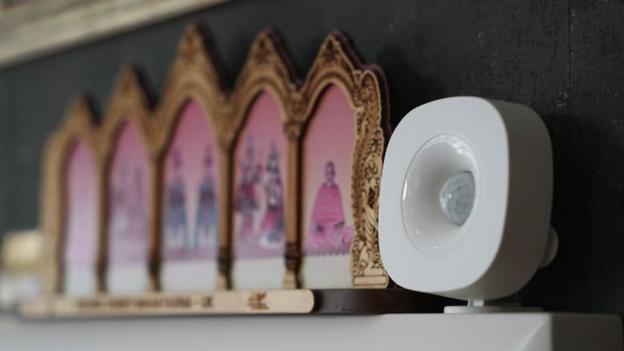
The sensor network includes door monitors that detect unusual departures during the night, movement detectors designed to identify falls, and kitchen appliances fitted with sensors to verify that Jyoti is eating regularly and maintaining her daily patterns. The couple sleep on a smart mattress that continuously tracks sleep quality, heart rate and breathing—data that can reveal early signs of infection before symptoms become apparent. Additionally, Jyoti is testing smart socks and a specialised watch equipped with sensors that monitor body temperature and track changes in her gait, which may indicate increasing frailty.
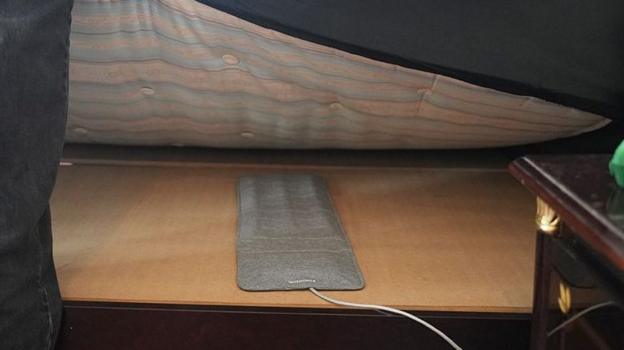
According to the trial registry, the MinderCare study is scheduled to run from October 2023 to October 2027 and is evaluating whether digitally enabled home monitoring can detect clinically relevant changes and support timely care within routine NHS and social care pathways. The system uses low-burden devices including movement sensors, door sensors, smart plugs and a sleep mat, requiring no action from the person living with dementia. The UK DRI's Minder platform, which underpins the trial, is currently in pilot operation across around 100 private homes and has already collected data spanning more than 30,000 days.

How much will it cost and is it worth it?
Annual costs are projected at approximately £2,000 per person, primarily covering data monitoring and the salaries of healthcare staff who analyse the information. With nearly a million people living with dementia across the UK, rolling out the system nationally would represent a substantial investment. However, Sarah Daniels, health and social care lead at the UK Dementia Research Institute, argues the expense is justified. She points out that the annual cost is comparable to just two weeks in a residential care home.
The fundamental objective, Daniels explains, is to provide earlier detection of health changes.
"Earlier signals means earlier intervention, which means we can head potential complications of an infection, potential challenges around care, we can head that off before it becomes a crisis,"she says. By enhancing the information available to general practitioners, the system enables them to make more informed decisions about patient care.
Privacy concerns are addressed by the fact that none of the devices record audio or video. Nevertheless, some individuals may harbour reservations about the extent of personal data being shared with external parties. Daniels contends that providing richer information to healthcare providers ultimately benefits patients through better-informed clinical decisions.
Why is this needed now?
The urgency of developing such technologies is underscored by demographic projections. The number of people with dementia in the UK is forecast to increase by 40 per cent by 2040, placing unprecedented strain on health and social care services. A 2025 update from UK DRI indicates that MinderCare has already launched a new NHS service with Imperial College Healthcare NHS Trust designed to anticipate changing needs and reduce unnecessary hospital admissions.
Dr Jeremy Isaacs, national clinical director for dementia and older people's mental health at NHS England, stated that the health service would monitor the trial closely. He noted that the research builds upon existing NHS programmes already supporting people to remain more independent in their own homes.
What do participants think?
Despite potential concerns about surveillance, Bharat emphasises that the sensors provide him with significant reassurance.
"Even if it can cut down my worries by 5 or 10%, then it helps me and it will help other people too,"he says. For the Patels, the trade-off between privacy and peace of mind is clearly worthwhile.
What happens next?
The MinderCare study is scheduled to continue until October 2027. Beyond the current trial, a related project called MinderCare Radar is testing a wall-mounted contactless radar sensor for home monitoring, with installation planned in 30 homes over approximately six months each during 2026–2027. These developments suggest that home-based digital monitoring could become an increasingly central component of dementia care delivery across the NHS in coming years.