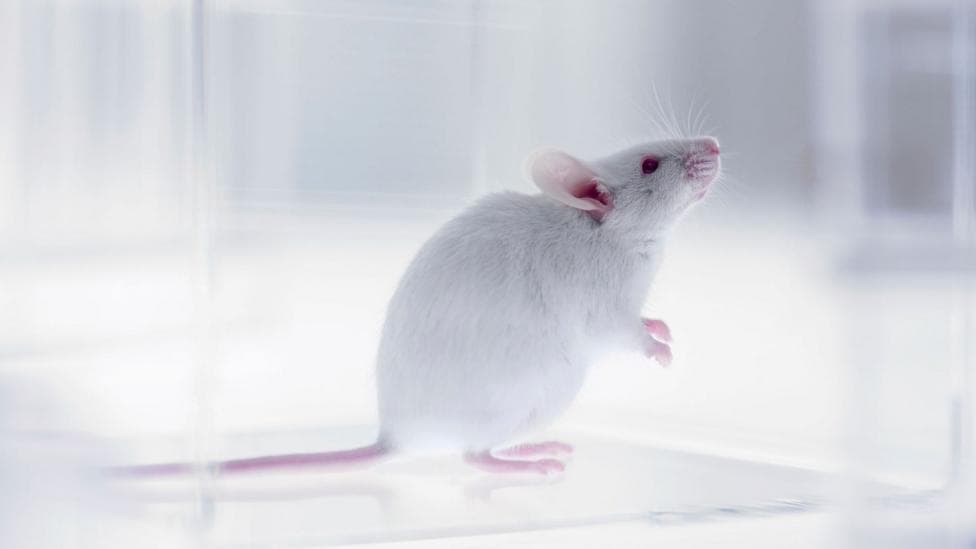
Neuroscientists at Stanford University have successfully integrated functioning human brain cells into laboratory mice, marking what researchers describe as the most extensive cross-species brain tissue integration achieved to date. The work, published in the journal Nature on 16 September 2026, aims to create better models for testing treatments for psychiatric and neurodevelopmental disorders that occur uniquely in humans but cannot be adequately studied in rodents alone.
The research team, led by Prof Sergiu Pașca, genetically engineered newborn mice so that most of their cerebral cortex—the brain's outer layer responsible for higher-level thinking, memory and sensory processing—would fail to develop. According to reporting on the study, the procedure removed approximately 14 million mouse neurons. The researchers then injected human brain cells into the developing animals, with each newborn mouse receiving several injections containing roughly 100,000 human brain cells each.
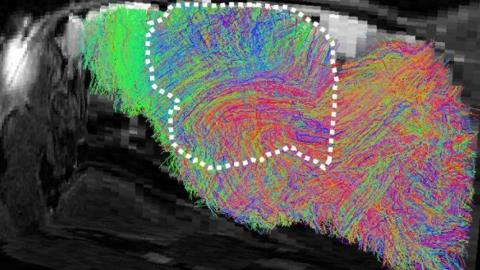
The human tissue, derived from skin cells that had been reprogrammed into brain-like structures called organoids, subsequently integrated with the mouse's existing nervous system. One report indicates that the human tissue occupied approximately 92% of the cortical space after three months and increased in volume by about 4.7 times, while the human cells wired into the animals' blood supply and connected with the rest of the mouse brain and spinal cord.
The scientists emphasised that these are not mice that think like humans. Rather, they represent a novel research tool designed to address a critical gap in drug development. As Prof Pașca explained, psychiatry has
one of the lowest success rates for clinical trials, with many drugs that perform well in animal models failing dramatically when tested in human patients.
That tells us we're missing a lot of information about human biology and capturing that will be essential, he said.
Why human brain tissue in mice matters
The fundamental challenge in neuroscience is that some brain disorders develop only in humans and cannot be reliably replicated in rodents. Conditions including epilepsy, autism and cerebral palsy involve complex neurological mechanisms that mice do not naturally exhibit, making it impossible to test potential treatments on conventional animal models. By introducing human brain tissue into mice, researchers gain access to human neural biology while retaining the practical advantages of working with laboratory animals.
Pașca's team had previously demonstrated that human brain organoids could survive and function after injection into baby rodents, but the current work represents a significantly larger step in the same research programme. The Stanford researchers said their work was carried out with independent ethical scrutiny and that the mice were engineered and reared under strict ethical and welfare guidelines.
How the human-mouse brain was constructed
The process begins with human skin cells, which scientists reprogram to grow into organoids—three-dimensional structures of connected, living cells that resemble brain tissue but are not whole brains. When implanted into the genetically modified mouse brain, these human cells divided and organised themselves into the animal's existing brain circuitry.

The resulting cortex differs from a normal mouse brain. While typical cortex forms organised, structured layers, scans of these hybrid brains appear, as neuroscientist Dr Ilary Allodi described it,
a bit messy. However, after several months, the human cells began to function like the outer layer of the mouse brain. Notably, cell types found only in human and primate brains—not in mice—spontaneously formed in the implanted animals, a development Allodi called
very impressive.
When researchers conducted basic behavioural tests on the mice approximately six months after surgery, observing them as they moved around a small table-top arena, Pașca reported they performed
largely as [the normal] mice did.
They don't have any enhancement, he added, indicating that the presence of human brain tissue did not confer cognitive advantages over standard laboratory mice.
What ethical concerns does this raise?
The creation of animals with partially human brains raises profound questions about animal welfare and consciousness. Dr Sarah Chan, a reader in bioethics at the University of Edinburgh, noted there is
no indication that what's being created here are mice that can think like humans, or a human brain in a mouse body. However, she cautioned that the study
prompts us to think about what it might mean when we start changing animal cognition.
The central ethical question becomes: how can researchers know what subjective experience these animals have, and how should that inform their treatment?
How can we know what it's like to be one of these mice? And how do we take account of that in the ways that we treat laboratory animals, Chan asked. Prof James Ainge, a neuroscientist at St Andrews University, pointed out that while the development was technically impressive, these mice could be
of limited usepartly due to the
ethical issues of raising living human brain tissue in a mouse and what that would mean for the experience of the animal.
What are the practical limitations?
Despite the scientific achievement, researchers acknowledge significant constraints on how widely this model can be applied. These mice will most likely be used in a small number of laboratories for studies of specific brain disorders rather than becoming a standard research tool. Prof Ainge noted that neuroscientists studying the human brain universally struggle with the same fundamental limitations:
We try to understand human disease, and what we have is mice, cells that live on a plate, and neural networks on a computer.
The hybrid mice represent one potential solution to this problem, but they cannot fully replicate the complexity of the human brain. According to a Nature news piece, the practical next steps involve using the hybrid animals to test drugs and study developmental disorders such as cerebral palsy, with further peer review and follow-up work expected as researchers and ethicists assess how far this model can be taken.
What happens next
The research community and ethics boards will now evaluate the implications of this work and determine how it can be responsibly developed. The Stanford team's broader aim remains to create better models for brain diseases that are difficult to study in mice because rodents do not naturally develop certain human neurological conditions. As the field moves forward, balancing scientific opportunity against ethical responsibility will be essential to determining whether and how extensively this approach can be pursued.