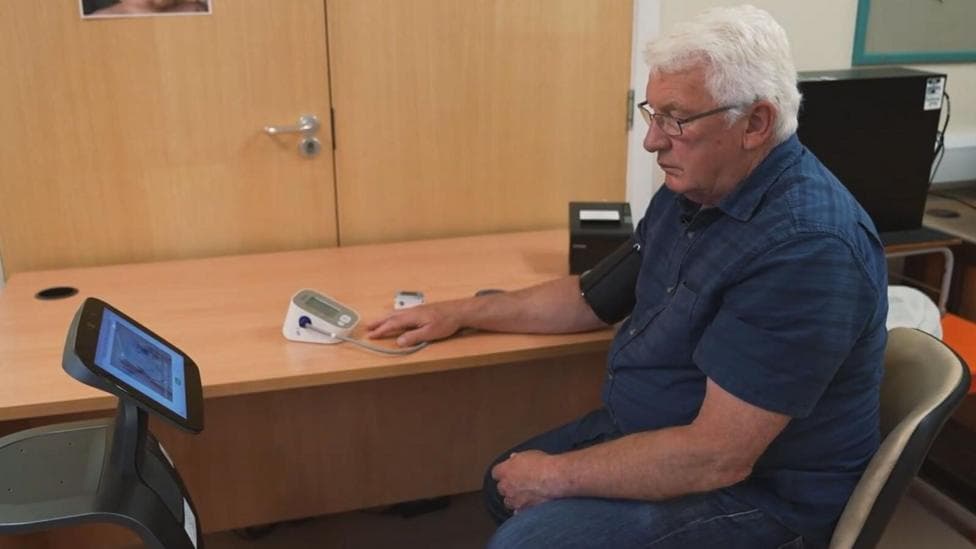
Ged Cashley experienced cardiac arrest in 2018 and now undergoes annual monitoring appointments to track his cardiovascular health. His most recent visit to his GP practice in Dundee took an unexpected turn when he encountered Teme, a 3-foot-tall robot that glides through the waiting room and conducts preliminary health assessments before patients see their doctor.
It's a bit odd at first, but you soon get used to it, Ged explains.
The first part of almost every patient consultation is spent collecting basic information. The little robot does that job - so by the time you sit down with your GP, they already have what they need and can spend their time actually talking to you.
How does the robot assist with consultations?
The trial, called HEART-POD, represents a collaboration between Erskine Medical Practice at Arthurstone Medical Centre in Dundee and researchers at the National Robotarium hosted by Heriot-Watt University in Edinburgh. Twelve patients with cardiovascular conditions participated in the two-day pilot programme.
During the trial, Teme performed routine measurements including blood pressure monitoring, oxygen saturation checks and weight recording. The robot, which currently speaks with an American accent, greets patients in the waiting area and guides them to an examination room where it provides verbal instructions on tasks such as positioning the blood pressure cuff, placing their arm flat on the table and activating the monitor. After collecting data, the robot prints results for discussion with nursing staff or the GP.

What benefits did the trial reveal?
Dr Gillian Chin, the GP leading the practice, believes robotic assistance could enable healthcare professionals to
see more patients, more quickly. According to her assessment, the robot reduced consultation time by 50%, allowing doctors and nurses either to accommodate additional patients or dedicate more time to complex cases.
Feedback from both staff and patients was predominantly positive, though the trial identified concerns that would require resolution before any wider rollout. Some patients expressed privacy reservations, preferring not to conduct preliminary checks with the robot in the public waiting room.

It's undeniable that the NHS is under pressure, Dr Chin told a national broadcaster's report.
Demand on the system is increasing at a higher rate than the number of appointments and capacity that we're able to offer.
How do robots fit into the broader NHS technology landscape?
Robotic and artificial intelligence applications are not entirely novel within the NHS. Surgeons have already embraced robotic-assisted surgery for its capacity to enable complex procedures with faster patient recovery times. AI tools have demonstrated success in specific NHS settings, such as assisting radiologists in cancer detection. However, deployment of these technologies has also raised questions about diagnostic reliability, patient privacy protection and potential workforce implications.
The Royal College of GPs Scotland acknowledges that robots performing routine tasks can meaningfully support medical professionals. Dr Chris Williams, Vice Chair of the organisation, cautioned that
technology should be seen as a tool to support healthcare professionals, not replace them. The human relationship between patients and clinicians cannot be replicated by technology alone.

Colin Poolman, executive director of the Royal College of Nursing in Scotland, expressed similar sentiments, stating that
nursing staff welcome investment in solutions that support them to be more effective in their roles, while emphasising that
technology is a support for nursing staff, not a substitute.
Why is adoption of healthcare robots slower in the UK than elsewhere?
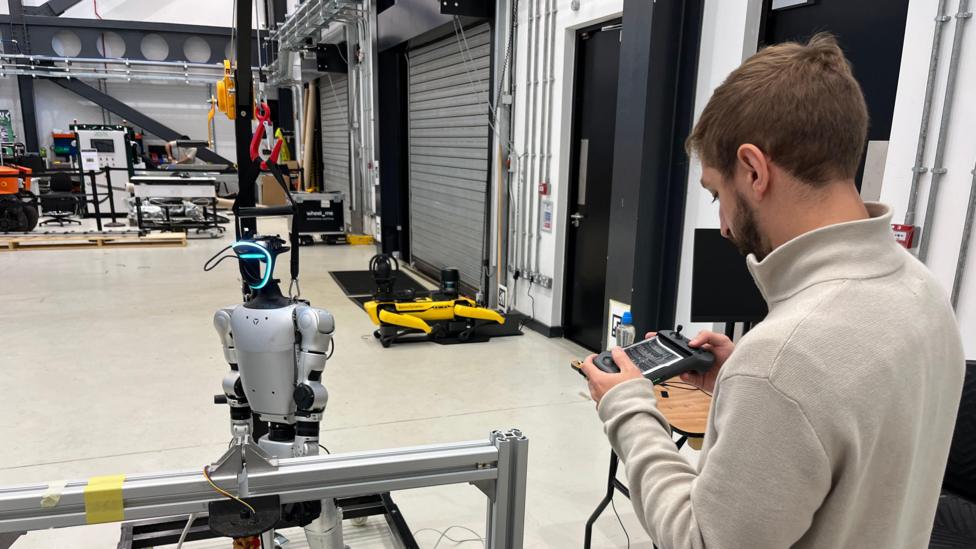
Lisa Farrell, business development lead for Healthcare Robotics at the National Robotarium, observes that rapid developments in humanoid robotics are occurring in consumer sectors including retail and leisure environments. However, healthcare adoption in the UK remains limited compared to countries such as the United States and Japan.
Farrell explains that healthcare robots are engineered to support rather than displace professionals, handling
dull, dirty or dangeroustasks to enable staff to concentrate on work requiring human judgment and empathy. She emphasises that Scotland and the UK require
momentum and political will nowto accelerate adoption.
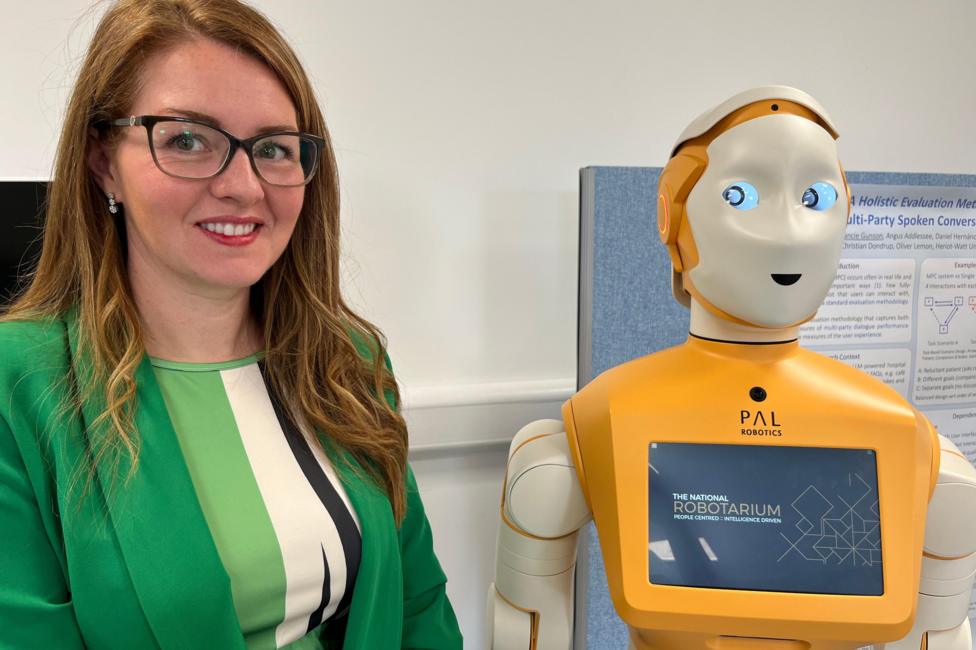
According to the National Robotarium, its healthcare robotics research encompasses patient monitoring, diagnostics, rehabilitation and robotic surgery applications. The organisation has also deployed Temi robots in a separate Glasgow project serving as telepresence systems for routine health and wellbeing assessments and emergency response coordination.
What barriers prevent wider implementation?
The National Robotarium is currently managing multiple small-scale pilots similar to the Dundee trial, including a healthcare robot project in a Paris hospital and an upcoming test in a Glasgow care home. Most initiatives remain dependent on private company funding rather than sustained public investment.
Professor Cristina Tealdi, an economics professor and project co-investigator, identifies a critical gap: while the underlying technology advances rapidly and adapts to diverse requirements, the UK lacks coordinated national planning.
At the moment the implementation is very scattered and there is not a national strategy towards implementation of technology in healthcare, she states. Tealdi argues that national investment coupled with real-world testing would generate essential data on which approaches deliver optimal value to the NHS and patients.
What government support exists for healthcare technology?
Health Secretary Angela Constance affirmed that innovation represents a cornerstone of the government's health and care system reform agenda. She highlighted existing initiatives including support for AI-powered physiotherapy services and a £1.8 million investment in a national digital dermatology platform now accessible to all GPs, designed to reduce waiting times and facilitate earlier skin cancer diagnosis.
This commitment to technology-enabled care aligns with broader NHS initiatives. The NHS is introducing an AI-powered triage tool within its app to direct patients to appropriate services, aiming to improve efficiency and reduce pressure on GP appointment availability as part of a wider technology modernisation programme.
Additionally, on 19 August 2026, Scotland's health secretary launched a new "heart and lung MOTs" scheme, expanding access to preventative cardiovascular checks across the country—an initiative that could complement robotic health assessment capabilities in future implementations.
Key Facts
- Teme, a 3-foot robot, conducted preliminary health checks for 12 cardiovascular patients during a two-day trial at Erskine Medical Practice in Dundee
- The robot reduced consultation time by 50%, enabling GPs and nurses to see more patients or provide more detailed care
- Trial feedback was largely positive, though some patients raised privacy concerns about conducting checks in the waiting room
- The National Robotarium is developing robots for patient monitoring, diagnostics, rehabilitation and telesurgery applications across multiple UK and international sites
- Experts emphasise that healthcare robots should support rather than replace clinical staff, with national strategy and sustained investment needed to accelerate wider adoption