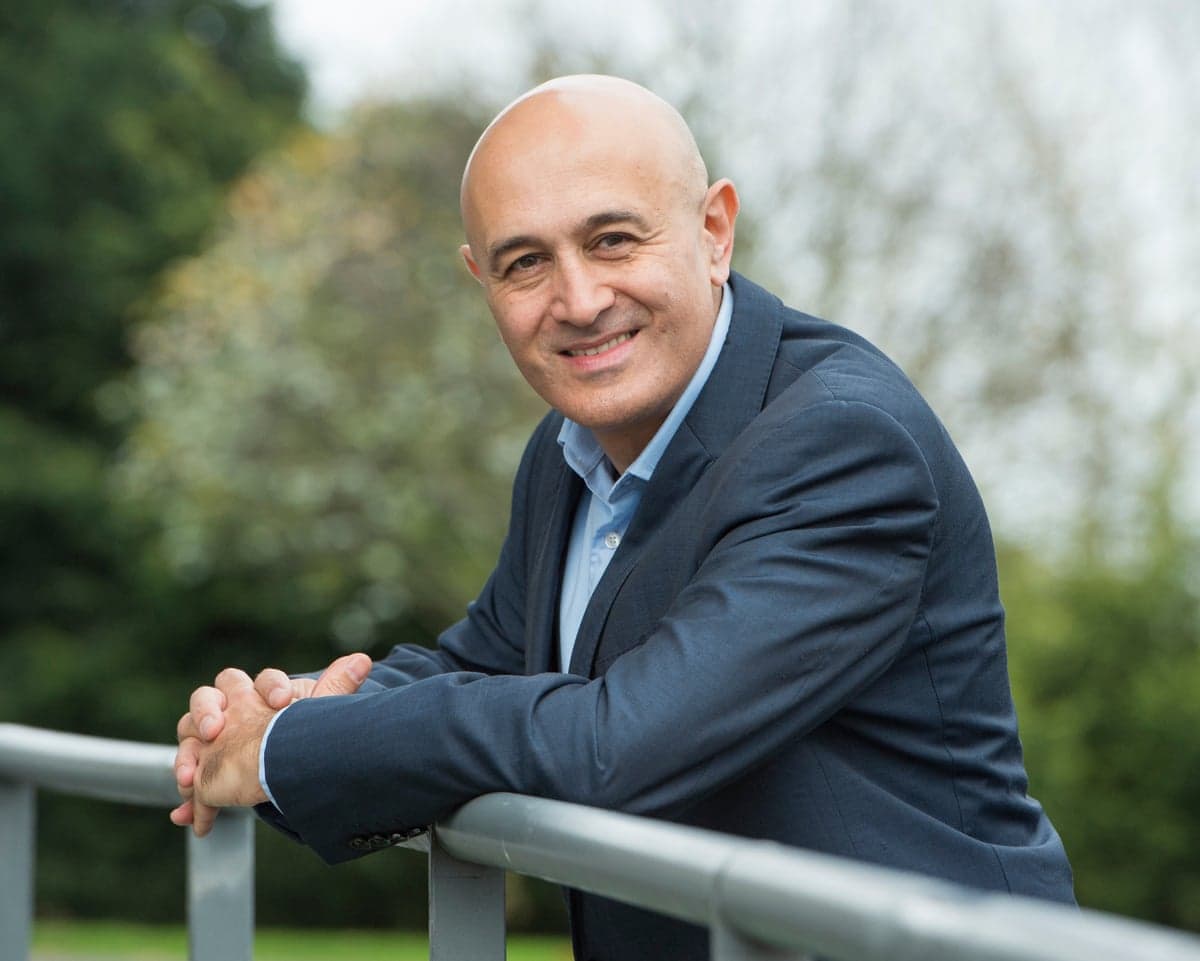
Tech billionaires pursuing immortality are fundamentally misunderstanding time itself, according to a leading theoretical physicist who will explore the nature of temporal existence in this year's Christmas lectures. Prof Jim Al-Khalili argues that expending vast resources on life extension may cause people to forfeit the present moment in pursuit of an impossible goal.
While some individuals pursue conventional anti-ageing strategies such as cold plunges and dietary supplements, ultra-wealthy entrepreneurs are pursuing far more extreme interventions. Bryan Johnson, a technology executive, has experimented with numerous biohacking techniques in his quest to achieve immortality. According to recent reporting, Johnson remains committed to his "Don't Die" movement and aims to achieve immortality by 2039.

Al-Khalili, who will deliver the Royal Institution's 2026 Christmas Lectures on the subject of time, contends that those dedicating themselves to life extension may be squandering their existence. He articulated his perspective with characteristic directness:
We have a finite interval of time in which we exist in the universe. And the more I study the nature of time, the more I think about it, the more I realise that I just want to make the most of the time that I have. We're [here for] a blink of an eye compared with the age of the universe. If I spend that blink of an eye trying to extend it to two blinks of an eye, I'm not sure if that is actually a worthwhile thing to be spending my life doing.
How did a physicist become fascinated by time?
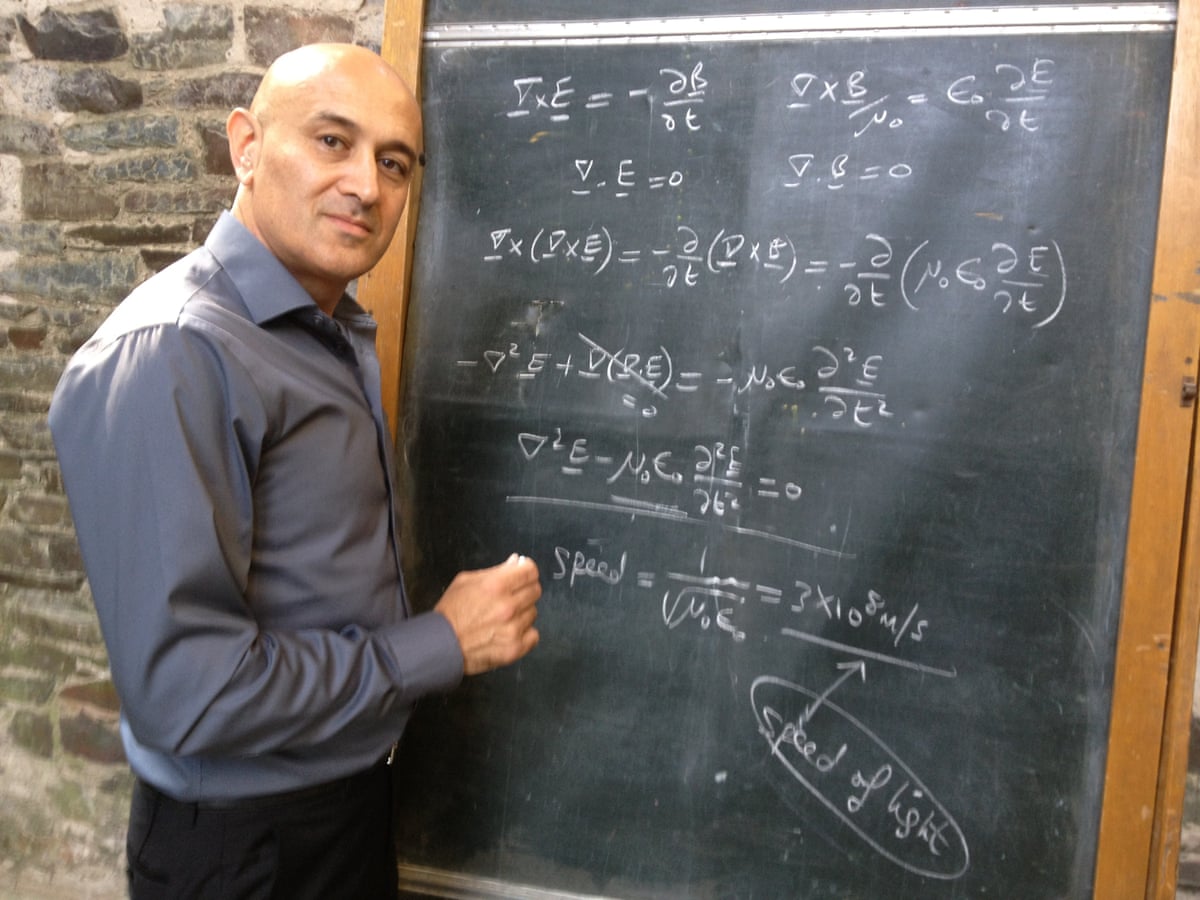
Al-Khalili's lifelong engagement with temporal concepts began in childhood when his father, an engineer, remarked that no one truly comprehended what time was. This cryptic statement puzzled the young Al-Khalili profoundly. Only through formal training in physics did he grasp the profound disconnect between everyday intuition about time and the theoretical frameworks physicists employ. He reflected:
It was only after training as a physicist you realise that, actually, the notion of time – our commonsense view of time – somehow it is very far removed from the way we think about time in physics in particular.
What did Einstein reveal about time?
Albert Einstein's revolutionary theories fundamentally transformed humanity's understanding of temporal flow. Einstein demonstrated that time does not progress uniformly for all observers—a concept that defies everyday experience. Al-Khalili illustrated this principle with a vivid example:
What I might call a second would be longer than a second for you if I was flying past you with my clock in a rocket. I'll say, look, it's ticking by one second. And you'll say, no, actually, five seconds have gone by. You're doing everything in slow motion.
Gravitational fields introduce an additional layer of temporal complexity. Al-Khalili emphasised the profound implications:
That for me is the most spine-tingling aspect to it, that time runs at different rates depending on how strong gravity is.
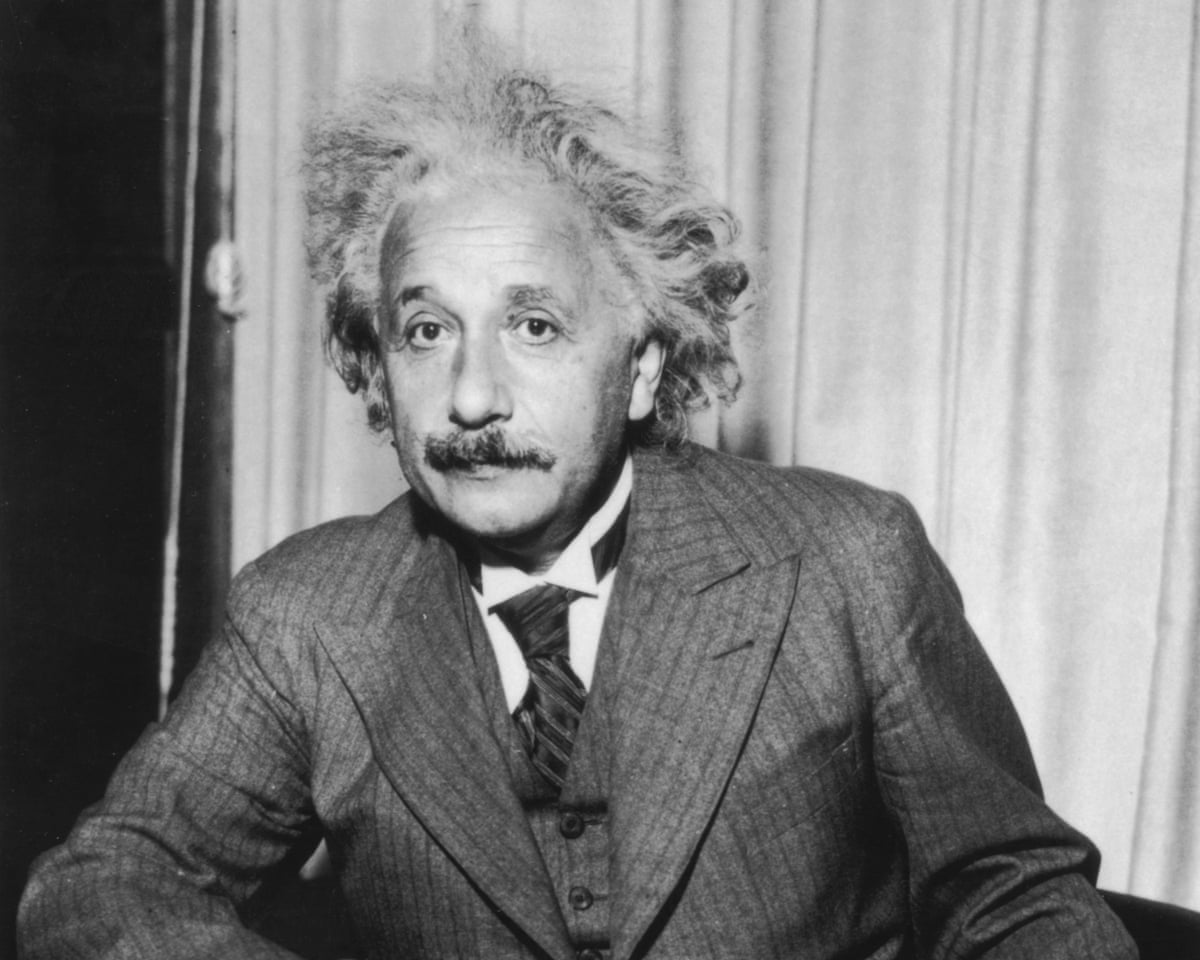
Einstein's insights offer an unexpected lens through which to examine Charles Dickens's literary masterpiece, A Christmas Carol. The narrative device of three spirits visiting Ebenezer Scrooge on a single evening—representing past, present and future—becomes theoretically plausible under relativistic physics. According to Einstein's framework, all moments in time coexist in the same manner that all spatial locations exist simultaneously. Al-Khalili explained:
The problem, of course, is that we only ever experience the present moment. So, the idea of the Christmas Carol is a wonderful one that highlights this notion that times maybe aren't all separate. That maybe we can join with people, someone from the past, someone from the future. But of course, in relativity, that means time travel.

Is time travel actually possible?
Time travel represents one of several topics Al-Khalili will address in the upcoming lecture series. From a mathematical perspective, backward time travel remains theoretically permissible within relativistic equations. However, the practical reality proves considerably more intricate. Al-Khalili employed an analogy to clarify the mechanism:
You're travelling forward along the rollercoaster, but what's happening is you're doubling back on yourself and arriving back at your starting point. It's the same sort of thing [with time travel]. What's called a closed time-like curve in relativity, is somewhere in space-time which is so warped and curved by gravity that you're travelling what you regard as forward in time, but in fact you're looping back through space-time to a moment before you started.
The fundamental obstacle to backward time travel stems from the logical paradoxes it generates. Al-Khalili noted:
But the problem, of course, is most physicists think 'surely that is impossible', because time travel into the past leads to all sorts of paradoxes.'
Forward time travel, by contrast, operates on more secure theoretical ground. Two mechanisms could theoretically enable it: travelling at velocities approaching light speed, or positioning oneself within the gravitational field of a supermassive black hole. Al-Khalili referenced the film Interstellar to illustrate the latter scenario:
The way you do it is by slowing time down, either by travelling close to the speed of light or doing what Matthew McConaughey does in Interstellar – you go and orbit around a supermassive black hole whose gravitational field is so strong that, I think in the movie, every hour they spend near this black hole, seven years go by on Earth.
Why does time appear to flow in only one direction?
A puzzle that has occupied physicists for centuries concerns the apparent unidirectionality of temporal flow. Observable phenomena consistently demonstrate this directionality: objects deteriorate, energy sources deplete, objects descend rather than ascend, organisms age, and disorder accumulates unless external effort intervenes. Yet the fundamental equations of physics contain no inherent directional bias. Al-Khalili articulated this paradox:
Things decay, batteries run out, balls roll downhill, we grow older, your children's bedroom gets more messy, not more tidy – unless you intervene. All those things point to a directionality to time, and yet fundamentally our equations say there is no preferred direction in time.
This conceptual problem has occupied Al-Khalili's thoughts intensively over an extended period. He has now formulated what he believes constitutes a resolution.
In the lectures, I'm going to give an explanation for how to solve that problem. I won't give any spoilers, that's for the Christmas lecture. I have solved the problem of the arrow of time.
What will the 2026 Christmas Lectures cover?
The Royal Institution's 2026 Christmas Lectures, supported by CGI, will span three separate talks delivered by Al-Khalili. Beyond the arrow of time problem, the lectures will examine whether time existed prior to the Big Bang and whether the future remains predetermined or remains open. The Royal Institution has also indicated that Al-Khalili will address why "our heads are ageing faster than our feet," connecting temporal physics to biological processes.
Al-Khalili holds the position of Distinguished Emeritus Professor of Physics at the University of Surrey and maintains an active career as a broadcaster and author alongside his academic work.
When will the lectures air?
The 2026 Christmas Lectures are scheduled for broadcast in late December on BBC and . Members of the Royal Institution will have the opportunity to attend live filming sessions at the Institution's Theatre prior to the broadcast premiere.