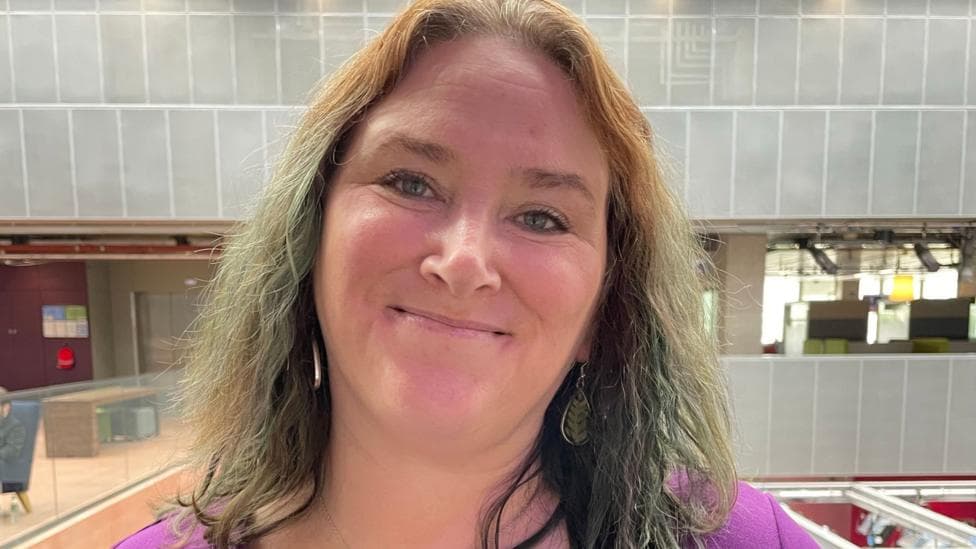
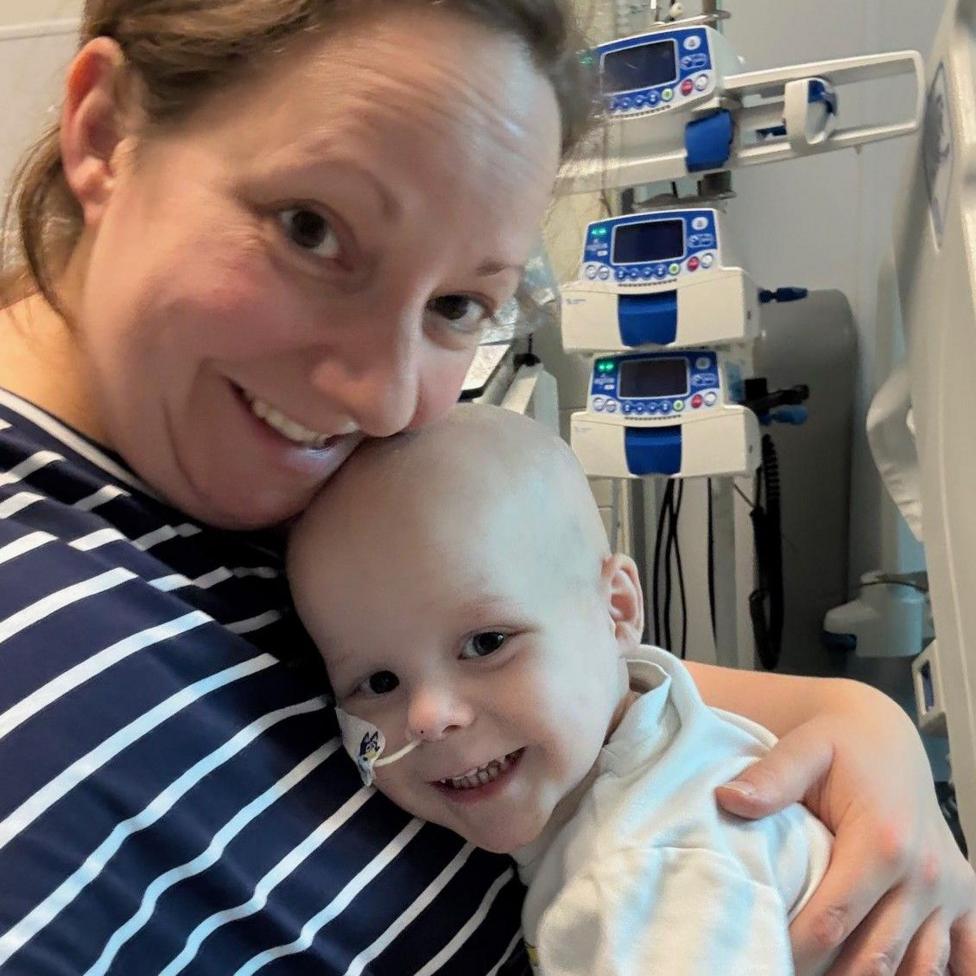
A paediatric nurse from Newport says her medical knowledge has been a “blessing and a curse” as she watches her three-year-old son Teddy face high-risk neuroblastoma, a rare form of childhood cancer diagnosed a year ago. Sarah Sloman says Teddy has been through a “horrendous 12 months” and is now facing the next phase of treatment, which is not currently available in the UK.
Sarah, who has spent 20 years treating children at work, said the situation has felt “uncanny” because it mirrors the kind of news she has given to “countless parents” during her career. The family is now trying to raise £250,000 to fund Teddy’s next treatment options, including possibilities in the United States and Italy.
What has Teddy been through so far?
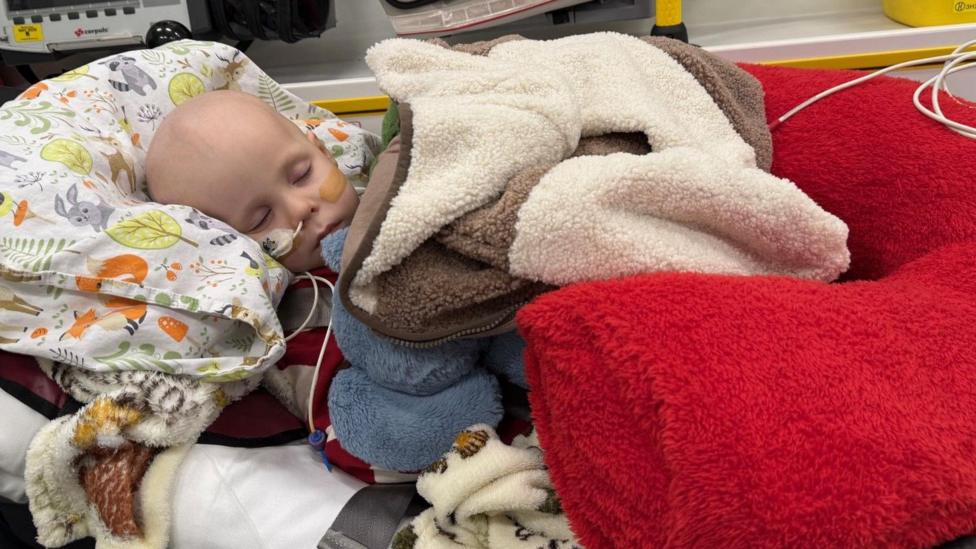
Teddy has undergone a gruelling course of treatment over the past year, including intensive chemotherapy, surgery, a stem cell transplant and radiotherapy in London.
He has also faced complications, including a severe reaction to one of the immunotherapy drugs, which meant he had to stop it. Sarah said the family has had to focus on getting Teddy through each stage of treatment day by day.

“Part of me has just gone into work mode... it has become 24-hour shifts and just doing what we need to do to get Teddy through this,” she told BBC Radio Wales Breakfast.
“But he always wakes up with a smile on his face so that's the thing that keeps us going, his strength and determination to beat this horrendous disease.”
What happens next in Teddy’s treatment?
A maintenance drug called difluoromethylornithine, or DFMO, could help prevent Teddy from relapsing, but it has been withdrawn from the NHS by the US-based company that owns it following a clinical trial. Sarah said the treatment they have had so far has focused on attacking the cancer and killing off the tumour, while the next phase is intended to help the body eliminate specific cells before they become “anything sinister”.
“The treatment we've had up until now is all about sort of attacking the cancer and killing off the tumour,” Sarah said.
“This next part is a maintenance phase... it teaches the body to eliminate [specific cells] before it can turn into anything sinister.”
The family is now trying to maximise the options available when Teddy reaches the point of needing this next phase of treatment in October. Sarah said they have no definite answers yet, but are exploring three possible routes: buying DFMO from America and importing it to the UK, joining a vaccine trial in New York, or taking part in a newer trial in Rome.
“This is what is so difficult with our current situation, is we have no definite answers at the moment,” said Sarah.
“We could potentially buy [DFMO] from America and have it imported to us here in the UK. There is a vaccine trial in New York, in America, which we would have to go there and stay, or there's an even newer trial going on in Rome.
“But all of these things need their medical teams to accept us as their patient, so we've started the ball rolling for all three options to see which one we would be accepted for and which would be the best course of treatment.”
How much has the family raised so far?
The family has so far raised £50,000 of their £250,000 target. Sarah said Teddy’s illness has also affected his younger brother Joey, who is 18 months old and was born two months premature.
“He's barely known life with his mum and dad at home,” Sarah said, as they spend so much time at hospitals.
Sarah said Teddy’s smile is what keeps her going through the ordeal, and the family has spent a great deal of time in hospital over the past year, including when they celebrated his third birthday there. 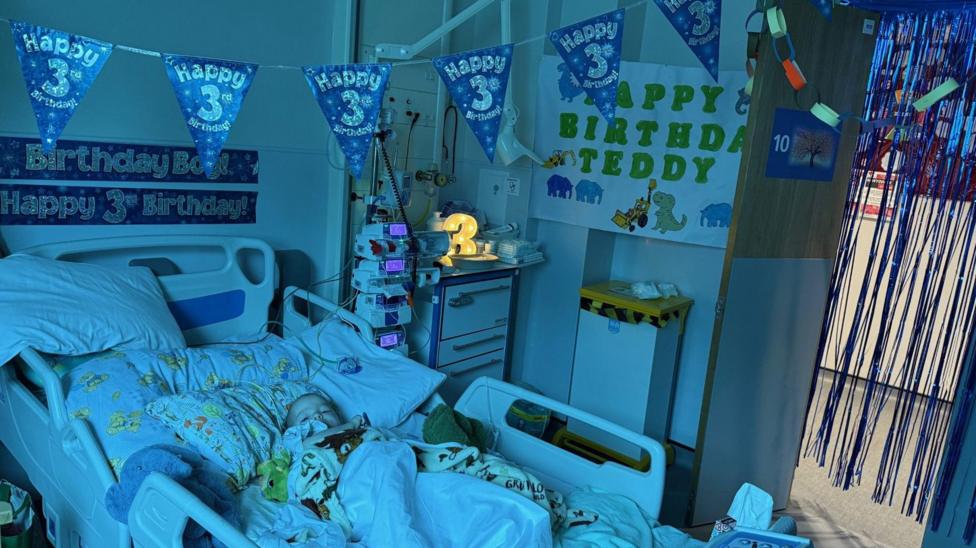
How has Sarah’s nursing background affected her?
Sarah said her training has helped her cope in some ways, but it has also meant she understands “what that means in reality... the statistics we're facing... the chances of surviving”. She said she has spent most of her working life caring for sick children and, as a student, once gave a family almost identical news 20 years ago.
“I've been caring for sick children for most of my working life,” she said.
“I, as a student, gave a family almost identical news when I was training 20 years ago.
“It's uncanny the resemblance to this particular situation. To be stood in that cubicle on the ward that day, to receive that news from a student nurse, a qualified nurse and a doctor, it just felt like an out of body experience.
“I wouldn't wish this past 12 months on anyone.”
Key Facts
- Teddy, three, was diagnosed with high-risk neuroblastoma a year ago.
- Sarah Sloman is a paediatric nurse from Newport and has spent 20 years treating children.
- The family is trying to raise £250,000 and has so far raised £50,000.
- Possible treatment options under consideration include DFMO, a trial in New York or a trial in Rome.
- Teddy has already had chemotherapy, surgery, a stem cell transplant and radiotherapy in London.