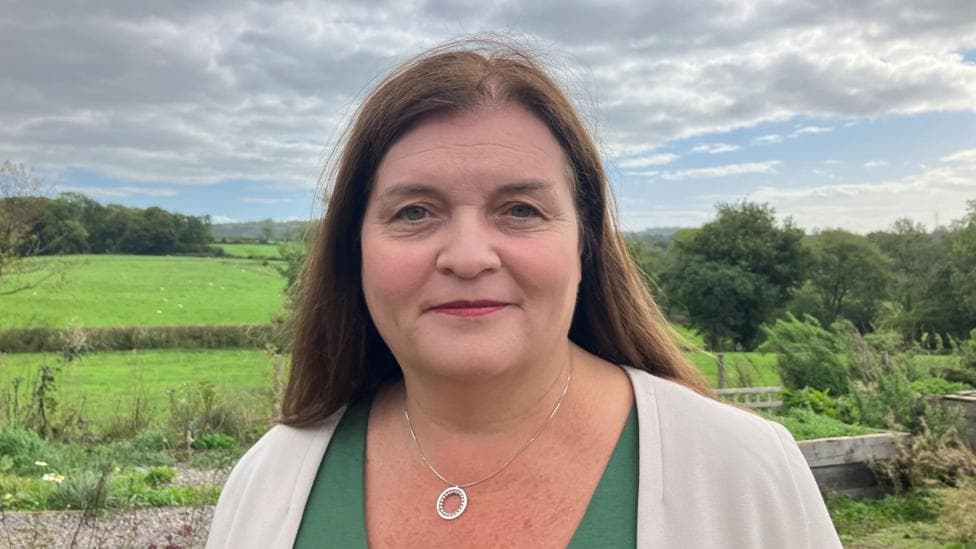
Cara McKee, the Scottish Green Party MSP representing the West of Scotland, has disclosed that she experienced suicidal ideation while struggling with chronic pain caused by trigeminal neuralgia, a severe neurological condition affecting the facial nerves. The politician is preparing to resume her duties at Holyrood following two brain surgeries to address the debilitating condition, which produces sharp, shooting sensations across the face.
Speaking to a national broadcaster's podcast, the mother of three revealed that obtaining a diagnosis took nearly three decades. Initially, medical professionals misidentified her symptoms as dental problems, leading to a tooth extraction. Subsequently, she was prescribed various medications in attempts to manage her pain, none of which proved effective.
The Impact of Medication
One particular medication appeared to offer minimal relief while simultaneously triggering profound emotional changes. McKee described the psychological toll:
I got put on one medication which I thought maybe helped a little bit, but it didn't help all the way. It also made me feel very negative. To be honest I had suicidal ideation. It just seemed like it would be more sensible if I wasn't there and the kids could be looked after better.
She explained that the suicidal thoughts felt disturbingly rational rather than emotionally driven.
I can remember how logical it was to me. I didn't feel really upset about it, which is what I imagined. It just seemed like a sensible path.
After discussing her mental state with her husband, McKee returned to her doctor, who discontinued the problematic medication. This intervention proved crucial in her recovery and wellbeing.
How Widespread Is Chronic Pain in Scotland?
Chronic pain affects a substantial portion of Scotland's population, with significant gender disparities in prevalence. According to NHS data, approximately 38 per cent of Scottish adults experience chronic pain, though this figure rises to 43 per cent among women compared to 33 per cent among men. McKee believes many sufferers endure their conditions without seeking help or discussing their experiences openly.

During a team-building exercise in her previous career as a librarian, McKee participated in an activity where colleagues rated their pain levels on a scale of one to ten.
I think I put down 7 out of 10 at the time… there wasn't anyone below four.This experience highlighted to her how many people silently manage significant pain without others realising their struggles.
The Long Road to Diagnosis
McKee finally received her trigeminal neuralgia diagnosis six years ago after being prescribed medication specifically designed for this condition. The extended diagnostic delay meant she endured decades of unnecessary suffering and inappropriate treatments. As her condition worsened into her 50s, she made the difficult decision to pursue major surgical intervention.
The timing of her surgery coincided with her election campaign for Holyrood.
I initially had it planned for May. And I was really surprised that I got elected, so we moved it to during recess.She underwent two brain surgeries during the parliamentary recess period, prioritising her health while managing her new political responsibilities.
Returning to Work and Advocacy
McKee now lives with substantially reduced pain levels following her surgical procedures. She is determined to leverage her personal experience to influence her work as an MSP, currently serving as the Scottish Greens spokesperson on community care. Despite warnings from others that her condition would prevent her from effectively serving as a politician—particularly given that speaking could trigger her pain—she remained resolute.
People told me that I shouldn't stand has an MSP because of the pain and especially because it got triggered when speaking. That's just like a red rag to a bull for me.She acknowledged that her role presents challenges but emphasised the importance of representation for the many constituents living with chronic pain conditions.
It might be difficult, but there's loads of people who have pain, who need to be represented.
Key Facts
- Trigeminal neuralgia is a neurological condition causing severe facial pain that took McKee nearly 30 years to diagnose correctly
- Approximately 38 per cent of Scottish adults live with chronic pain, with women experiencing higher rates (43%) than men (33%)
- McKee underwent two brain surgeries to treat her condition and now experiences substantially reduced pain levels
- She serves as the Scottish Greens spokesperson on community care and is committed to advocating for chronic pain sufferers
Support and information for those affected by mental health concerns or chronic pain conditions is available through appropriate health services and support organisations.