Ward clerks at Scotland's largest health board have abandoned a planned three-day strike after voting to accept an improved pay offer from their employer. Members of Unison at NHS Greater Glasgow and Clyde (NHSGGC) had been scheduled to walk out from Monday, but the union's members voted to call off the action following a revised proposal from the health board.
The revised deal could deliver a pay increase exceeding £2,000 for the most experienced workers, with some staff potentially eligible to receive up to three years of back pay. Ward clerks currently occupy the lowest NHS pay grade, and Unison has argued they have shouldered expanded responsibilities without corresponding pay recognition in recent years.
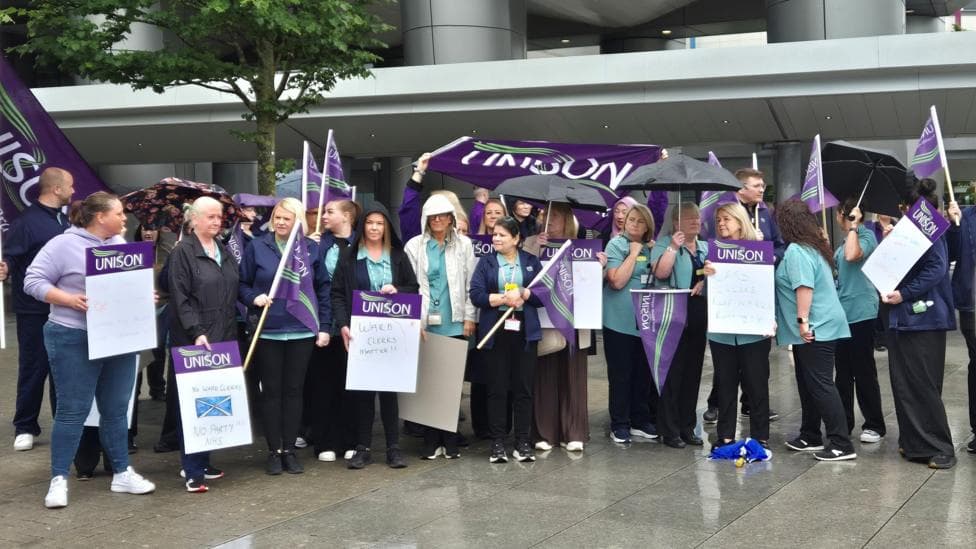
This decision to cancel the planned stoppage marks a significant shift after ward clerks staged a two-day strike on 5–6 August 2026. According to union figures, more than 220 ward clerks participated in that earlier action, with 98% of those involved backing industrial action. Picket lines had been established at Queen Elizabeth University Hospital, Glasgow Royal Infirmary, Royal Alexandra Hospital, Inverclyde Royal Hospital and Gartnavel General Hospital, with a rally held outside Gartnavel Royal Hospital.
What triggered the dispute?
The conflict centred on ward clerks' assertion that their job duties had expanded substantially since the pandemic without a corresponding review of their pay or grading. Unison maintained that despite taking on additional responsibilities, the clerks remained on the lowest NHS pay band, creating an untenable situation for experienced staff.

How did this resolution come about?
The latest offer followed successful industrial action by district nurses and payroll officers at NHSGGC over comparable pay and grading concerns. Unison branch secretary Frances Carmichael expressed her pride in the staff involved, stating:
"I could not be prouder of staff who refused to give up on getting the recognition they deserve. This shows what workers can achieve when they stand together."
Lorcan Mullen, Unison Scotland regional organiser, emphasised the significance of collective action:
"NHS boards shouldn't be forcing loyal, hard-working staff to strike just to be paid fairly, and after this successful action we will be expecting a radical change to the board's approach to rebanding claims."
What has the health board said?
A spokesperson for NHSGGC stated:
"We highly value our staff and are pleased to have worked constructively with Unison to reach a resolution. We also look forward to working with our trade union colleagues to establish a better and more timely process going forward."
What happens next?
Unison has signalled its expectation of a fundamental shift in how NHSGGC handles future rebanding claims. The health board has committed to collaborating with trade unions to develop improved and faster procedures for addressing such disputes, suggesting a structural change to how pay and grading matters are resolved at the organisation.
Key Facts:
- Ward clerks at NHSGGC called off a planned three-day strike after receiving an improved pay offer
- The deal could provide pay increases exceeding £2,000 for experienced workers, with potential back pay of up to three years
- More than 220 ward clerks participated in an earlier two-day strike on 5–6 August 2026, with 98% backing industrial action
- The resolution followed successful strikes by district nurses and payroll officers at the same health board over similar pay issues
- Both Unison and NHSGGC have committed to establishing better processes for handling future rebanding and pay disputes