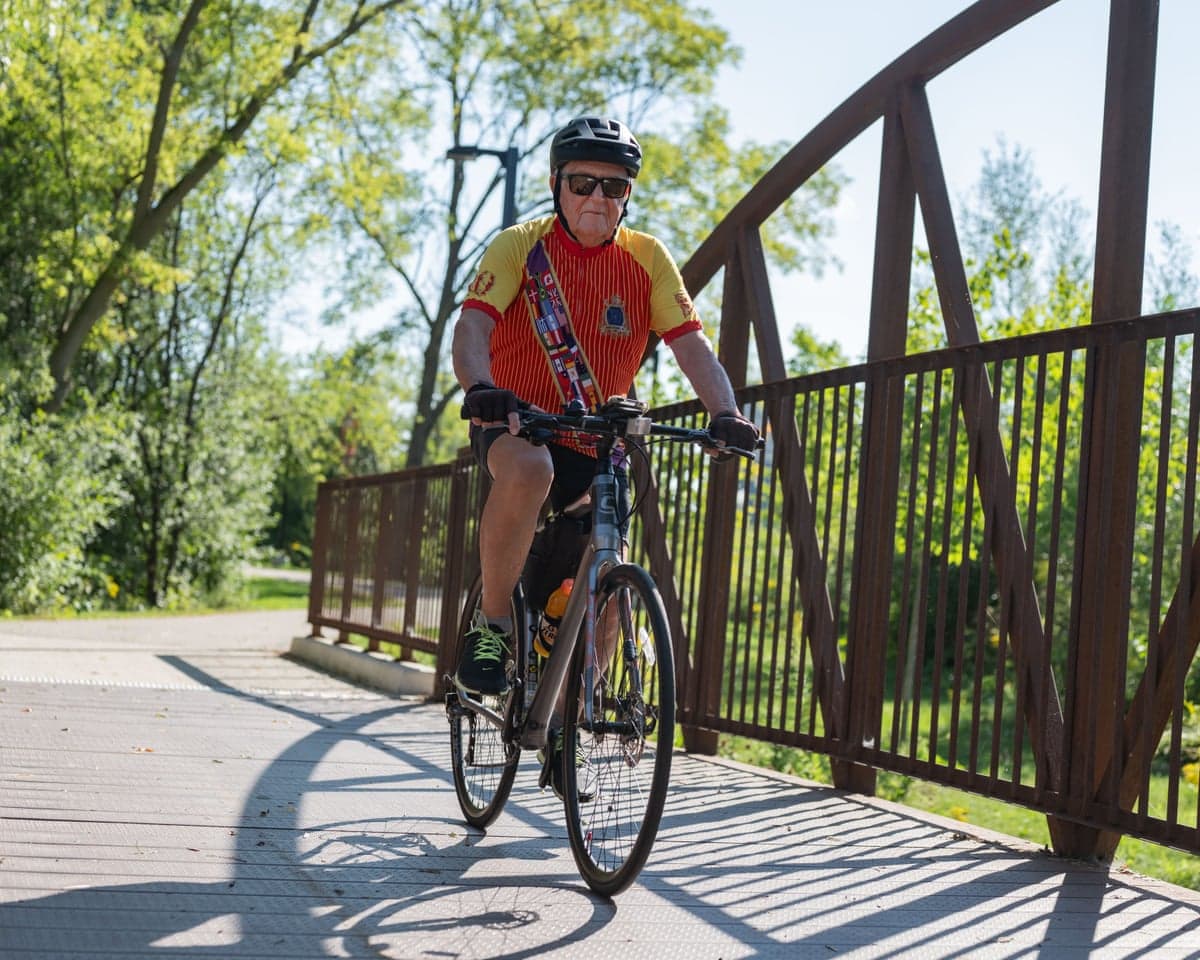
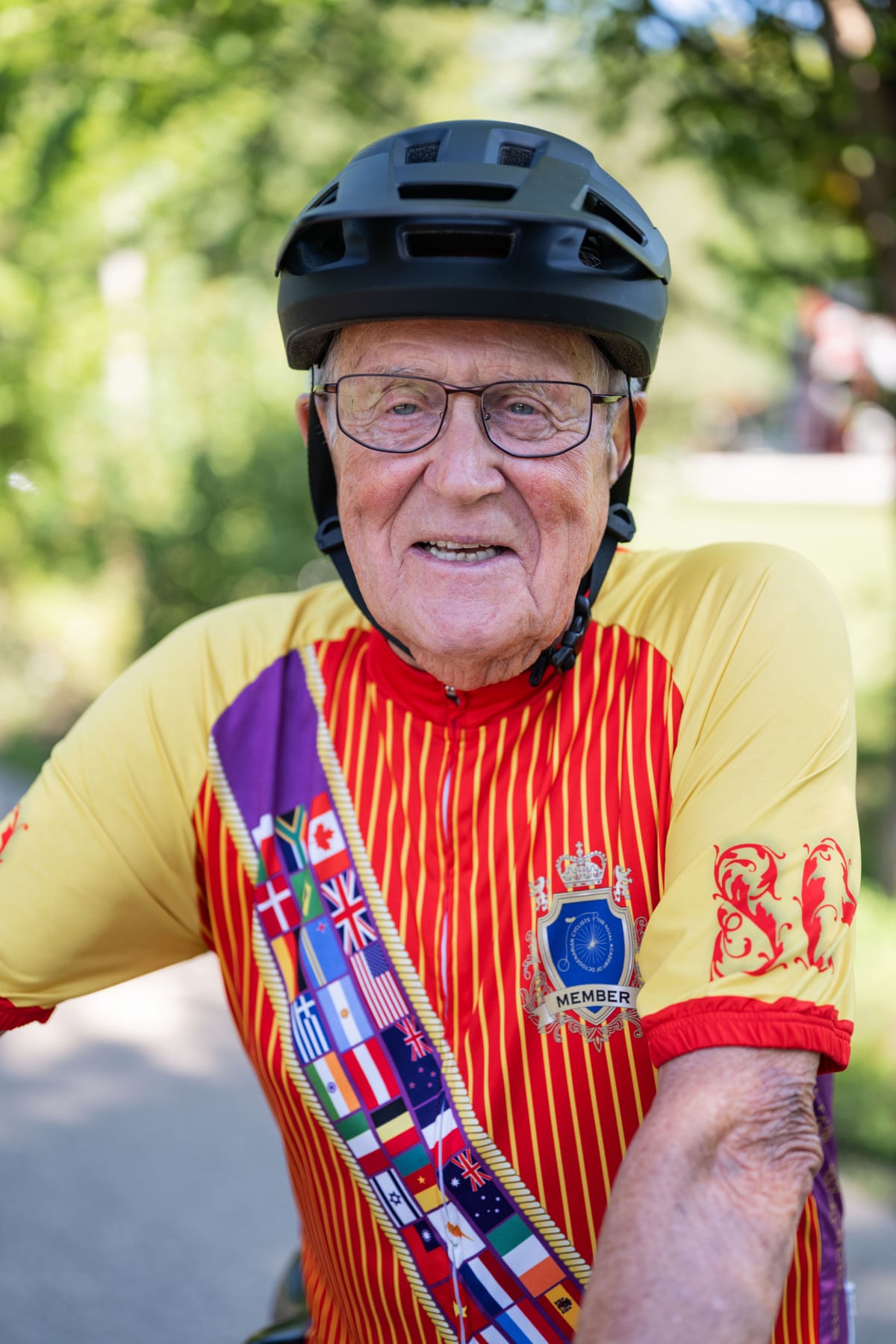
Arthur Plummer acquired a secondhand bicycle when he stepped away from work at 65, and his sister's membership in a cycling club for older adults in Waterloo, Ontario, led him to join as well. At that time, he was among the club's youngest participants. Three decades later, at 92, he remains the oldest active member—yet continues to accumulate thousands of kilometres on his odometer annually. His distance tracker for the current year shows 4,270km (2,650 miles) logged so far, with plans to add another 40km after our discussion.
"I love cycling,"he explains.
"Wherever I go, even if I ride on the same roads, there's something new happening. When I get on my bike, I feel great. I come home at about 3pm and I feel exhausted. However, it's the nicest feeling. It's exhilarating, and it's resulted in me being extremely healthy."
How did cycling help him overcome illness?
During his late 80s, Plummer was diagnosed with polymyalgia rheumatica, an inflammatory condition characterised by pain, stiffness and inflammation affecting the shoulders, neck and hips. The condition rendered him unable to walk, confining him to a wheelchair. Yet cycling became his pathway back to mobility.
"I was in a wheelchair and I would sit outside in my driveway and people would go by and I felt trapped,"he recalls.
"I can't walk,"he thought,
"but if I can get on my bike, I bet I could ride."That intuition proved correct.
Walking remains uncomfortable for him today; his stride is shortened and he sometimes cannot maintain pace with his wife and friends during holidays. Cycling, by contrast, grants him freedom and independence. Plummer has explored
"every street you can go on"within 100 square miles (260 square kilometres) of his residence. He frequently transports his bike on public buses to venture into unfamiliar territory.
"I'm looking for new vistas,"he says.
What was his life like before cycling?
Plummer did not participate in organised sports during his childhood. His parents, he explains,
"were not well off."His father laboured in a rubber factory while his mother managed the household and worked as a waiter and sales assistant in a clothing shop.
"There were few luxuries. It was a tough life, but it was a good life."Born in 1934, he observed that financial hardship was commonplace.
"In 1934, when I was born, it was the norm to not have money."His schoolmates divided sharply into wealthy and poor categories.
"And we stayed apart. It was an advantage to be poor, because you had more friends."
The demands of adult life left little room for recreational cycling. Following his education, Plummer worked as an estimator and quantity surveyor, beginning with hydro projects in northern Quebec before relocating to Ontario. He raised three daughters—aged nine, 11 and 13 at the time—as a single parent, an experience he describes as
"a wonderful experience."Later, he partnered with four colleagues to establish a company managing construction and renovation work in schools. The role proved intensely stressful, and when a business associate suffered a heart attack, Plummer recognised the need for change. At 50, he transitioned to municipal building inspection, a position he held until retirement.

During his years as an inspector, a memory lodged itself in his mind. He would occasionally drive past a colleague who commuted by bicycle, pedalling through winter conditions.
"You know how you remember some things for ever in your life? I thought: 'Wow, he's an avid cyclist.'"That observation would later inspire his own cycling journey.
How has his cycling performance changed with age?
When Plummer first took up cycling, he maintained a maximum sustained speed of 25 kilometres per hour. According to reporting on his cycling life, his pace has since declined to between 15 and 20kph, and he has adjusted his annual distance target downward to 5,000 kilometres. He remains conscious of injury risks—he abandoned skiing at 90 out of concern for fractures—yet his cycling history includes six instances of going over his handlebars. Years ago, he collided with a vehicle that ran a red light, though he escaped with only cuts and bruises.
"I apparently went head first on to the road, broke my helmet and passed out. People tell me that when I woke, I ran straight to my bike,"he recounts.
"There is a kind of a connection between the rider and the bike."
What role does cycling play in his current life?
Approximately two years ago, Plummer relocated to a high-rise apartment in downtown Waterloo, embracing what he describes as
"living the urban lifestyle downtown."His carbon-fibre Cannondale bicycle now occupies a rack positioned beside his bed.
"My bike is my best friend,"he declares.
"We are a team."When he wakes during the night, he acknowledges his bicycle
"with a greeting: 'Hey there, buddy'."
The Waterloo Cycling Club, where Plummer remains active, operates with a mission to create opportunities for members to participate in organised rides, races and community leadership in the Waterloo Region. The broader region supports an active cycling community; Ontario's cycling resources list multiple clubs in the Waterloo area, reflecting the popularity of recreational cycling among residents of all ages.
Cycling generates its own momentum in Plummer's life.
"I am so full of energy, I can't believe it myself sometimes. I want to get out and use that energy to cycle,"he says.
"I hope my last day is on my bike. I have a saying: I'm cycling to eternity and it's further than I thought."