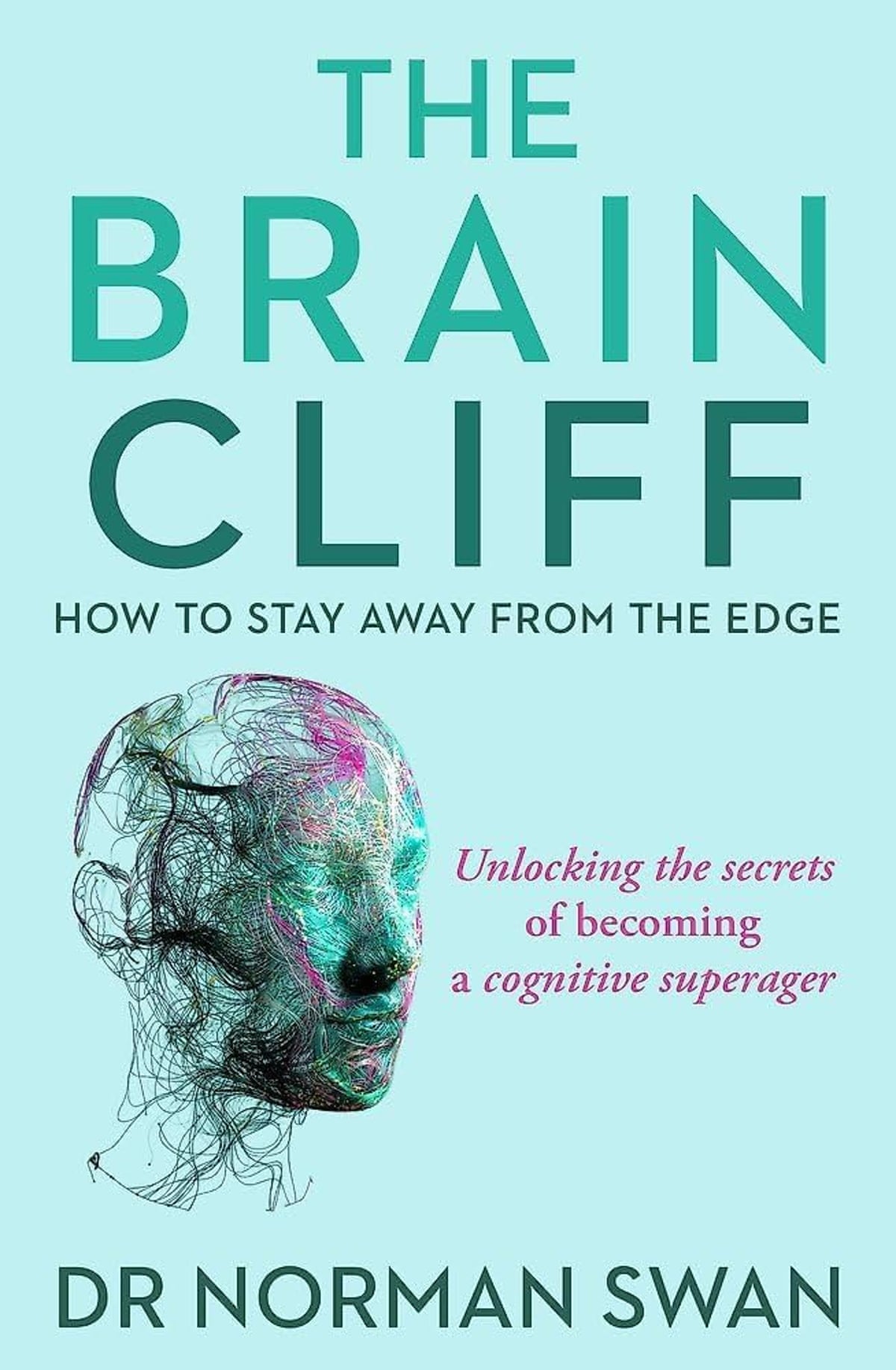
In his new book, The Brain Cliff, Dr Norman Swan examines the neuroscience underlying brain ageing and presents evidence-based approaches to slowing cognitive deterioration. The work challenges common misconceptions about how our minds function as we grow older and offers practical strategies grounded in research about cognitive super-agers—people who maintain sharp mental abilities well into their 90s.
Reframing cognitive change rather than decline
A fundamental shift in perspective can alter how we experience and manage our mental abilities. Most people assess their cognitive performance by comparing their current abilities to their peak in their 20s, a comparison that leads to the mistaken belief that decline has occurred. In reality, particularly during midlife in the 40s and 50s, the brain has undergone transformation rather than deterioration.
Fluid intelligence—the capacity for rapid problem-solving and processing speed—does peak in early adulthood. However, unless someone works in mathematics or laboratory research, this particular cognitive domain matters less than crystallised intelligence, which encompasses accumulated knowledge and wisdom and can actually strengthen throughout life.

How does the brain protect itself as we age?
The brain employs a protective mechanism called scaffolding, in which networks of nerve connections develop to maintain and potentially enhance cognitive abilities. This process resembles the structural framework inside a skyscraper—it provides the infrastructure supporting all brain function. Initially, this scaffolding spreads across the brain and then concentrates in the frontal lobes, particularly the prefrontal cortex, which integrates thoughts and memories and governs judgment, decision-making and emotional regulation.
The further the brain successfully builds this scaffolding, the further away the cognitive cliff moves. Protecting and encouraging this process becomes central to maintaining mental sharpness.
What habits do cognitive super-agers share?
Swan interviewed seven cognitive super-agers ranging from a 95-year-old illiterate shoemaker to a 94-year-old woman still working at McDonald's in Kyushu, Japan, and a former statistics teacher of Mick Jagger. Despite their vastly different backgrounds, they displayed striking similarities in how they protected their brain scaffolding. One critical commonality was their approach to stress: they problem-solve, move forward and avoid rumination. Rumination occupies valuable prefrontal cortex space with unproductive circular thinking, potentially accelerating cognitive decline. Depression and alcohol consumption both damage the prefrontal cortex, making stress management and substance moderation particularly important as people age.

Genetic inheritance plays a surprisingly minor role in determining whether someone experiences cognitive decline or when they might reach it. One super-ager, a 100-year-old neuropsychiatrist from New Jersey, illustrated this principle: despite having a family history that might suggest genetic influence, he actively maintained his brain by learning pencil drawing, making new friends through classes and staying socially connected beyond his family.
What lifestyle changes support brain health in midlife?
The 40s and 50s represent an optimal window for implementing protective measures. Physical exercise enhances brain plasticity, which in turn encourages scaffolding development. An anti-inflammatory diet featuring low quantities of red meat, high vegetable diversity including leafy greens, fermented foods such as yoghurt and berries supports the microbiome and enables absorption of bioactive compounds that aid scaffolding.
Mind wandering activates what neuroscientists call the default mode network—the brain's activity during apparent rest. When this network engages, brain regions that normally operate independently form new connections. This seemingly idle mental state actually supports scaffolding development. Related to mind wandering is mental time travel: recalling the past, remaining grounded in the present and envisioning the future. Midlife offers an ideal balance for this cognitive activity, as younger people lack sufficient past experience while older people's mental time travel often becomes dominated by historical memory.
Why does retirement pose risks to cognitive function?
Research demonstrates that cognitive decline accelerates after retirement. However, the definition of retirement matters significantly. Transitioning from employment to volunteering, engaging in new leisure activities or learning complex new skills does not constitute retirement in the harmful sense. Retirement to sedentary leisure activities represents a genuine risk to brain health. Swan himself has stated he has no intention of retiring, noting that the Australian Broadcasting Corporation would need to terminate his employment to stop him working.
Some people with physically demanding jobs cannot sustain them indefinitely, but the principle remains that continued cognitive engagement—whether through paid work or substantial alternative activities—protects mental function.
How can people manage rumination and stress-related cognitive decline?
Rumination and stress may accelerate cognitive change, but responses vary among individuals. For some people, these patterns become disabling and difficult to address without professional support. Variations of cognitive behavioural therapy, delivered by well-trained clinical psychologists, can provide effective intervention. Swan's personal approach has involved becoming more aware of his own rumination patterns, prioritising problem-solving over worry, significantly reducing alcohol consumption, monitoring cardiovascular risk factors including cholesterol and blood pressure, and maintaining moderate to vigorous exercise as a non-negotiable part of daily life.
What happens next for The Brain Cliff
The paperback edition of The Brain Cliff is scheduled for release on 8 September 2026 through Hachette Australia. A State Library Victoria event on 3 September 2026 featured Swan in conversation with Dr Preeya Alexander about the newly released book. Swan is scheduled to appear at the Hawke Centre in Adelaide on 9 September 2026, with in-person attendance fully booked but livestream access available. Additional public appearances are scheduled for the Australian National University's Meet the Author series on 10 September 2026 and the Brisbane Writers Festival on 8 October 2026.
Key facts
- Brain function changes rather than declines in midlife; crystallised intelligence—accumulated knowledge and wisdom—can improve with age
- The brain builds protective nerve networks called scaffolding, particularly in the prefrontal cortex, which can be strengthened through exercise, diet and cognitive engagement
- Cognitive super-agers studied by Swan shared common traits including stress management through problem-solving rather than rumination, and continued mental engagement through work or meaningful activities
- Retirement from all cognitive engagement accelerates mental decline, but transitioning to volunteering, new hobbies or skill-learning provides protective benefits
- Genes play a minor role in cognitive ageing; lifestyle and environmental factors have substantially greater influence on brain health trajectories