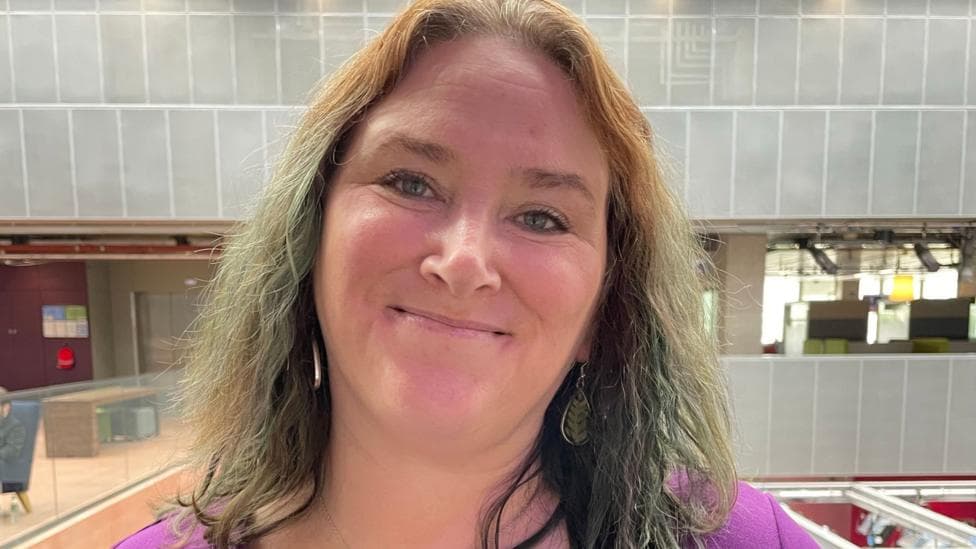
For almost a year, Melys Edwards avoided making eye contact and hid behind dark glasses even when speaking to close friends after being diagnosed with genital herpes in her early 20s. The 29-year-old from Wrexham said the diagnosis changed her life, leaving her in severe pain at first and struggling with grief, anger and denial.
Health experts say the psychological impact of a genital herpes diagnosis, which is treatable but not curable, can be even greater than the physical symptoms. Official figures in England show new cases are rising, while in Wales the latest data show a fall in first episode diagnoses, though officials warned the Welsh figures should be interpreted cautiously because of incomplete clinical data.
How did the diagnosis affect Melys Edwards?
Melys said she rarely left the house without sunglasses because she was ashamed and did not want people to see her.
“I just didn't want people to see me,”
She said her first outbreak was extremely painful and that she believed she caught genital herpes through unprotected sex with someone who knew he had the virus but did not tell her. The yoga teacher and digital content creator said the diagnosis left her feeling detached from herself and unable to trust her own judgement.
“When I first got it, it was horrendous... the worst pain ever,”
“My whole life changed in that moment,”
After the diagnosis, her first instinct was to search online, but she found frightening headlines instead of reassurance. She read warnings about lifelong infection, relationships and other worst-case scenarios, which she said were difficult to process.
“I was reading things like, 'your life will never be the same again', 'who knows if you'll ever have children?' .
“All of these extreme things that I had to process.”
Melys also said relationships became difficult. She became attached to the first person who accepted her diagnosis because she feared nobody else would, and said another man “ghosted” her after she told him she had herpes.
She recalled telling a man she met while travelling about her diagnosis before they met for tea.
“He said he had great respect for me for being so open,”
“But then he said he didn't think we would meet again.
“And I was thinking, you don't catch it from having a cuppa.”
Melys works as a yoga instructor and uses her social media to raise awareness of genital herpes.

What do the latest figures show?
In England, official figures show nearly 29,000 people were diagnosed with genital herpes in 2025, a 3% rise on the previous year.
In Wales, Public Health Wales recorded 913 first episode diagnoses in 2025, down from 1,321 the year before. However, the body said the figures should be treated cautiously because clinical data from Cardiff and Vale University Health Board were incomplete.
Doctors believe the true number of people living with genital herpes could be much higher than the statistics suggest. Although home testing is possible for some STIs in Wales, those tests do not check for genital herpes, which must be diagnosed in a sexual health clinic.
How does genital herpes spread?
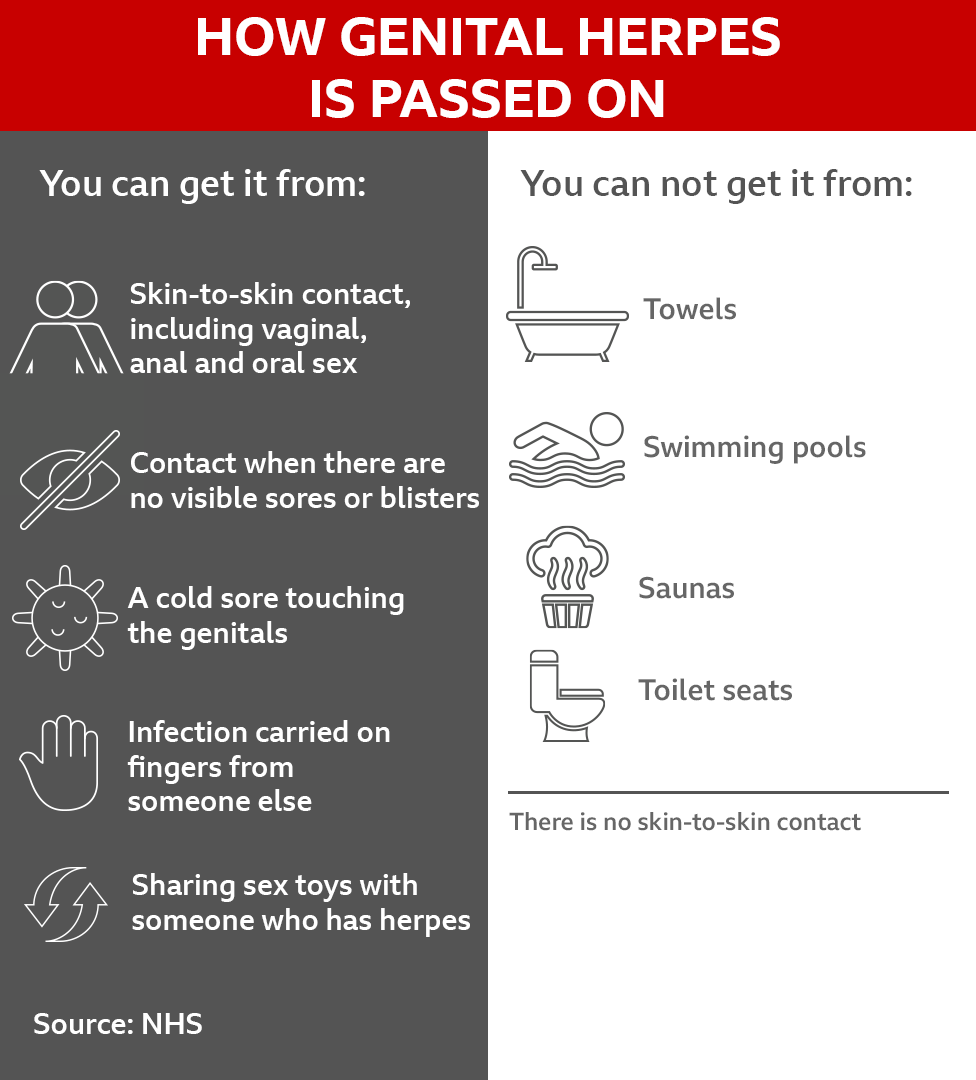
Genital herpes is caused by the herpes simplex virus, and the virus can be passed on in ways many people do not realise. The Herpes Viruses Association says public understanding has not kept up with medical knowledge, and many people are unaware that cold sores and genital herpes are caused by the same virus.

Marian Nicholson, director of the Herpes Viruses Association, has lived with herpes for more than three decades and said there is still a great deal of unnecessary fear around the condition.
“There is an awful lot of unnecessary fear,”
She said stigma dating back to public health campaigns in the 1980s continues to shape attitudes today.
“People think it's a punishment - it isn't.”
She explained that oral sex is a common route of transmission and that the virus can be passed if someone with a cold sore gives oral sex to a partner.
“The virus doesn't know where it is. If somebody has a cold sore and gives oral sex, the virus can be passed to the genitals.”
She described genital herpes as a manageable skin condition for most people. Many people never develop symptoms, while those who have recurrent outbreaks can often control them with antiviral medication and lifestyle changes.
“Only one person in three is going to notice that they've caught it. Two out of three people catch it so mildly they just don't realise.”
What should people know about symptoms and treatment?
Dr Olwen Williams, chair of HIV charity Fast Track Cymru and a former consultant in sexual health and HIV, said people with genital herpes should be able to have sexual relationships, but they are advised not to have sex while they are having an active attack because there is a risk of onward transmission.
“Actually it's quite uncomfortable to have sex at that point, but also there is a risk of onward transmission due to the shedding of the virus then.”
She said people should seek medical advice as soon as symptoms appear because swab testing is most effective within about 48 hours. She also said the first outbreak is often the worst, while later outbreaks are usually much milder.
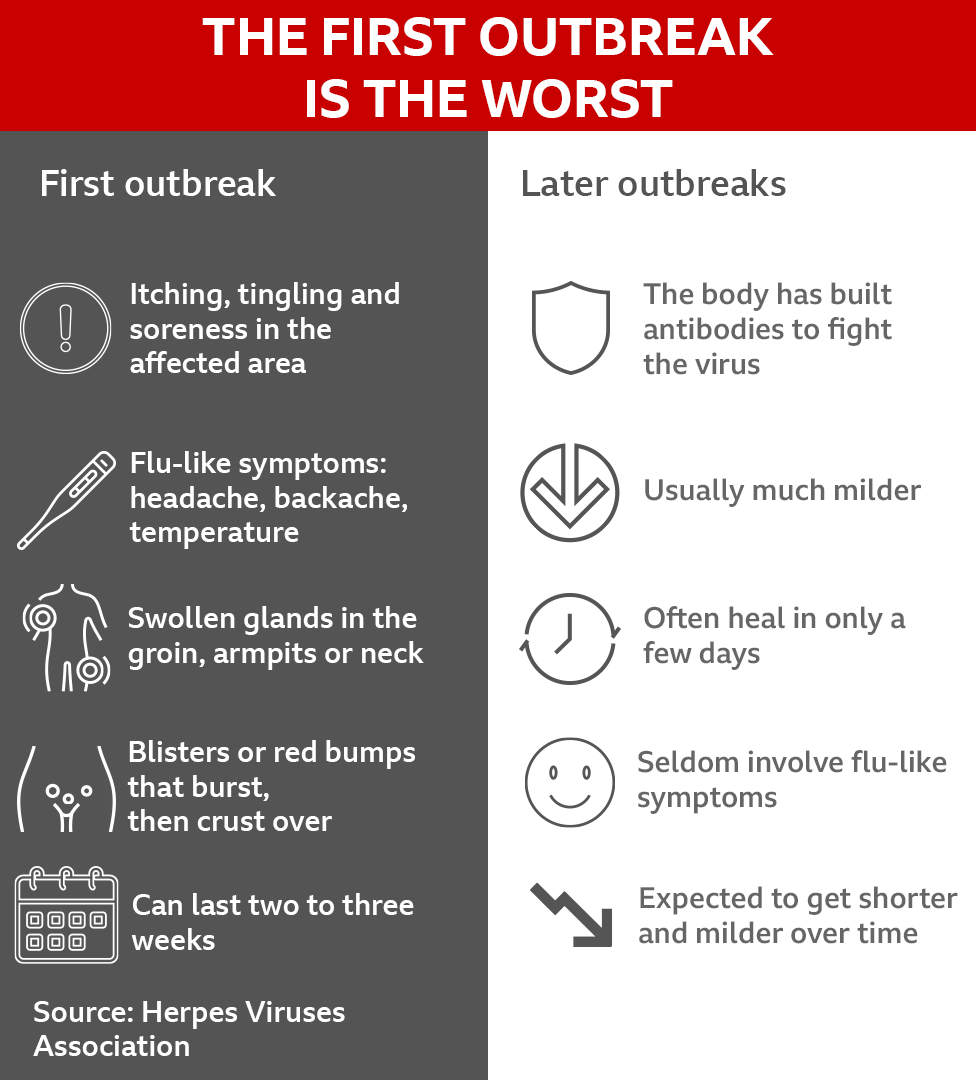
Symptoms of the first outbreak can include itching, tingling and soreness in the affected area, flu-like symptoms, swollen glands, and blistering or red bumps that crust over. Later outbreaks are often milder and can heal in only a few days.
Melys said she has gradually realised that her diagnosis does not define her. In February 2026 she appeared on Wales' answer to Love Island, Amour & Mynydd (Love and Mountain), and more recently she began using her social media platforms to raise awareness of genital herpes.
She said that the more openly she spoke about it, the more she realised how many other people were living with the condition in silence.
“Instead of hiding in shame like I did when wearing the sunglasses for so long, I was like no I'm not going to do that,”
“I wrote a performance piece because that really helped me feel empowered, and then I posted that and I had a few people speak to me afterwards.
“A local bouncer came up to me and said, 'I've got it. Respect'.”

Melys said her openness has also brought abuse online, including misogynistic comments blaming her for contracting the virus, but she believes speaking out remains important.
“Hardly anyone speaks about having herpes,”
“When I first got it, there was almost nothing online except scary Google searches and Reddit posts.
“So if I can be that person that I needed back then, then something good has come from it.”
Williams said many people never seek testing, while others miss the short window needed for the most accurate diagnosis. She said there is probably under-reporting, with some people never being tested and others receiving negative results even though they have the virus.
“We know there's probably under-reporting,”
“A lot of people who have the virus will never have gone to have a test and for some people the tests will come back negative even though they have the virus.”
She said accessing clinics remains a challenge and that there has been no increased investment or expansion in the physical capacity of clinics despite a growing population needing services and delays in accessing them.
“What we haven't seen is any increased investment or expansion of the actual physical capacity within clinics,”
“We have a growing population requiring services and they're having delays accessing them.”
The Welsh government said preventing ill-health was “a key priority” and that it had appointed a Minister for Public and Preventative Health. A spokesperson said the government was assessing population needs in relation to the prevention, testing and treatment of STIs and HIV to improve sexual health services across Wales.
Key Facts
- Nearly 29,000 people were diagnosed with genital herpes in England in 2025, a 3% increase on the previous year.
- Public Health Wales recorded 913 first episode diagnoses in 2025, down from 1,321 in 2024.
- Genital herpes is treatable but not curable, and many people do not realise they have it.
- Swab testing is most effective within about 48 hours of symptoms appearing.