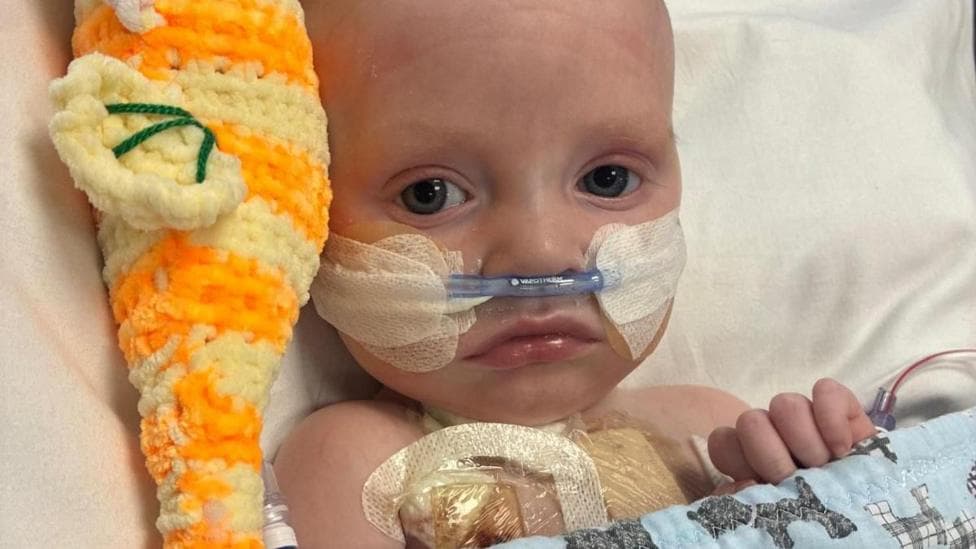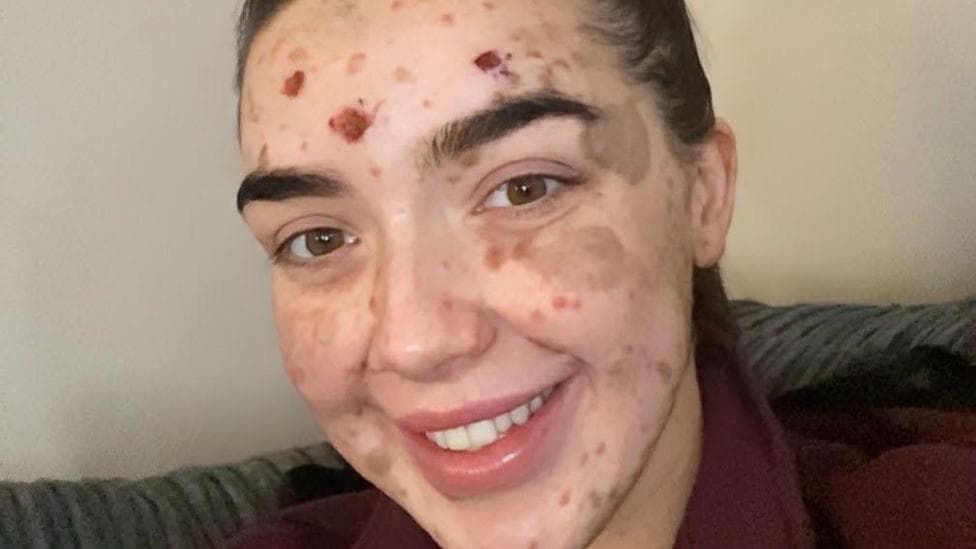
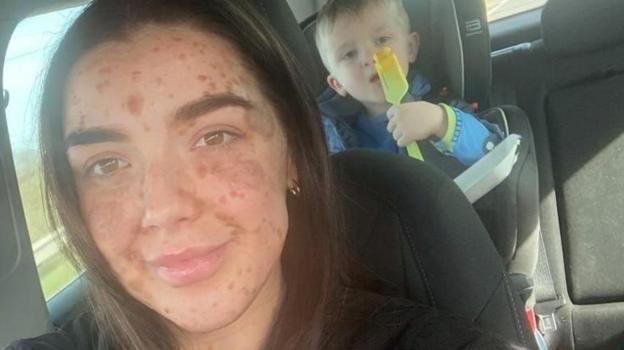
Laura Kelly, 28, was born with congenital melanocytic naevus (CMN), a rare genetic skin condition that covers 98% of her body in birthmarks. After undergoing 14 operations as a baby when doctors feared she might not survive beyond age eight, she has spent years learning to accept her appearance and is now working to raise awareness of the condition and support others living with visible differences.
The condition was not detected on routine scans before her birth, and doctors in Northern Ireland had not encountered a case as extensive as hers before. Laura said the diagnosis was frightening for her parents at the time.
"I always think of how scary it had to be for my parents. I suppose back then, there wasn't much, if any actual awareness of CMN,"she told a national broadcaster.
What is congenital melanocytic naevus?
Congenital melanocytic naevus is a type of birthmark or mole typically present from birth, caused by an increased number of pigment-producing cells in the skin. Some cases may develop during the first year or two of life. The condition results from a genetic change in a single cell during fetal development and is not inherited from parents—it can occur randomly in any pregnancy.
Small CMN are relatively common, affecting roughly one in 100 newborns. Larger or more widespread forms are significantly rarer, occurring in approximately one in 10,000 to 20,000 births. In the UK, an estimated 7,000 babies are born with some form of CMN each year. According to clinical guidance, approximately 1% of newborns have the condition, with larger presentations being much less common.
People with larger or multiple CMN may develop additional birthmarks after birth, particularly during their first few years. The pattern and number of new marks vary from person to person, and their development can help doctors predict how the condition may progress. Beyond skin manifestations, CMN can affect body systems beyond the skin, including neurological problems, medical complexity, and an increased risk of melanoma. The underlying genetic change typically occurs between the fifth and 24th weeks of pregnancy, according to medical literature on the condition.
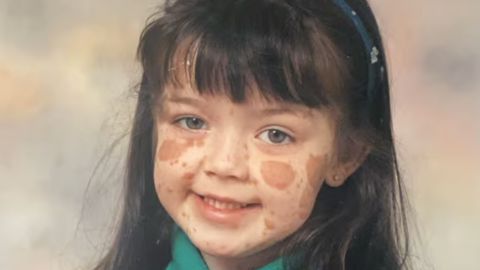
Growing up in a supportive community
Laura grew up in Draperstown, County Londonderry, a small close-knit community where she was treated like any other child by her peers and teachers throughout her school years.
"Everybody knew me as the wee girl with the marks,"she explained.
"Even the children I went to playschool with right up until upper sixth, nobody in my whole school years ever went up and told me that I had birthmarks on my face or body."
This supportive environment meant she did not feel different from her classmates during her childhood. However, her relationship with her appearance shifted dramatically during her teenage years.
"I grew up not thinking that I was different to anyone until I did reach my teenage years, when it did affect me immensely."
How did self-consciousness develop in her teenage years?
As a teenager, Laura became increasingly self-conscious about her appearance and began using makeup to conceal her birthmarks, eventually covering herself completely from head to toe.
"I wouldn't have left the house without makeup,"she said. She also carefully selected clothing to minimize visible skin and felt compelled to explain her condition to everyone she met.

"Every time I meet someone… I always feel like I have to tell them about me. It'll be the first thing I tell them: 'Oh, I was born with birthmarks'. And I know I don't have to do that, but I just feel like I have to."
Despite sometimes appearing confident to others, Laura struggled privately and often had to push herself to leave her home. This pattern continued for years until a significant turning point in her life.
How has connecting with others changed her perspective?
Meeting other people with CMN through the charity Caring Matters Now has fundamentally shifted Laura's confidence and self-acceptance.
"I never actually met someone who looked like me until recently. So, in my head, I felt like all these years I was the only person that looked like this."This connection with others facing the same condition proved transformative.
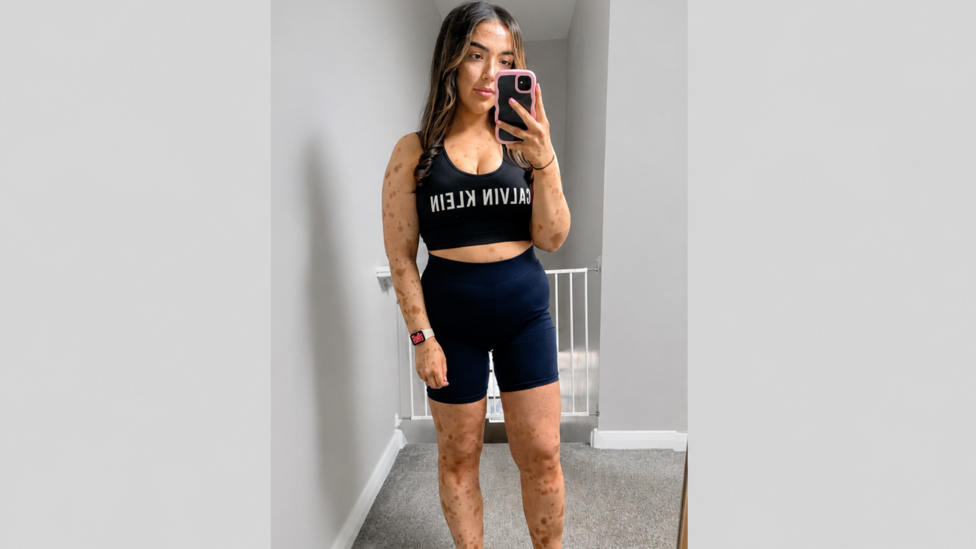
Her family and friends have noticed a marked improvement in her self-confidence over recent months. She has begun showing more of her birthmarks in public, including wearing shorts outside for the first time during a recent period of warm weather—a milestone she never thought would happen.
"I have started to show myself off a bit more and embrace myself. Being different is unique, and being unique is better than being perfect."
Laura is taking her journey day by day and has set herself the goal of eventually leaving the house without makeup. In April 2026, six women with CMN, including Laura, used the London Landmarks Half Marathon to launch Caring Matters Now's "Bare Your Birthmark" campaign, promoting visibility and acceptance of the condition.
What does her progress mean for others with visible differences?
Laura emphasizes that gaining confidence is a gradual process that does not happen overnight.
"Gaining confidence doesn't happen overnight, by no means. It takes time and it's okay to feel self-conscious, it's okay to feel different."She reflects on her own journey with pride, noting achievements she once thought impossible.
"I never thought in a million years that I would walk out of the house with a pair of shorts on from I was like 13 or so, but now it does happen. And I'm proud of myself, I have to say."By sharing her story, Laura hopes to inspire others with visible differences to embrace their appearance and recognize that being different is a strength, not a flaw.
Laura continues to undergo medical procedures as part of her ongoing treatment. Her most recent procedure was in March 2026, and she was still undergoing operations and procedures throughout 2026. Despite the medical challenges and the emotional journey of acceptance, she remains committed to her personal goals and to raising awareness of CMN.
Key Facts
- Laura Kelly's CMN covers 98% of her body and was not detected on routine prenatal scans; doctors in Northern Ireland had not previously seen a case of this severity.
- Approximately 1% of newborns have some form of CMN, but larger presentations occur in only one in 10,000 to 20,000 births.
- Laura underwent 14 operations as a baby and continues medical procedures; she was still receiving treatment in 2026.
- Meeting others with CMN through Caring Matters Now has been instrumental in her journey toward self-acceptance and public visibility.
- Laura participated in the "Bare Your Birthmark" campaign launched in April 2026 to promote awareness and acceptance of congenital melanocytic naevus.