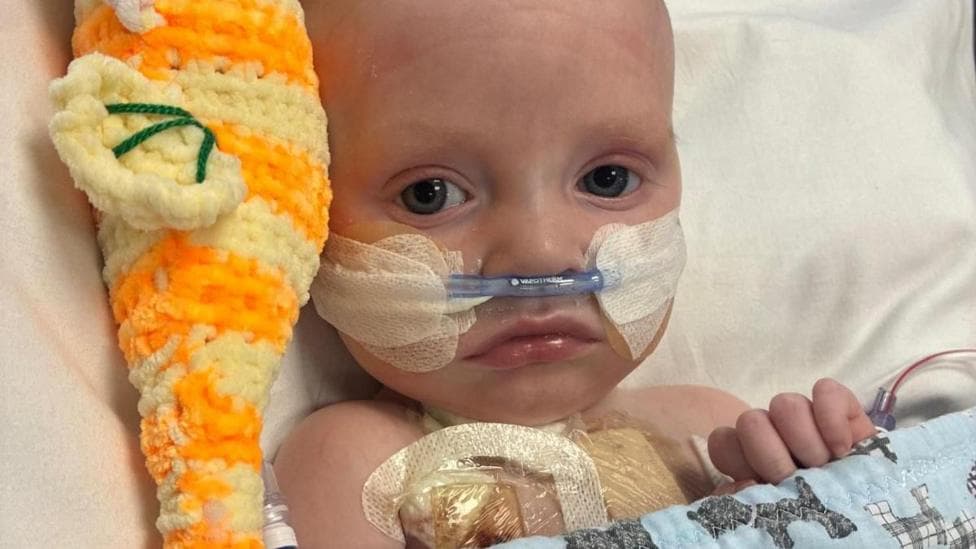
A baby who faced imminent death without emergency intervention is now "thriving" following a complex heart operation, though his family faces an uncertain wait for a donor organ that could take months or years.
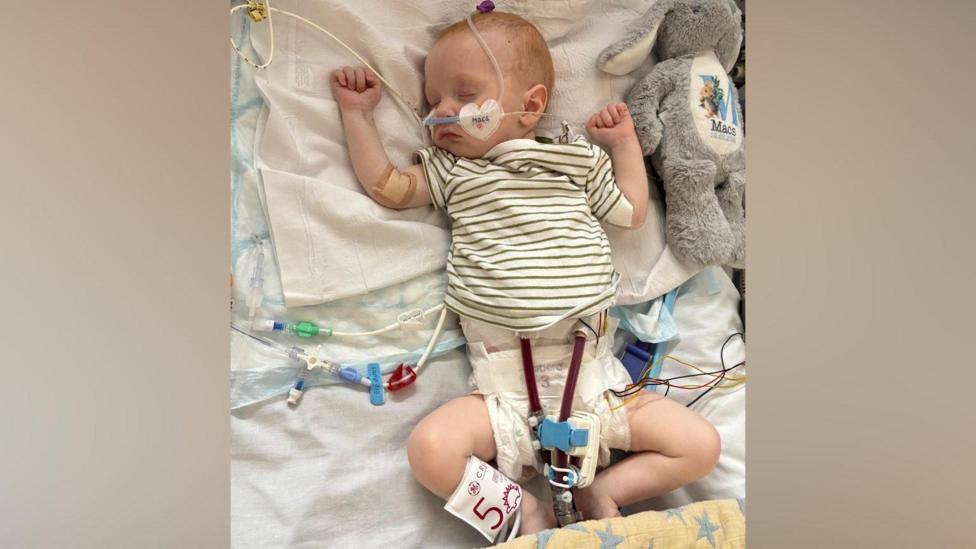
Macs Green, previously a healthy infant, suffered two cardiac arrests and was diagnosed with dilated cardiomyopathy, a condition that can progress to heart failure. His condition deteriorated rapidly while he was receiving support at Bristol Royal Children's Hospital on an extracorporeal membrane oxygenation (ECMO) machine, which artificially pumped oxygenated blood through his body. After his parents reported he was in an induced coma and waiting for transfer because no suitable beds were available, Macs was moved to Newcastle's Freeman Hospital, where he underwent surgery on 7 August to have a Berlin Heart fitted.
The Berlin Heart is a ventricular assist device—an air-driven pump that sits outside the body and takes over the pumping function of the heart. According to NHS Blood and Transplant, 17 of these devices were fitted in children across the UK during 2024-25, making it a rare but established treatment for end-stage heart failure in young patients. Only two specialist hospitals in the UK—Great Ormond Street Hospital in London and the Great North Children's Hospital in Newcastle—are equipped to implant the device.
How has the operation changed Macs's condition?
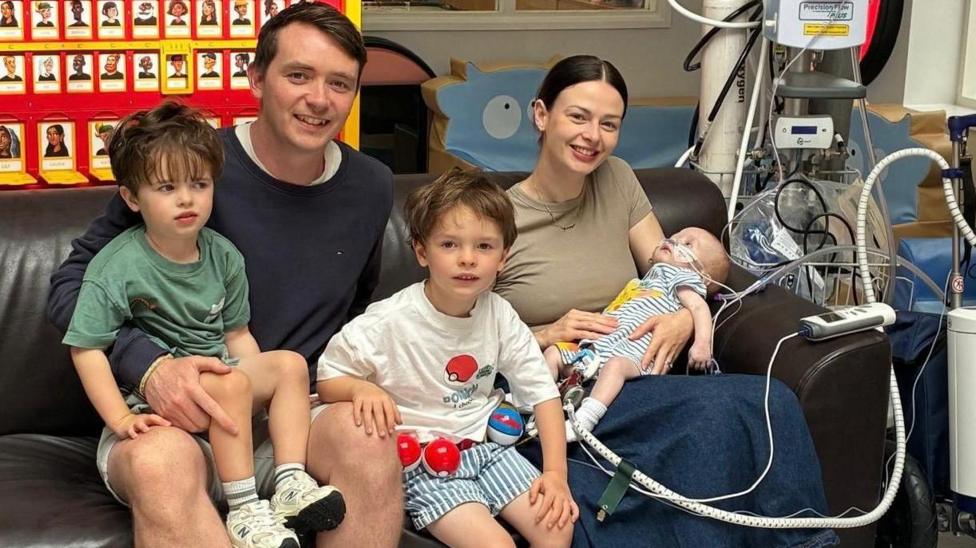
The transformation has been dramatic. His father Dylan, a 35-year-old town planner, described the shift as remarkable, saying his son is now "a completely different baby." Before the procedure, Macs had been sedated by medication necessary to keep him stable on the ECMO machine.
"There was talk of end of life at that point. We're so pleased he's on the Berlin Heart. It means he can come off the drugs which have been sedating him. Since then, he's a completely different baby. He's smiling, he's responding to us. Before now, he's just been a small baby lying on a bed."

His mother Catrin, a 32-year-old solicitor from Cardiff, echoed this sentiment, describing the change as
"having our baby back."She noted that Macs had been "absolutely thriving" since the operation. The couple have two other children, Caio, aged five, and Gruff.
What happens next for Macs?
Despite the success of the Berlin Heart implant, Macs still requires a heart transplant to survive long-term. His parents have been told the wait could extend to 18 months, two years, or potentially longer, though a suitable donor heart could theoretically become available at any time.
"They've told us... he's likely to have to wait 18 months for a heart. It could be two years, it could be more than that. But a heart could also turn up tomorrow."
The uncertainty weighs heavily on the family. Catrin explained that while they would accept a prolonged hospital stay if they knew the timeline, the reality is more complex.
"If we knew we were just waiting and living in a hospital that would be fine, but there are a lot of potential risks that come with being on a Berlin Heart and a lot of things which can affect him. We just hope now he can remain stable."Freeman Hospital's paediatric intensive care unit is specifically equipped to provide care that bridges the gap to heart transplantation, including Berlin Hearts and ECMO support.
What is the success rate for this treatment?
The Berlin Heart has an established track record as a bridge to transplant. Research from a 2013 UK study of 102 children supported with Berlin Heart EXCOR devices found that 84 per cent survived to transplant or device removal, and 81 per cent survived to hospital discharge, demonstrating why the device is used as a critical intervention in cases of end-stage heart failure.
What is the family's message now?
The Greens are urging other parents to consider organ donation should they lose a child, and they have expressed deep gratitude to the hospital staff and supporters who helped them through the crisis.
"We are extremely grateful,"Dylan said. Their case highlights both the life-saving potential of advanced cardiac technology and the ongoing need for organ donors to give other families hope.