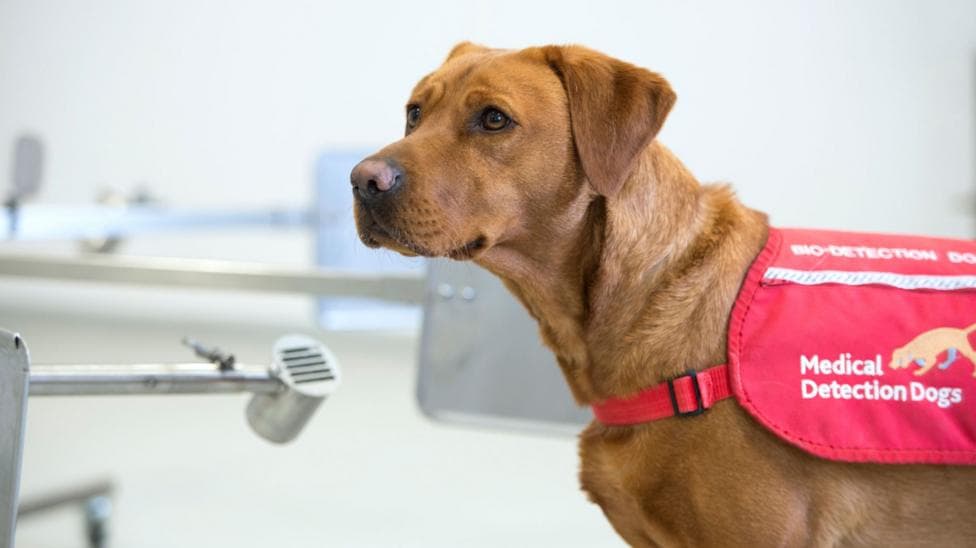
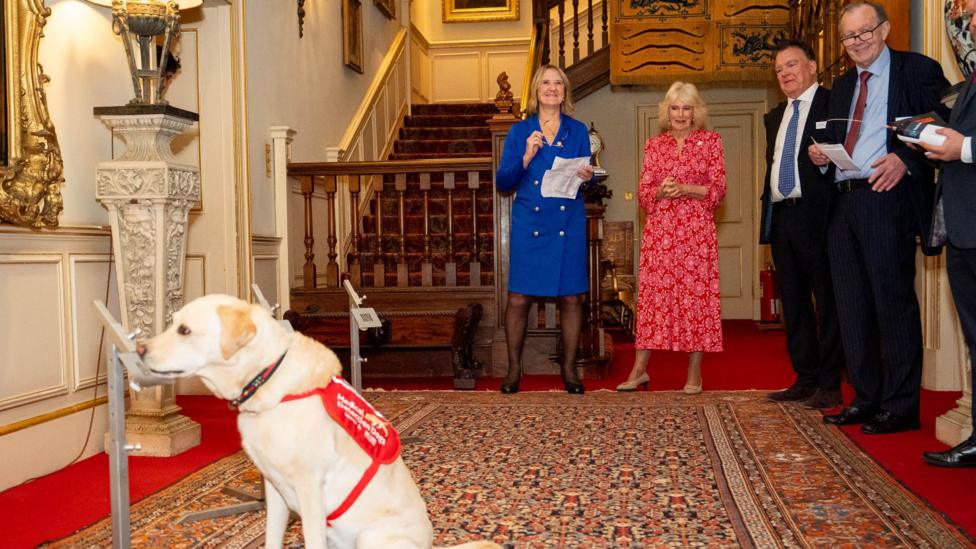
Perfume entrepreneur Jo Malone and her husband Gary Willcox have donated £100,000 to accelerate development of an artificial intelligence-powered electronic nose designed to detect cancer from biological samples. The funding will enable Medical Detection Dogs (MDD), a Buckinghamshire-based charity, to install a SniffSpace—an automated facility where trained canines can analyse far more samples in a secure environment, generating the robust datasets needed to refine the technology. According to BBC News, the donation was made after Queen Camilla witnessed a successful demonstration of the prototype detecting prostate cancer from a urine sample.
MDD has collaborated with quantum physicist Dr Andreas Mershin for over a decade to develop the device, which mimics the extraordinary scent-detection capabilities of dogs. Chief executive Dr Claire Guest called the investment
"game-changing", adding that
"This technology gives us an unprecedented opportunity to decode those scent signatures and move closer to developing a reliable electronic nose for cancer detection."Medical Detection Dogs announced that Malone became one of its ambassadors nearly a decade ago after learning about its work training dogs to identify breast cancer and Type 1 diabetes.
How sensitive are dogs' noses compared to human ability?
A dog's nose functions as an extraordinarily sensitive chemical detector, capable of identifying odours far beyond human and technological capacity. Dogs possess approximately 300 million sensory receptors, compared to roughly five million in humans. To illustrate the difference: if humans can detect a teaspoon of sugar dissolved in a cup of tea, dogs can identify that same sugar in a volume of water equivalent to two Olympic-sized swimming pools. MDD emphasises that every disease produces a distinctive odour, and its canine companions can detect the biochemical changes associated with illness through scent alone.
How does the electronic nose technology work?
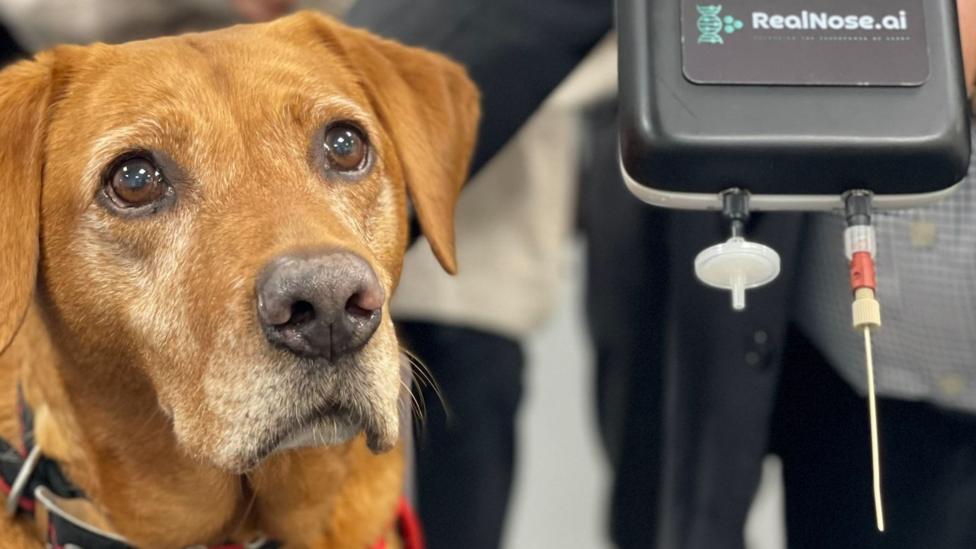
The electronic version of the dog's nose, developed by Mershin at RealNose.ai, operates on comparable principles. It uses protein odorant receptors to capture scent molecules from biological samples—initially urine—to identify prostate cancer. The system then applies artificial intelligence to recognise patterns in how those receptors activate when exposed to cancerous versus healthy samples. MDD has been instrumental in training the AI component by providing data from its dogs' detection work. Mershin described the charity's facilities and protocols as
"cutting edge"and noted they were
"inspiring others around the planet."Electronic noses are already deployed in food and beverage quality control, environmental monitoring, and security and crime prevention applications.
What is the current stage of development?
The prototype electronic nose is currently analysing 500 urine samples provided by patients from Milton Keynes Hospital. MDD-trained dogs have already correctly identified which samples came from patients with cancer. Once researchers complete analysis of this dataset, they will compare the electronic nose's results with the dogs' identifications to validate the technology's accuracy. Currently, the charity's dogs sniff samples arranged in up to eight stands to detect disease-associated odours, but trainers must manually record data after each row and physically rearrange the samples. The SniffSpace will automate sample rotation, allowing significantly more samples to be processed in less time. MDD also notes that the SniffSpace will help researchers measure the subtle ways dogs communicate their detection decisions, not merely increase sample throughput.
What diseases are being studied?
Beyond prostate cancer, MDD is training dogs to detect bowel cancer, Pseudomonas infections, and urinary tract infections using human samples including breath, urine, and sweat. The charity's research and collaborators have also studied dogs detecting Parkinson's disease, malaria, Covid-19, and various cancers, expanding the potential applications of both canine detection and the electronic nose technology.
Why is Jo Malone supporting this work?
Malone explained her motivation for the investment, saying
"My sense of smell has given me so much throughout my life. So I have always wanted to find a way of using that world of smell to give something back."Her background in perfumery—an industry built on olfactory expertise—naturally aligns with supporting research that harnesses the power of scent detection for medical benefit.
What happens next?
The SniffSpace is scheduled for installation in early 2027, with a team of dogs to be prepared for training on the new equipment. Mershin stated that
"RealNose.ai and MDD are focused on establishing a formal partnership aimed at creating in vitro diagnostic medical devices specifically for the NHS to look at as potential solutions to the prostate cancer screening and early diagnosis problems before also trying out the same olfactory approach for other cancers."This partnership represents a significant step toward bringing the technology into routine clinical use across the UK's health service.
Key Facts
- Jo Malone and Gary Willcox donated £100,000 to Medical Detection Dogs to fund a SniffSpace facility for accelerated cancer detection research
- Dogs have 300 million sensory receptors compared to five million in humans, allowing them to detect diseases through scent alone
- The electronic nose uses protein odorant receptors and artificial intelligence to replicate canine detection capabilities at scale
- A prototype is currently validating against 500 patient samples from Milton Keynes Hospital, with dogs having already correctly identified cancerous samples
- The technology aims to provide the NHS with diagnostic tools for prostate cancer screening and early detection, with potential expansion to other cancers