

A months-long strike by health visitors at Cwm Taf Morgannwg health board has led to a sharp fall in home visits to new parents, with a charity warning that babies and children are being put at risk. About 100 health visitors, members of Unite, walked out in February 2026 in a dispute over job grading, with the union saying staff are losing up to £9,000 a year as a result. Between March and May 2025 the health board carried out 6,140 visits, but in the same period in 2026 that figure fell to just 909.
Mothers Matter, a charity offering mental health support to new parents, says it has been overwhelmed as families turn to it in the absence of routine health visitor contact.
What is the dispute about?
The disagreement centres on how health visitors are graded and paid, with Unite arguing its members' skills and experience are not being properly recognised. According to the health board, health visitors are currently paid at Band 6, a banding it says is used consistently for the role across Wales and England, with a salary range of £40,559 to £48,841 a year, as detailed on the health board's own account of the dispute. Unite's national officer for health has said workers in south Wales are being underpaid by roughly £8,000 to £9,000 a year because the board has not accepted the outcome of a job evaluation exercise, according to Community Practitioner.
The roots of the row go back further than the strike itself. The health board says an all-Wales expert group was set up to review health visitor job descriptions after new Nursing and Midwifery Council training standards raised entry qualifications to Masters level, and reporting from ITV's coverage of the dispute's origins notes that a formal grievance over the issue was first lodged in February 2024, two years before the walkout began.
How has the strike affected families?
Parents who back the strike say they have nonetheless struggled without the routine contact health visitors normally provide. Clare Boast, a mother of two who experienced postnatal depression after her first child was born, said she supports the industrial action but worries some mothers are going without vital emotional support.
"I think a lot of mums aren't having that opportunity to say 'I don't feel right, I'm struggling, maybe a lot, possibly with postnatal depression or aspects of it' because they haven't got someone to open up to."
Becks Wilson, 34, a first-time mother to nine-week-old Dylan, said she too supports the strike but found the lack of a health visitor made a minor issue harder to manage.
"He's formula fed so he didn't react very well to the first formula and without a health visitor there we ended up going to the GP and to paediatrics and it made things a lot bigger than maybe they were."
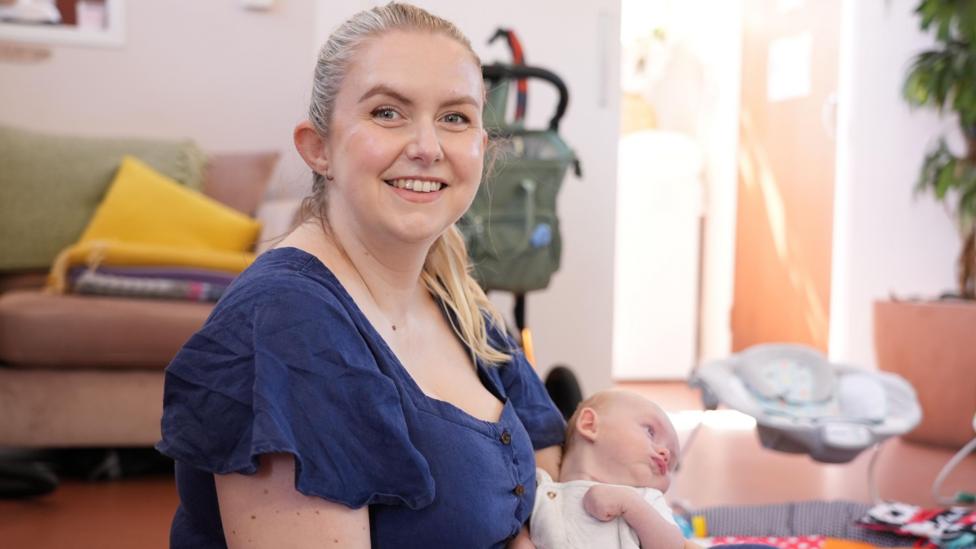
At Mothers Matter, staff say referrals have surged as families seek an alternative source of support. Tracy Sweetland-Hodges, who works for the charity, said demand had risen sharply and that its small team of two support workers was struggling to keep pace.
"Weekly we have concerns around safeguarding children that we support through our services."
"Even though we support the health visitors it's putting people under undue stress and it's very concerning for our families within our communities at a very very difficult time where everything else is against the odds for them as well."
"There's not enough hours in the day to help everybody."
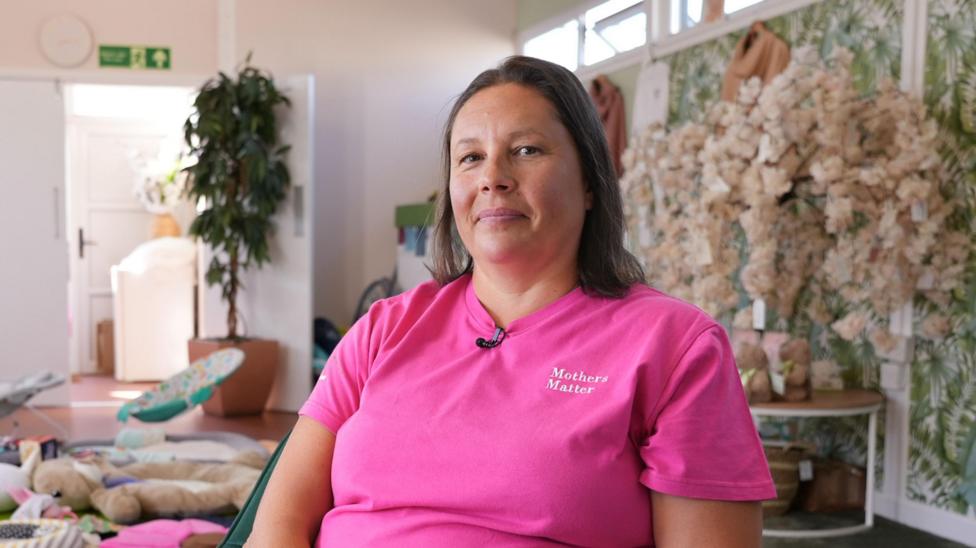
Unite's Kerry Parry acknowledged the impact on families but said responsibility for resolving it lay with management.

"There are real risks when we are not in work and within local communities."
"This could be easily resolved by the health board today."
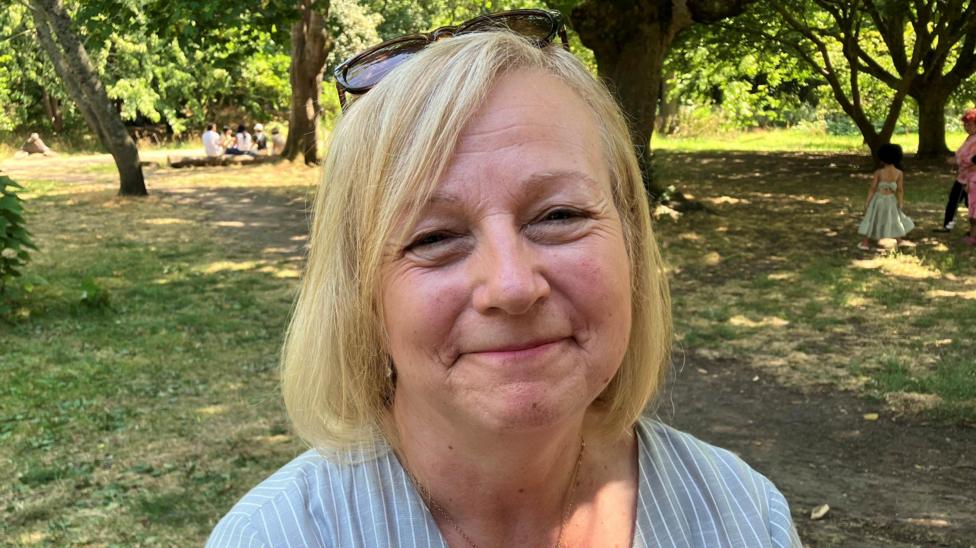
Melani Smith, who has worked as a health visitor for 29 years and began her NHS nursing career 42 years ago, has never taken part in industrial action herself but said she understood why colleagues felt they had no choice. She warned that the loss of face-to-face visits removes the ability to spot signs of serious distress in a household.
"In a phone call you won't see a punch hole in a door or the sadness on a mother's face, you won't see that the baby's crying and the mum is disengaged and doesn't know what to do."
"It's shocking for me that it has come to this."
This pressure on early years services is not confined to Wales. Health visitors in England have separately called for caseload limits after workforce numbers there fell by 45%, leaving some staff responsible for more than 1,000 families each. Concerns have also been raised about the pipeline of future staff in Wales, with the Royal College of Nursing Cymru warning that up to half of new nursing graduates in Wales could face unemployment amid NHS recruitment freezes.
Why is the timing particularly difficult for families?
Joanne Penny, a health visitor and Unite representative, said six months into the dispute the union was providing financial support to striking staff, but that the strain on families was mounting during the school holidays.
"People's lives have been put on hold, so whereas normally you would plan things with your family, especially through the school holidays, this has been restrictive to a lot of families."
Unite has also raised concern that children are more vulnerable to going unseen during the summer break, when they are not in school and therefore not being monitored by teachers. That concern echoes wider reporting on parents describing the six-week summer holiday as a strain on childcare, with families juggling costs, annual leave and additional pressure on households supporting children with special educational needs. Separately, other new mothers have described inconsistent advice and a lack of postnatal support around breastfeeding, a gap that health visitors would normally help to fill.
What has the health board and government said?
Unite general secretary Sharon Graham said the union's members were justified in their demands and would continue to receive backing.
"Our members are demanding what is right and what is fair and they will have the full backing of Unite in their fight to be paid at the appropriate level for their skills and experience."
The union has called for the health board's director of human resources to be dismissed over what it described as "catastrophic mismanagement" of the dispute, and has urged the Plaid Cymru-led Welsh government to intervene after ministers pledged during an election campaign to see the row resolved.
The Welsh government said it recognised staff concerns, adding that the situation "should not have occurred in the first place". A spokesperson said health minister Mabon ap Gwynfor had spoken with health board chairman Jonathan Morgan and expected both sides to return to negotiations to find a solution, and that Morgan had confirmed to ministers that the risks associated with the strike were being properly managed.
The health board said its priority throughout the industrial action has been maintaining safe and accessible services for families.
"Our priority during this period of industrial action is the safety and accessibility of services provided to families across Cwm Taf Morgannwg."
"To keep services safe and ensure we can support families with more complex and urgent needs, a single point of access has been established."
"This provides families with access to advice, guidance and support from our health visiting teams, with inquiries typically responded to within two hours."
The board has confirmed that families needing support during the dispute can contact a dedicated single point of access by phone on 01443 803930 or by email at CTM.SPOAHealthVisiting@wales.nhs.uk, according to the health board's published guidance on the dispute.
What happens next?
The dispute shows no sign of ending soon. According to a national broadcaster's Welsh-language coverage, health visitors were still taking industrial action as of 14 August 2026, well beyond the period covered in earlier reporting. Unite's own published strike calendar lists further walkout dates through August, including 17, 18, 19, 20, 21, 24, 25, 26, 27, 28 and 31 August 2026, according to the union's strike calendar listing. One regional news outlet has reported that the action has effectively been extended to the end of October 2026, with strike dates scheduled across the remainder of the summer and into autumn, according to a Welsh regional news report. That would mean the dispute, which began in February 2026, could run for the better part of a year before any resolution is reached.
- About 100 health visitors at Cwm Taf Morgannwg health board have been on strike since February 2026 over job grading.
- Home visits fell from 6,140 between March and May 2025 to 909 in the same period in 2026.
- The health board says health visitors are paid Band 6, with a salary range of £40,559 to £48,841 a year.
- Unite says workers are underpaid by around £8,000 to £9,000 a year due to an unrecognised job evaluation outcome.
- Strike dates have been scheduled into late August 2026, with one report suggesting action could continue until the end of October 2026.


