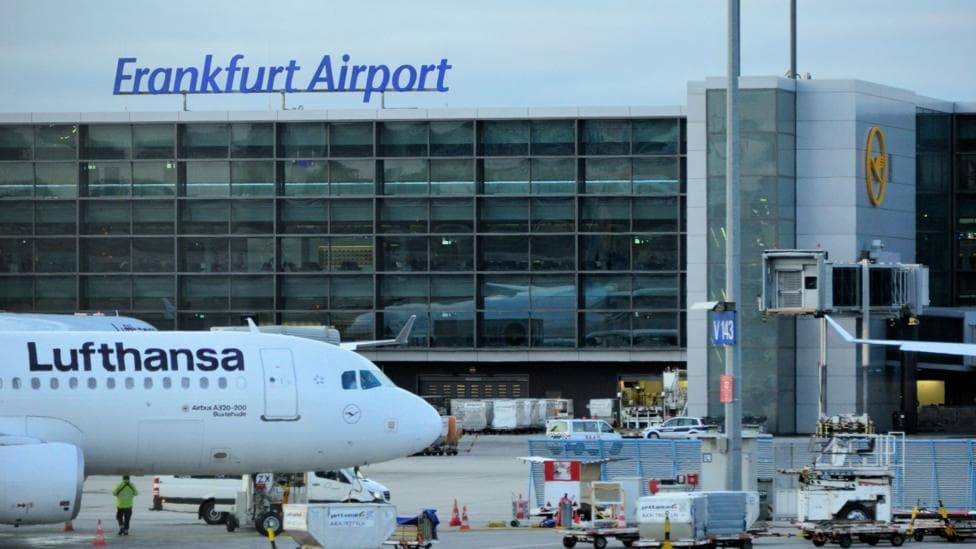
A worker at Frankfurt Airport, Germany's busiest aviation hub, has died from malaria following an unusual outbreak that infected six employees at the facility. The infections are believed to have originated when mosquitoes arrived on an incoming aircraft, according to German public health authorities.
The death was confirmed publicly on 26 August 2026, marking a tragic outcome in what officials describe as an exceptionally rare event. Five other infected workers are currently undergoing medical treatment, according to a statement from Fraport, the airport operator. All six affected individuals worked in different roles across various sections of the airport, with some employed in baggage handling operations.
A Fraport spokesperson stated:
Sadly, we must confirm that one employee has died as a result of the infection. We have provided comprehensive information to all employees and encourage them to consult a doctor if they experience any symptoms.
The outbreak is under investigation by the Frankfurt Public Health Department and the Robert Koch Institute, Germany's federal agency for disease control and public health. Investigators are examining blood samples to establish whether all six workers were infected by a single mosquito or by multiple insects.
How did the outbreak begin?
The initial cases emerged between 4 and 6 July 2026, when four employees first fell ill. According to the Robert Koch Institute's epidemiological bulletin, the infections were caused by Plasmodium falciparum, the parasite responsible for the most severe form of malaria. The mosquitoes responsible are believed to have entered the airport aboard an aircraft, though the specific flight and origin remain under investigation.
The rarity of this event cannot be overstated. In Germany, malaria transmission almost exclusively occurs among long-haul travellers who contract the disease in endemic regions and return home already infected. The Robert Koch Institute has noted that transmission occurring within a German airport is exceptionally uncommon.
The lack of a travel history can lead to a delayed diagnosis. A delayed diagnosis increases the risk of a severe course of the diseases,the institute warned in its epidemiological bulletin, highlighting why airport-based cases pose particular diagnostic challenges.

What measures are being taken?
Mosquito traps have been installed throughout Frankfurt Airport following identification of the cluster. Captured specimens are being sent for laboratory analysis to determine their species and geographic origin. The airport operator has distributed comprehensive information to all staff and urged employees to seek medical evaluation if they develop any symptoms consistent with malaria.
Ongoing investigation efforts include determining the transmission chain and whether additional cases may emerge. The Frankfurt health authorities continue to examine whether the infections stemmed from a single mosquito or from multiple insects that entered on different aircraft.
Why is airport malaria so rare?
Airport-associated malaria represents an unusual epidemiological event. The Robert Koch Institute emphasises that malaria in Germany is almost exclusively imported by travellers returning from malaria-endemic regions. Transmission at an airport—where the disease spreads from an imported mosquito to local workers with no travel history—is extraordinarily rare and poses diagnostic difficulties because physicians may not initially suspect malaria in patients without overseas travel.
This outbreak is not the first of its kind at Frankfurt Airport. A previous cluster occurred at the same facility in 2023, making this at least the second recent airport-malaria event at this location. Published research has documented airport-associated Plasmodium falciparum malaria as an unusual occurrence, with investigators noting that prior clusters within five-year periods have been documented.
What is malaria and how is it transmitted?
Malaria is a parasitic infection transmitted through the bite of certain mosquito species and is predominantly found in tropical regions. According to the World Health Organization, the disease is preventable and curable, though symptoms can range from mild to life-threatening. Critically, malaria does not spread directly from person to person; transmission requires a mosquito vector.
What happens next?
Frankfurt health authorities will continue investigating the source and transmission chain of the outbreak. Laboratory analysis of captured mosquitoes will help identify their species and determine their geographic origin, potentially revealing which aircraft brought them to the airport. Investigators will also determine whether the six infections resulted from exposure to a single mosquito or multiple insects, which could indicate whether the outbreak represents a contained incident or an ongoing risk.
Key Facts:
- Six Frankfurt Airport workers contracted malaria between early and late August 2026, with one fatality confirmed on 26 August
- The infections were caused by Plasmodium falciparum, transmitted by mosquitoes believed to have arrived on an aircraft
- This is the second recent airport-malaria cluster at Frankfurt Airport, following a case in 2023
- Airport-based malaria transmission is exceptionally rare in Germany, where the disease almost exclusively affects returning long-haul travellers
- Mosquito traps have been deployed and captured specimens are undergoing laboratory analysis to identify their species and origin