Scotland's only crisis centre for drug and alcohol addiction is warning that "lives could be put at risk" if it is forced to close over a dispute with its council-owned landlord. Turning Point Scotland says aggressive rent increases from Glasgow City Property, including the doubling of the rent on its crisis centre, have left the charity dangerously close to shutting down.
Turning Point Scotland has run two drug and alcohol services in Glasgow on behalf of the city council for more than 30 years, including a 16-bed residential service that helps stabilise patients. The charity says both services, located almost side-by-side in an old school building in the Tradeston area, are now under threat because of rising costs and uncertainty over future charges.
The crisis service supports people in the most urgent and life-threatening circumstances, while the nearby residential service provides longer-term support. Together, the two services have received 3,650 referrals over the past three years, and demand has risen in the past 12 months.
Turning Point Scotland said the dispute centres on several bills, including a doubling of rent for the crisis service when a new lease agreement comes into effect. The BBC understands the current rent for the crisis service building is £65,000 per year and will rise to £131,000 per year. The charity says it is also waiting for final confirmation of any rent rises or maintenance costs for the nearby residential centre.
The uncertainty over future costs, it argues, threatens the sustainability of running the service. City Property, an arm's length organisation wholly owned by Glasgow City Council that manages its property portfolio, said it could not discuss lease details because of commercial sensitivity, but said it was in regular communication with Turning Point about viable solutions.
Turning Point Scotland is a social care provider that also supports people navigating the criminal justice system and homelessness in 19 local authorities across Scotland.
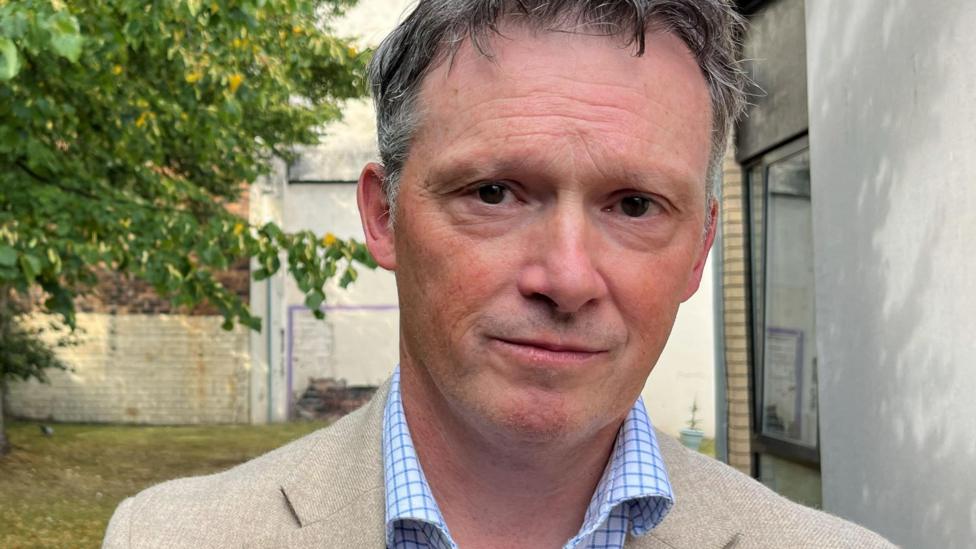
Speaking to BBC Scotland News, Turning Point chief executive Neil Richardson said he had not seen such "commercially aggressive behaviour" from a local authority landlord before. He said the charity was familiar with leasing arrangements across Scotland but had never encountered a situation like this.
Richardson said that with the current "enormous financial liabilities hanging over our heads" the charity could begin a formal staff consultation process on shutting down the service by the end of the week if no compromise is found.
How is the rent dispute affecting the service?
The dispute is centred around the lease for the Glasgow crisis centre and related costs for the residential service nearby. Turning Point Scotland says the increase in rent, together with unresolved maintenance and other charges, leaves both services in an uncertain position.
City Property said it could not discuss the details of the lease because they are confidential between tenant and landlord. It said it remained in regular communication with Turning Point Scotland to identify viable options.
Richardson said the charity had not previously seen a local authority landlord act in this way and warned that the service could be forced into a formal consultation process to begin shutting down by the end of the week if no agreement is reached.
Why does the charity say the pressure is so severe?
Turning Point Scotland says the financial pressure comes on top of a £806,000 bill it received from Glasgow City Property last year after the closure of a residential centre for women going through the criminal justice system.
The charity says it had to close the Bath Street centre in 2024 after a budget cut, and was then unexpectedly handed the dilapidation bill the following year. Dilapidation costs are fees commercial tenants often face at the end of a lease, such as repairing damage and redecorating the property back to its original condition.
Richardson said the bill included costs towards the structure of the building itself, which he said would not normally be expected when a charity is delivering a vital service for a local authority.

Scotland has the worst drugs death rates in Europe, and Glasgow has the worst levels in the country. Earlier this year, the Scottish government and councils announced a joint long-term action plan to tackle drug and alcohol deaths, including a commitment to reducing barriers to support services such as those offered by Turning Point Scotland.
Richardson said it was not possible to reduce the harm caused by a drug death emergency while allowing the kind of damage the treatment service is now facing.
"If that treatment is jeopardised, as it is currently being done by Glasgow City Property with these two services, then it's putting lives at risk and frankly that is something we cannot tolerate."
What do staff and service users say?
Last week, Turning Point gave the BBC rare access to both its crisis and residential centres. People using the services described the support as life-saving and said they believed they would not be alive without it.
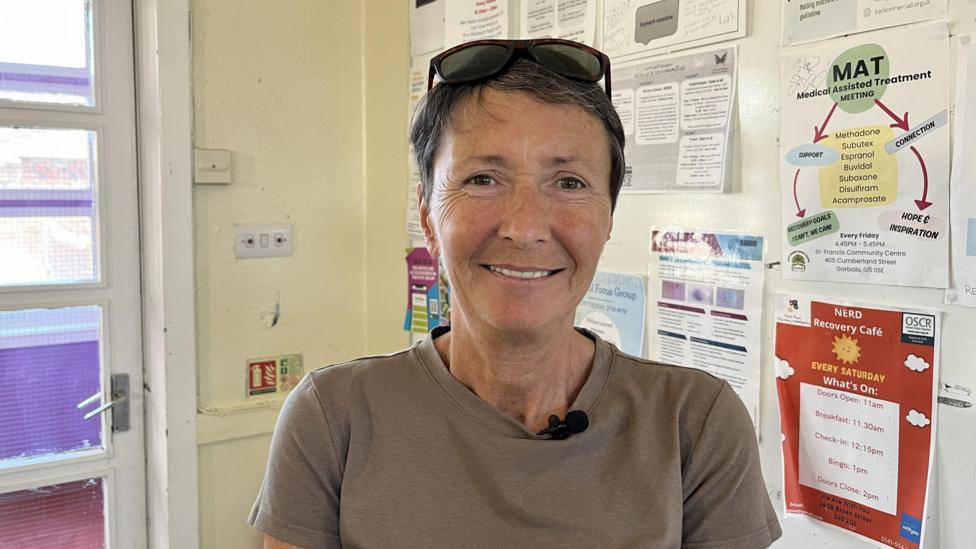
Rena, who now volunteers at Turning Point, said she would be dead without help from the service. The 57-year-old, who was addicted to drugs for more than 40 years, said this time last year she weighed five stone and only had five teeth.
"I just wanted to die, I was just praying I wouldn't wake up because I couldn't face another day doing what I was doing," she said.
"They really listened to me for the first time in a long time and I just feel seen as a human being," she said.
Rena said the staff at the Glasgow Alcohol and Drug Crisis Service (GADCS) were "incredible". For the first time in her adult life, she says she can give her family "peace of mind" and make meaningful friendships, and she recently went on a holiday. She says none of these things were possible for her before.
Among the services offered at the 24-hour crisis centre are a safe needle exchange, wound care, group support sessions and intensive individual support. The building also includes sensory rooms, communal spaces with pool tables and televisions, and a garden with a paddling pool and gym.
Gerry, 50, has been clean for eight months after receiving support at the charity's residential service. When he arrived 18 months ago, he saw "no way out" and had made several suicide attempts.
He stayed at the unit for six weeks before moving on to rehab once he was stable. "Now I've got a chance to build a life for myself, and do stuff that the guys are doing, and up until 18 months ago none of that was possible," he said.
If the centre were to close, Gerry believes the number of drug deaths in Glasgow would increase even further.
"That's a fact, and there's a ripple effect on family, on friends, who are left to pick up the pieces," he said.
What has the Scottish government said?
Health Secretary Angela Constance said she is "very concerned" about the situation and "very aware of the good work" Turning Point Scotland does, but described the issue as a "dispute at a local level".
Ms Constance said the minister for public health, Maree Todd, has "written once again" to Glasgow City Council asking that "everything be done to resolve this situation" and has suggested independent mediation to move things forward.
However, Ms Constance also said: "If we want to save and improve lives, we need to be very focused on access to care and treatment that is bespoke to each individual." She added that every effort must be made locally to resolve the dispute and that all parties should come together to find a solution in everybody's interests, especially those currently receiving a service.
"It is important that every effort is made at a local level to resolve this and we want to support all parties to get together and to find a solution that's in everybody's interests, and most importantly, those who currently receive a service."
A spokeswoman for Glasgow's Health and Social Care Partnership, which provides the funds to run the drug service, said discussions were ongoing with Turning Point Scotland to find a resolution that would allow the service to continue.
"We have met and continue to meet with Turning Point Scotland and discussions are ongoing about how we can find a resolution that allows the continuation of service provision."
The dispute comes as Scotland continues to struggle with the highest drugs death rates in Europe, and as pressure grows on services designed to reduce barriers to treatment and support.
Turning Point Scotland says the future of the Glasgow crisis and residential centres remains uncertain unless a deal can be reached with Glasgow City Property and the wider local partners involved.
Key Facts
- Turning Point Scotland runs Scotland's only crisis centre for drug and alcohol addiction in Glasgow.
- The BBC understands rent for the crisis centre is set to rise from £65,000 to £131,000 a year.
- The charity says it also faces uncertainty over maintenance and other costs for a nearby residential service.
- It was previously billed £806,000 after the closure of Bath Street centre in 2024.
- Health Secretary Angela Constance said she was very concerned and suggested independent mediation.