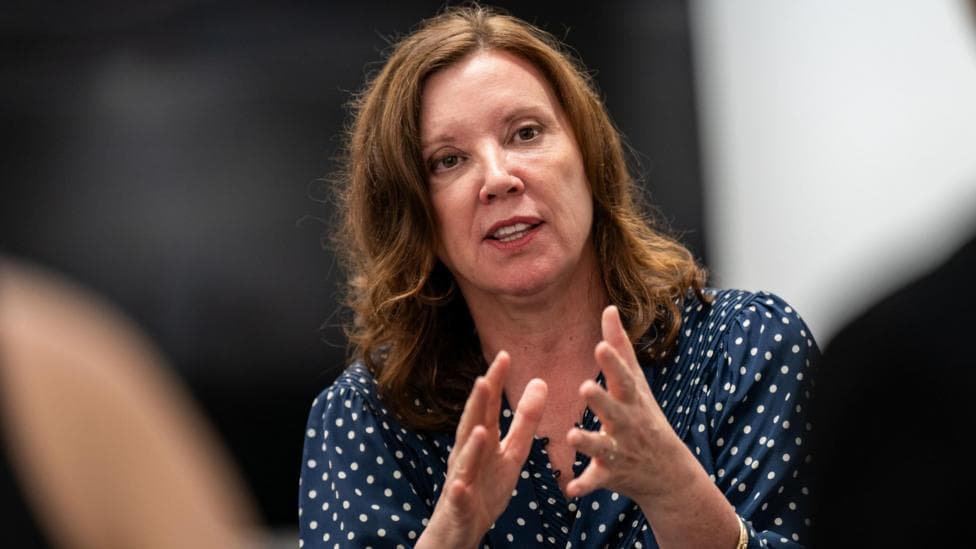
Jo Hooper achieved what many consider a career milestone—landing her dream role as head of communications by age 30—only to discover that professional success came at a devastating cost. Within a year of stepping into the management position, she experienced two mental health breakdowns and was forced to confront a harsh reality: the ambition and work ethic that had propelled her upward were simultaneously destroying her.
Now 39 and based in Penarth in the Vale of Glamorgan, Jo has become an advocate for rethinking workplace culture. Her story reflects a broader crisis affecting millions of workers across Britain. According to recent data, 22 million working days were lost in Britain because of work-related stress in 2024-25, and the problem shows no signs of improving. According to Mental Health UK's 2026 Burnout Report, the risk of burnout remains stubbornly high, with 91% of adults experiencing high or extreme stress in the last year.
The World Health Organization recognises burnout as a state of physical and emotional exhaustion resulting from chronic workplace stress that has not been properly managed.
The climb to the top
Jo spent her 20s pursuing rapid career advancement, securing promotions and salary increases through relentless effort.
I loved being good at it,she recalled of those years as a communications professional. Her strategy for success involved the tactics many ambitious professionals adopt: working extended hours, accepting every opportunity regardless of feasibility, and going beyond typical job responsibilities.
I wanted to be a head of communications by the time I was 30, which I did by doing all things you'd expect, working long hours, saying yes to everything including mad things like taking my boss's kids to school.
At the time, Jo viewed these sacrifices as necessary investments in her future.
I genuinely thought these were all good opportunities, and I was going to grab them with both hands,she explained. However, she failed to recognise the unsustainable pattern developing beneath her professional achievements.

When the switch flipped
The breakdown came suddenly, though the warning signs had been accumulating for months.
I remember being in the bathroom crying, hyperventilating, but I never thought this isn't sustainable, never thought I can't do this any more.Instead of questioning her approach to work, Jo assumed a change of employer would solve the problem.
I just thought I needed to change job and I'd be fine. I thought the fix was being in a different organisation but the way I behaved, what I thought was expected of me, was the same everywhere.
A year into her management role, the physical and mental toll became impossible to ignore.
I definitely think it was a case of being forced to stop by my body and my mind,Jo said. The symptoms were severe and disorienting.
I found it really difficult to make decisions, like my brain was working slower. I remember feeling like someone had flipped a switch and my brain had just broken.Sleep became elusive, and basic daily activities triggered nausea. Two mental health crises unfolded within twelve months.
Understanding burnout in Britain's workforce
Jo's experience is far from isolated. The charity Mental Health UK reports that two in five young workers aged 18 to 24 took time off due to poor mental health caused by stress in 2025. More broadly, according to the 2026 Burnout Report, 34% of UK adults experienced high or extreme pressure or stress always or often last year, while 91% experienced it at some point. Critically, only one in four workers say mental health is genuinely prioritised and supported at their workplace.
High-profile cases have drawn public attention to the burnout epidemic. Olympic athlete Laviai Nielsen recognised her own burnout only after the 2024 Paris Olympics concluded, while Green Party MP Carla Denyer announced in May that she would be taking a leave of absence due to burnout.

Who is most vulnerable to burnout?
Dr Jill Williams, a psychologist and business coach in north Wales who specialises in working with burnout sufferers, has identified a counterintuitive pattern.
It's actually perfectionists or those who go the extra mile who are more likely to experience this. The same traits that get you promoted will be the same ones that burn you out, unfortunately.
Public Health Wales' Amy Davies emphasised that burnout and stress, while related, are distinct experiences.
Stress can feel like drowning, but burnout can feel like having nothing left to swim with,she said. Burnout is not confined to traditional employment either. Williams noted that
it's not necessarily just work, we can see it an awful lot in carers and students, any situation where there is long-term stress.Any role involving prolonged, unmanaged stress can trigger burnout, whether paid work or unpaid caregiving.

Is burnout the same as depression or anxiety?
Burnout and depression are distinct conditions. The World Health Organization does not classify burnout as a mental health condition or illness in itself, though it can lead to such conditions if left unaddressed.
If burnout experiences are unaddressed it may lead to those conditions developing,Davies explained. Jo was eventually diagnosed with anxiety and depression following her breakdown, illustrating how untreated burnout can progress into diagnosable mental health disorders.
Can rest alone fix burnout?
A common misconception is that a holiday or extended break will resolve burnout. Davies cautioned that
sometimes it can be helpful, but it also needs to come with changes to the context that's causing the distress.Williams added that
for many people rest is necessary, but it's not always enough. If you go back to work and your attitude to work is the same, then you're going to have the same result, so something needs to change.
Jo learned this lesson painfully.
I've learnt the hard way that rest doesn't fix burnout, and it certainly didn't fix the breakdown for me. Actually changing the things that burnt you out or broke you down is the only way to get over it.
A career transformed
Rather than returning to corporate employment, Jo left her career entirely. She now runs her own business, offering public speaking and coaching to help business owners and employers support their staff in avoiding burnout.
I'm in control, I run my business, I get to decide how it works, I get to decide what I do and who I work with and that's a huge part of the process for me,she said.
Her mission has become explicit and uncompromising.
Now I'm a woman on a mission to convince others to work less, because I spent 10 years not doing that, and it nearly broke me.She is particularly critical of contemporary workplace culture.
I detest this optimisation culture of trying to be as productive as possible. Feeling like we constantly have to optimise ourselves and productivity is just forcing us into working more and living less... I think it just needs to get in the bin.

Burnout as a systemic workplace issue
Several professions have reported alarming rates of staff departures due to burnout, particularly midwifery and teaching. Hannah Leonard from the Royal College of Midwives union stated:
Midwives do an extraordinary job, and they deserve to feel pride in their profession, not burnt out within a few years of qualifying.Neil Butler from the teaching union NASUWT said:
Changes must be made to bring back the joy into teaching. Whilst it is a relentless grind we will continue to lose good teachers from classrooms in Wales.
Trade union research has identified stress as the primary occupational hazard. Laura Doel from Trade Union Congress Cymru stated:
Our research shows that stress is the number one risk at work, higher than traditional dangers like exposure to chemicals, working at height and unsafe machinery.While employers increasingly offer wellbeing initiatives, Doel emphasised that addressing root causes is essential.
Tackling the root cause of stress such as low pay, insecure contract and impossible workloads is key.
According to BBC reporting on burnout, over one-third of employees feel uncomfortable discussing significant stress with their managers, creating a barrier to early intervention and support.
Regulatory and government response
The Health and Safety Executive, Britain's national regulator for workplace health and safety, has clarified employer obligations. A spokesperson stated:
Employers have a legal duty to protect workers from risk factors that cause work-related stress by assessing and properly managing key areas of the work.
The Welsh government said it was working with employers and trade unions to reduce pressures, support staff wellbeing and ensure appropriate mental health support is available.
Earlier this year, hundreds of GPs told the BBC they had never refused to sign a patient off work for mental health issues, raising questions about how medical professionals assess and document burnout-related absences.