

The Royal College of Paediatrics and Child Health (RCPCH) has warned that vaping carries genuine health risks for children and young people and should be made "less attractive" to them. The warning follows a review of roughly 81 studies, which found links between vaping and higher rates of breathing problems, as well as evidence of harm to babies whose mothers vaped during pregnancy. The college is now pressing the UK government to strengthen its planned restrictions on vape sales, including limiting the range of flavours on offer.
The findings, published in the journal Archives of Disease in Childhood, drew on research examining the health and social effects of vaping among children and young people. Reviewers identified associations between vaping and a range of problems, including wheezing and coughing, poor oral and dental health, disrupted sleep, mental health difficulties and eye-related symptoms. The college stressed that vaping should not be regarded as a "harmless part of growing up".
What did the review find?
Co-author Prof Will Carroll said the analysis revealed clear connections between vaping and respiratory symptoms, nicotine dependence, and a higher likelihood of taking up cigarette smoking afterwards.
"We must act to make vaping less attractive and accessible to children,"
Dr Mike McKean, the RCPCH's vice-president for policy, said too little is still known about the long-term consequences of vaping for young people, but that the emerging pattern is troubling.
"Vaping is still a relatively new product, and there is much we do not yet know about its long-term impact on children and young people but a clear and concerning picture is emerging."
"We need to keep pace with a rapidly evolving market and continue to take action to protect children from nicotine products."
Separately, the RCPCH's 2026 state of child health data shows that in 2023, more than a quarter of girls aged 11 to 15 in England had tried e-cigarettes at some point, compared with 22% of boys of the same age, according to the college's own child health indicators.
How is the government responding?
In July 2026, ministers opened a public consultation on the appearance, packaging and in-store display of vapes, aiming to make the products less appealing to under-18s. Under the proposals, packaging would be plain, branding tightly restricted, and only simple flavour names such as "apple" or "cola" permitted, rather than more elaborate marketing descriptions.
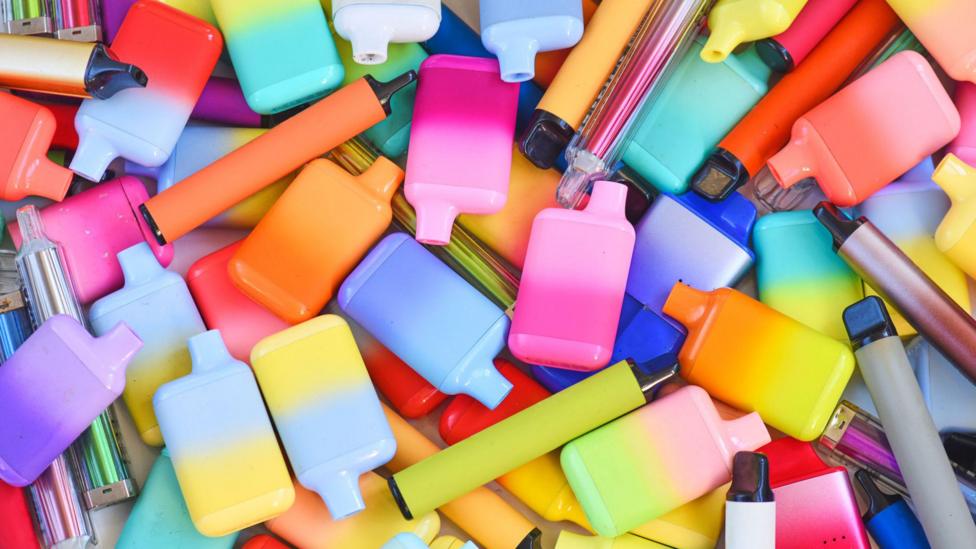
Other measures under consideration would require retailers to keep vapes out of customers' direct line of sight, mirroring existing rules for cigarettes and tobacco. According to the government's own announcement, the UK-wide consultation formally launched on 10 July 2026 as part of a wider crackdown on products marketed toward children, based on official government guidance.
These proposals build on the Tobacco and Vapes Act, which became law on 29 April 2026 and lays the groundwork for a smoke-free generation, according to a government statement on the legislation. Under the act, anyone born on or after 1 January 2009 will face a lifelong ban on buying tobacco products, meaning today's 17-year-olds and younger will never legally be able to purchase cigarettes.
Dr McKean welcomed the legislation but cautioned that it should not be treated as a complete fix.
"an important step towards protecting children from nicotine addiction, but it must not be seen as a one-and-done solution."
Prof Carroll went further, arguing that ministers need to restrict the actual flavour types available rather than simply how they are described on packaging.

"to go further and limit the types of flavours available to them as opposed to just their descriptions"
What's the wider context behind these restrictions?
The push for tighter rules comes against a backdrop of rapid growth in the vaping retail market. Our earlier reporting found that the number of vape retailers in Scotland has risen by 28% since 2020, with outlets concentrated disproportionately in deprived areas such as Greenock, raising concerns among experts about unregulated growth and youth uptake. Separately, councils have already been given expanded powers to restrict the spread of vape and betting shops on high streets, part of a broader effort to limit young people's exposure to nicotine products in their local areas.
The human cost of vaping-related harm has also drawn public attention. Earlier coverage detailed how the family of Harry Whitton, an 18-year-old from Dundee, said his death in Spain followed a suspected reaction to vape oil, prompting relatives to warn publicly about the dangers of vaping while raising funds for his repatriation and funeral.
The government's regulatory ambitions extend beyond retail packaging. A separate consultation launched in February 2026 also examined banning smoking, vaping and heated tobacco use in playgrounds and education settings across England, according to a government announcement on protecting children from second-hand exposure. The Tobacco and Vapes Act itself also bans advertising and sponsorship of vaping and nicotine products from next year, and gives ministers powers to impose further marketing restrictions aimed at children, according to the official consultation document.
How widespread is youth vaping?
Polling commissioned by the charity Action on Smoking and Health (Ash) found that almost one in five 11 to 17-year-olds in Britain have tried vaping. More precisely, Ash's 2026 figures put the proportion who have ever tried vaping at 19%, with 6% currently vaping and 2% vaping daily, according to the charity's published research.
Ash chief executive Hazel Cheeseman said the risk profile of vaping needs to be kept in perspective alongside smoking.
"The evidence remains clear that vaping is less harmful than smoking but is not risk free."
"As it was with tobacco, strong controls on marketing and promotion will be key to reducing youth vaping."
Andrew McCracken of the charity Asthma + Lung UK echoed the message that vaping should remain a tool strictly for adult smokers trying to quit.
"Vapes can play an important role for current smokers looking to quit, but anyone who doesn't smoke, shouldn't vape, and that is especially true for children."
The Department of Health and Social Care said the new evidence underscores why children should be kept away from vaping altogether.
"children should never vape and this evidence shows just some of the risks associated".
A department spokesperson pointed to measures already in force and further steps in the pipeline.
"We have already banned single-use vapes and have legislated to ban advertising and sponsorship from next year too."
"We're also consulting on proposals to crack down on packaging that appeals to children."
What happens next?
The current UK consultation on vape packaging, flavour descriptions and retail display remains open to public responses until 11:59pm on 2 October 2026, according to the official consultation page. Once it closes, ministers will review submissions before deciding whether to tighten rules on packaging, flavours and how vapes are displayed in shops. A parallel consultation on tobacco and vape restrictions in Scotland is also due to close on the same date, 2 October 2026, according to Ash Scotland's consultation tracker.
Key Facts
- The RCPCH reviewed about 81 studies linking vaping to breathing problems, poor sleep, mental health issues and harm to babies of mothers who vaped in pregnancy.
- Almost one in five 11 to 17-year-olds in Britain have tried vaping, with 19% having ever tried it and 6% currently vaping, according to Ash.
- The government's consultation on plain packaging and simplified flavour names runs until 2 October 2026.
- The Tobacco and Vapes Act, law since 29 April 2026, bars anyone born after 1 January 2009 from ever legally buying tobacco.
- Scotland has seen a 28% rise in vape retailers since 2020, concentrated in deprived areas.


