Temporarily closing residential streets to let children play and socialise safely outside has proved beneficial for both children and adults. On Colenso Mount in the Holbeck area of Leeds, seven-year-old Aydin is enjoying the chance to play somewhere new after the street was temporarily closed to traffic to become a Play Street.
“Everyone can ride scooters and the boys over there play football which is very fun”, he says excitedly.
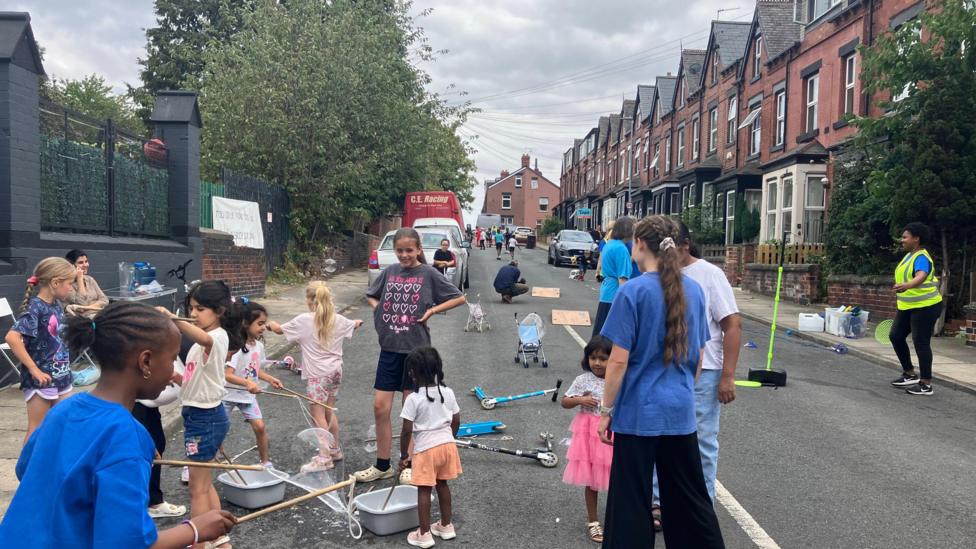
As Aydin jumps a scooter over ramps set up in the middle of the road, children around him are drawing with chalk, blowing bubbles and kicking a football in a place where cars would normally be driving through. It is a rare chance for children in the neighbourhood to play outside together, in a space big enough to frolic and safe from traffic.
According to a survey from the campaign group Play Their Way, out on Wednesday, nearly half of parents, 46%, say their child doesn't have a safe place to play outdoors.
Prime Minister Andy Burnham is being urged to bring back a national play strategy for children in England, an initiative he championed while culture secretary in 2008.
Both Wales and Scotland have already made it a legal requirement for local authorities to ensure there are enough opportunities for children to play. In England, however, the campaign group Play England says many children do not have access to high quality playgrounds and play opportunities.
The group is urging the prime minister to force councils to regularly assess whether children have enough time, space and freedom to play where they live.
A spokesperson for the government told the BBC that “every child deserves the space to run around and be a kid” and said ministers are investing £18m to reopen lost play spaces.
It also says it is rolling out free stay-and-play sessions in its new local community centres, known as Best Start Family Hubs, as well as “giving parents new guidance on screen time, and protecting playgrounds through our planning rules.”
It's a safe environment
Beth says closing the street to traffic makes her more comfortable about allowing her children to play outside.
A year-long commission on play by the Centre for Young Lives found last year that children spend half as much time in unstructured outdoor play as any generation before them. The report said play was too often “quietly squeezed out” of daily life by increased traffic, screen time and an intolerance against play in public spaces.
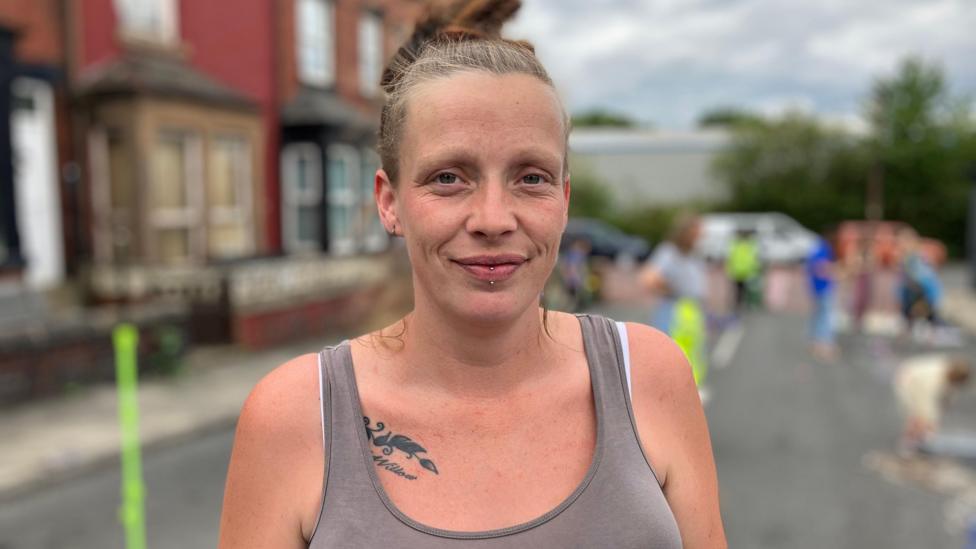
For Beth, a parent in Leeds, closing the street to traffic meant she was more comfortable allowing her children to play outside.

“It is a safe environment, the roads are blocked off and there are no cars that can come speeding up.
“This is a deprived area so the children absolutely love it, because it is a safe space for them to play.”
Another resident, Kate, who lives on the corner of Colenso Mount, says having a Play Street right outside her front door is “brilliant” and has led to making new connections with her neighbours.
“It's so easy just to sit inside, and kids get bored so being able to go outside our front door, play and meet different people, it's really good.”
This is the first time Colenso Mount in Holbeck, Leeds, has closed to become a Play Street.
The idea of regularly closing down residential streets for children to play was started in 2009 by a group of parents in Bristol, who wanted to show that “playing out near home should be normal, it doesn't have to be a special event”.
Alice Ferguson, one of the founding parents, says play is essential for children’s wellbeing and organised Play Streets should be a step towards that wider goal.
“If you've got a safe space, children will come out and play with whatever they have.”
Ferguson's campaign group Playing Out estimates that around 100 councils across the UK now have a Play Street policy, with more than 1,600 streets regularly closing to traffic.
Council policies differ across the country and Ferguson says having a national policy in place would give councils and residents “clarity and confidence” to close streets safely.
“There's still a long way to go. Some councils have cost barriers or insist on insurance, and a lot of councils don't have a policy at all.”
She says there are common requirements to hosting a Play Street, including an official “road closed” sign, physical barriers at each end and volunteers who can escort residents in and out.
Catherine Peacock has organised about 100 Play Streets across Leeds in the past few years.
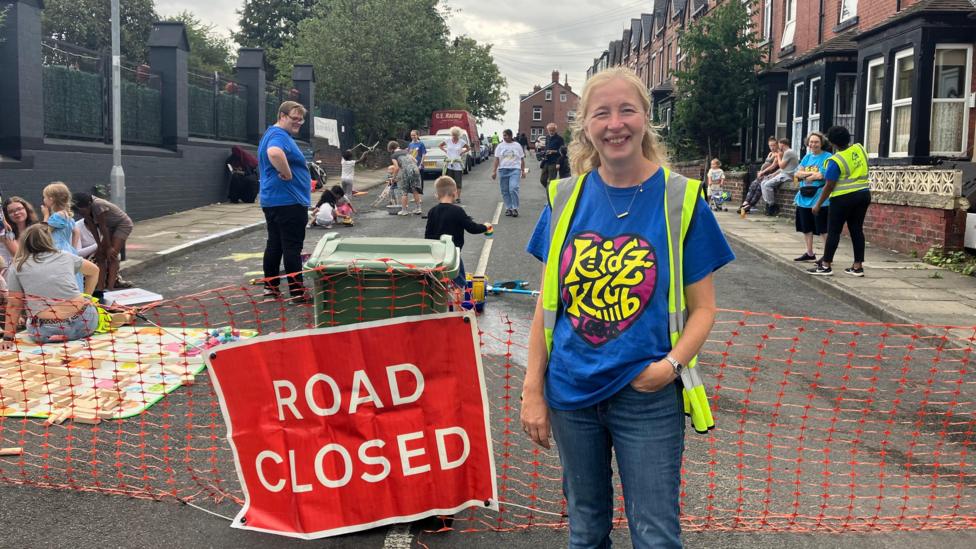
She works for the charity KidzKlub in Leeds and says she originally started as a mum, doing it on her own street because she wanted her own kids to be able to play out safely.
“But because my work is in the community I thought other streets we're working with could benefit from that too and it's really grown and grown.”
Leeds City Council is specifically targeting poorer areas to host Play Streets, after staff noticed most of the residents applying to close their road lived in more affluent areas.
Jen Rutherford, Play Strategy Officer for Leeds City Council, works to ensure children's access to play is considered in wider council decisions, and says it is limiting to think only about playgrounds.
“Play is everyone's business across a local authority because it feeds into your waste management strategy, it feeds into how you design your streets and spaces.”
“We're working very closely with planning in Leeds on how we can make it so that developers when they're building new spaces in our city are focusing on children and young people and are designing through that lens of play as well.”
Back on Colenso Mount, ten-year-old Mohamed is hoping he gets the chance to play football in the street with his friends again soon.
“It's a good idea, because lots of children will come and then [they] will be excited and happy and they'll have something to do in the summer holidays.”
Key Facts
- Seven-year-old Aydin is playing on Colenso Mount in Holbeck, Leeds, after the street was temporarily closed to traffic.
- Play Their Way says 46% of parents report their child does not have a safe place to play outdoors.
- Play England says children in England lack access to high quality playgrounds and play opportunities.
- Playing Out estimates around 100 councils across the UK have a Play Street policy, with more than 1,600 streets regularly closing to traffic.
- Leeds City Council is targeting poorer areas to host Play Streets.