

With schools closed for the summer, charities in Gloucestershire and Somerset say growing numbers of families are struggling to afford food, prompting community groups to launch support schemes including free meal events and expanded food banks.
YMCA Cheltenham has begun hosting park-based "family fun days" that combine outdoor play with free, healthy meals for children and their families. Rob Charsley, head of communities, health and wellbeing at the charity, said one week alone saw 67 children and their families attend a single event.
Why are families struggling during the school holidays?
Charsley said the summer break removes the safety net of school meals at the same time as parents face heightened financial pressure to keep children entertained and fed.
Summertime is a great and fun time for children, but it's also a difficult time for parents [dealing] with financial pressures and food poverty.
There can be real pressures for families to find those positive activities and be providing healthy food for children, and it all comes at a cost.
He said figures show 18% of children in Cheltenham and 17% of children in Gloucester experience very low food security. Despite the scale of the problem, Charsley said the fun days were making a tangible difference.
It's great fun and really satisfying when you've managed to feed all those families as well.
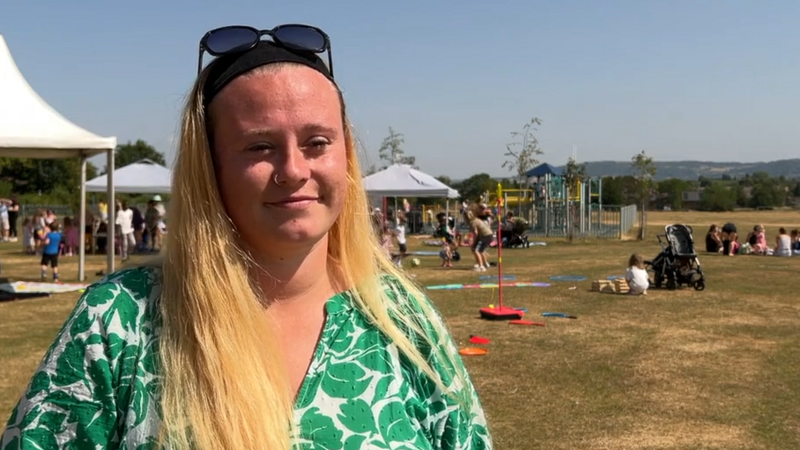
Atlanta, who attended one of the events with her two children, said her main worry was the quality and shelf life of affordable food.
It just goes off really quickly.
It is quite difficult because it's so pricey to get all the healthy stuff, whereas the cheap stuff - the junk food - is just cheap, so it's easier to buy that.

How is demand changing at food banks?
In Somerset, Radstock Food Club, which redistributes surplus food from supermarkets and suppliers, says it is now feeding more than 100 families, a rise it attributes directly to the increased cost of living. Manager Sofia Perkins said attitudes towards seeking help appear to be shifting.
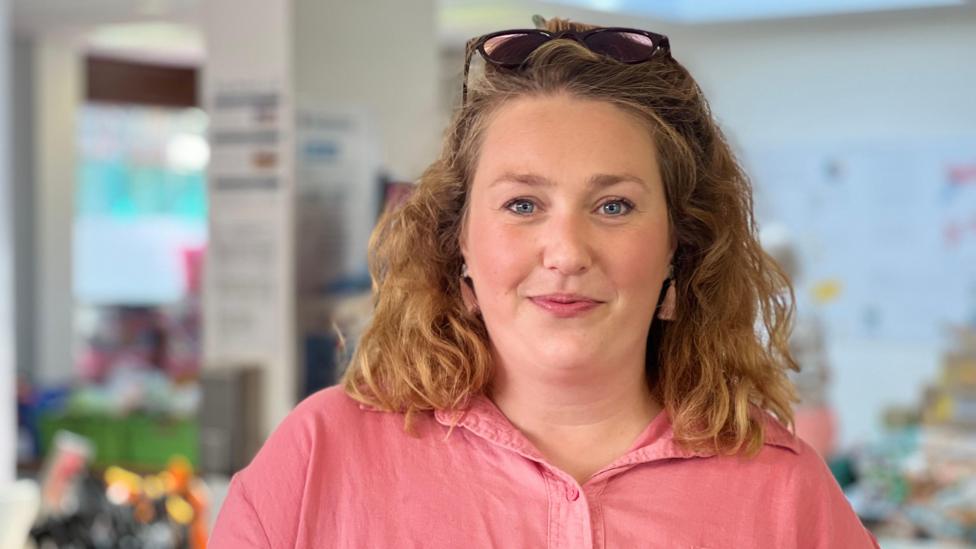
There's more people [going to food banks] - people are less worried about accessing it.
Perkins said the growing reliance on food support in her area was troubling given local economic conditions.
People can't afford your standard healthy food, which means people are eating quick, convenient food, which is no good for them.
Being able to provide this for everybody really does make a big difference.
Is this part of a wider pattern?
The pressures described in Gloucestershire and Somerset echo concerns raised elsewhere in the region. A charity in Sussex and Surrey recently said families are skipping meals during the summer holidays once free school meals stop, while a father relying on a community larder in Castle Cary told reporters he fears a particularly difficult summer as donations fall and holiday voucher schemes end. Separately, foodbank use in the South Cotswolds has been rising as living costs and health problems push more people to seek help for the first time, and campaigners have renewed calls to reinstate cut support payments amid rising holiday food costs affecting families nationwide.
How does this compare internationally?
Food insecurity linked to the cost of living is not confined to the UK. In the United States, the Federal Reserve Bank of New York found that by February 2026, 10% of surveyed households reported insufficient food availability, up sharply from 4% in June 2020, with 15.8% saying they relied on food donations, according to reporting on the survey. In Virginia, a 2025 poll cited by local advocates found more than half of families with children in public schools said it had become harder to afford food and make ends meet during the summer months, according to a report on summer food insecurity.
What support exists elsewhere, and what happens next?
In the US, federal and state programmes have expanded to address the gap left by the end of school meals. According to the Food Research and Action Center, 38 states and the District of Columbia have committed to the Summer EBT programme for 2026, reaching an estimated 21 million children with $120 per child in grocery benefits, as detailed by the Food Research and Action Center. The organisation notes the scheme targets children eligible for free or reduced-price school meals and has been shown to reduce food insecurity and improve nutrition. Families in the US can also use the USDA's Summer Meals Site Finder to locate nearby meal sites by zip code, city, state or street address, or call the National Hunger Hotline, which operates weekdays from 8am to 8pm ET on 1-866-3-HUNGRY. In Virginia specifically, the SUN Bucks scheme offers a one-time $120 grocery benefit per child, while SUN Meals provides free meals for children aged 18 and under at community sites throughout the summer, according to local coverage of the programmes. No equivalent nationwide summer benefit scheme was mentioned by the Gloucestershire and Somerset charities, who instead continue to rely on community fun days and food club donations to meet local demand through the rest of the school break.
Key Facts
- YMCA Cheltenham's family fun days fed 67 children and their families in a single week.
- 18% of children in Cheltenham and 17% in Gloucester experience very low food security, according to the charity.
- Radstock Food Club now supports more than 100 families, up amid rising living costs.
- In the US, 38 states plus Washington DC have joined the 2026 Summer EBT scheme, giving $120 per child in grocery aid, per the Food Research and Action Center.
- A Federal Reserve Bank of New York survey found household food insufficiency rose from 4% in June 2020 to 10% by February 2026.


