

Britain's repeated heatwaves this summer have caused travel chaos, overheating homes and school closures nationwide, with a fifth heatwave forecast to arrive this week. For disabled people, campaigners say, these episodes go far beyond discomfort and can become a matter of survival, as service dogs struggle in the heat, wheelchair batteries drain faster and lifts break down leaving residents trapped.
Disability campaigner Doug Paulley said the stakes are entirely different for disabled people than for the able-bodied public.
"For somebody who is able-bodied, it's uncomfortable but if you identify as disabled, we're starting to talk about survival," said Doug Paulley.
Campaigners and researchers argue that the specific difficulties disabled people face during extreme heat — from service animals overheating to mobility equipment failing — are routinely left out of official heat advice and emergency planning.
How does heat affect people who rely on guide dogs?
For London-based journalist and content creator Emily Davison, rising temperatures mean her guide dog Rosie's welfare must take priority over her own plans.
"The dog's health has to come first," Davison said.
Heatwaves have repeatedly forced Davison to pull out of events because conditions were unsafe for Rosie to travel in, costing her potential income. She said buses and other public transport often become uncomfortably hot, and she has stopped relying on Uber after being refused entry with her dog on multiple occasions. Even the subsidised London Taxicard service, designed for people with mobility impairments or severe sight loss, has become harder to use as available taxis grow scarcer.
Davison said every outing now demands extensive forward planning, which leaves her feeling cut off from normal life and restricts both her career and her independence.
"It does put the brakes on your life," she said. "When you're in this situation and you've got a guide dog and you can't do anything, it does make certain things grind to a halt."
As a result, she now works from home for extended stretches, though she acknowledges that not everyone with a disability has that option.
"I think the culture of being able to work from home and have that option is really important to keep ensuring that disabled people can still be in employment," Davison said.
What happens when mobility equipment fails in extreme heat?
Cardiff-based actor Jimmy Macfarlane, who uses a powered wheelchair for work-related travel, said the heat directly threatens his mobility because it drains his chair's battery.
"The heat definitely impacts the chair and it makes the battery go down a lot quicker… I always have to think is there a way I can get to where I need to be without moving the chair?" Macfarlane said.
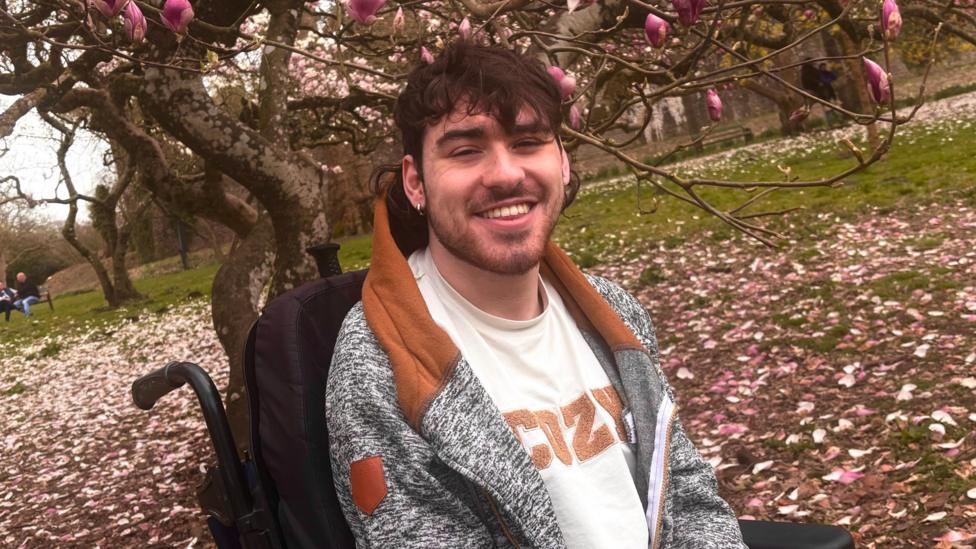
On some days he has been unable to leave home altogether. While living in a sixth-floor flat, he found that high temperatures caused the building's lift to fail — a problem that has also been reported in other tower blocks, but one that poses a far greater obstacle for wheelchair users than for residents who can simply take the stairs.
"There were times where I was stuck in the flat [for days] until it was fixed," he said.
Indoor heat brought its own difficulties. Macfarlane said his cerebral palsy already means routine activities take considerably longer than for someone without a disability.
"Things like getting changed, having a shower… everything I do takes twice as long as a non-disabled person," he said. "On a hot day, it's even more exhausting."
Why can standard cooling advice be risky for blind people?
Standard heatwave guidance — keeping curtains shut and opening windows once temperatures drop — can create serious risks for people with visual impairments. Content creator and advocate Claire Sisk, who has distorted vision, said opening up her home leaves her feeling exposed.
"If I've got all my windows and doors open, I feel incredibly vulnerable because I can't see if anybody is walking into my property. So I have to have them all closed, which is quite unbearable," Sisk said.


Sisk gradually lost her sight after suffering two strokes in 2009 at the age of 29. Other common cooling measures carry hazards too — she said fans placed to cool a room can become trip hazards simply because they disrupt her familiar layout.
Bright sunlight also reduces what little vision she has left when she is outdoors.
"[When] that sunlight comes out, then that bit of vision just goes," Sisk said.
Heat-related disruption to transport compounds the problem, turning short trips into drawn-out ordeals. Sisk recounted being delayed at a Tube station due to staff shortages.
"That can be a bit frustrating because it takes you two hours then to get home when it should have only taken 45 minutes," she said.
What is the financial and emotional toll of extreme heat?
Hollye Kirkcaldy, a PhD researcher at the University of Bath studying how extreme heat affects disabled people across the UK, said the difficulties described by Davison, Macfarlane and Sisk reflect a much broader pattern.
"You've got inequalities in urban infrastructure, housing, structural conditions around things like social networks and care. If you put all of those together and then you throw heat in, that's what's disabling," Kirkcaldy said.
Her research found that official heatwave guidance frequently fails to account for disabled people's circumstances, and that measures marketed as straightforward can in practice introduce fresh barriers. She said this erosion of independence damages mental wellbeing and adds financial strain, since disabled people can be forced out of work while facing higher costs, such as running cooling systems around the clock.
Kirkcaldy said in some cases it can be "a trade-off that nobody should have to make between your health and whether you eat."
These concerns are echoed beyond the UK. According to research published in The Lancet Planetary Health, autistic and disabled people remain largely invisible in adaptation and health policy, and disability-inclusive heat adaptation is needed to ensure equitable survival during extreme weather. Separately, Human Rights Watch reported in 2023 that extreme heat disproportionately affects people with disabilities and can worsen physical, social and mental health problems, particularly when they are left to cope with dangerous temperatures on their own.
Is there a wider policy problem?
For Paulley, who lives with several health conditions worsened by heat, the struggles described by others point to systemic failures rather than isolated incidents.
"Disabled people are always amongst the first against the wall whenever there's a significant crisis of any type in society, and this is no exception," Paulley said.
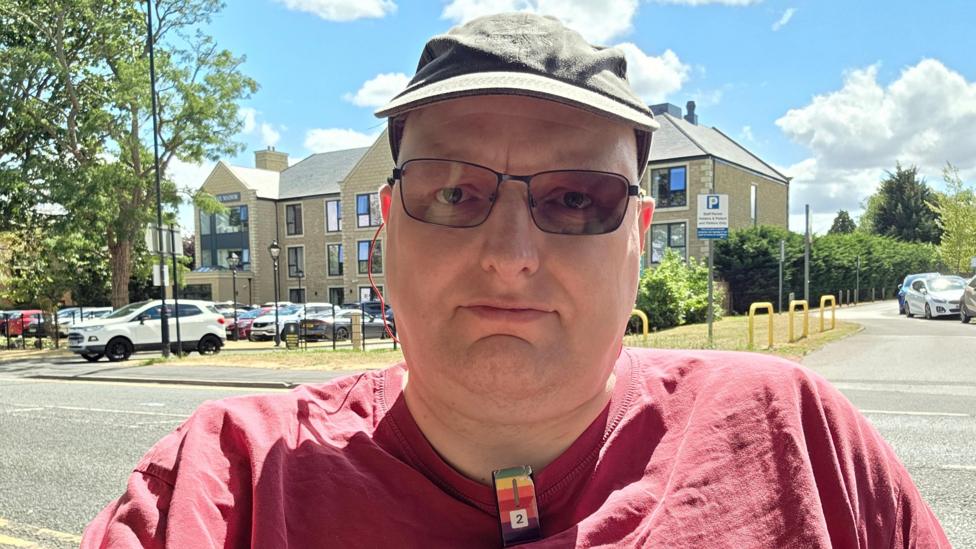
During one heatwave this summer, Paulley had to cancel physiotherapy and could not give evidence to the Covid Inquiry because travelling was too dangerous.
"There was just no way that I could have gone. It was dangerously hot and I would have been really unwell."
Davison said the changing climate means these challenges are only likely to intensify.
"Climate change is a thing. Summers are only going to get hotter."
Paulley said the deeper issue is who gets a say in how society responds to that change.
"Policy is very much set for them, not with them."
The strain of extreme heat on the NHS has also drawn political attention. As reported in our earlier coverage, Health Secretary Yvette Cooper has said the NHS must prepare for heatwaves every year in the same way it plans for winter, following a rise in heat-related accident and emergency visits and disruption to hospital services this summer. Separately, rising temperatures have also fuelled debate over home cooling, with questions growing over whether British housing is fit to cope with warming summers and whether air conditioning should become more widespread.
What could change going forward?
Campaigners and researchers say the recurring problems faced by disabled people each summer point to a need for heat planning that is designed with disabled people rather than simply applied to them. No further policy announcements or scheduled reviews have been confirmed at this stage, but the calls from Paulley, Kirkcaldy and international researchers suggest pressure for change is likely to continue as heatwaves become more frequent.
Key Facts
- A fifth heatwave of the summer is expected to hit the UK this week.
- Guide dog owner Emily Davison has cancelled work events because heat made travel unsafe for her guide dog, Rosie.
- Wheelchair user Jimmy Macfarlane was previously trapped for days in a sixth-floor flat when heat caused the lift to fail.
- Visually impaired advocate Claire Sisk cannot safely open windows or doors to cool her home due to security concerns.
- Human Rights Watch reported in 2023 that extreme heat disproportionately harms people with disabilities, worsening physical, social and mental health outcomes.


