Canada's government announced on Wednesday that it will indefinitely postpone expanding its medically assisted dying programme to people whose sole medical condition is mental illness, citing insufficient agreement on eligibility criteria and implementation safeguards.
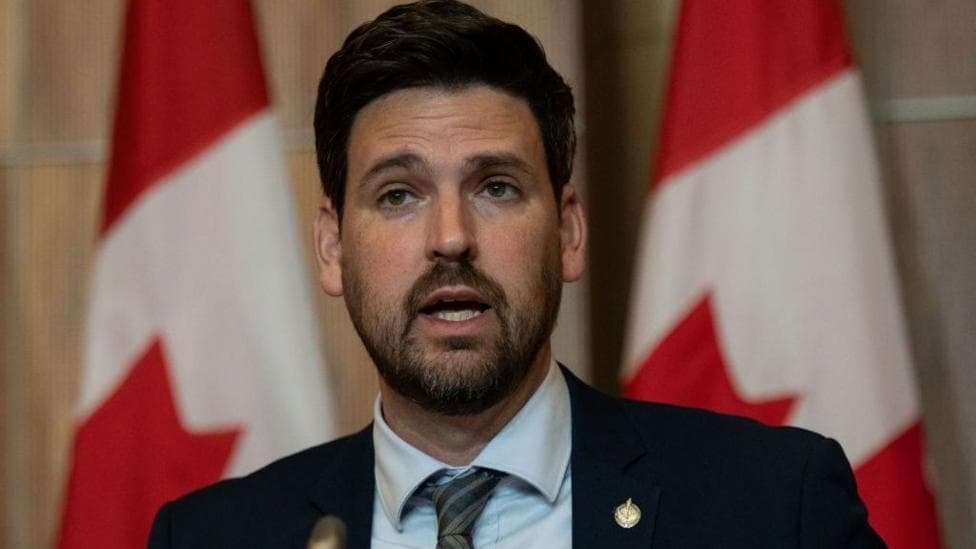
Justice Minister Sean Fraser stated that
while there is not a perfect consensus on this issue, we believe this is the correct approach, acknowledging the difficulty of the decision. The announcement follows a recommendation earlier this year from a parliamentary committee that the expansion should not proceed.
Why the expansion is being halted
The government's primary concern centres on defining what constitutes a mental disorder in the context of assisted dying eligibility. According to policy analysis, officials worry that overly broad definitions of "mental disorder" could inadvertently restrict access to medically assisted dying for people already eligible under existing law, including those with neurocognitive conditions.
The parliamentary committee's 88-page report identified a recurring theme in testimony: the need for more equitable access to adequate mental-health services before expanding assisted dying eligibility. This finding underscored concerns that expanding the programme without first strengthening mental health infrastructure could create inequitable outcomes.
What this means for people with mental illness
Canadians whose sole condition is mental illness will not gain access to assisted dying by March 2027, the date that had been previously planned for the expansion. The current statutory exclusion is scheduled to expire on March 17, 2027, unless Parliament changes the law. The government's new legislation will make that exclusion permanent unless future circumstances warrant reconsideration.
Advocates for expanding the programme argue that denying access violates constitutional rights and healthcare equality. A federal court case remains active, challenging the government's earlier decision to delay access to medically assisted dying for people with mental illness as their sole condition.
What is Canada's assisted dying programme?
Medically assisted dying, known as Maid in Canada, became legal in 2016 for people with terminal illnesses. That group still represents the vast majority of cases. Following a Quebec court decision, the programme expanded in 2021 to include people with incurable conditions whose death was not imminent—a mechanism referred to as "track two" Maid.
The expansion has generated controversy, with disability advocacy groups documenting instances where assisted dying was offered to people with disabilities who had not requested it themselves. These cases raised concerns about whether vulnerable populations were being inadequately protected.
What new provisions are being introduced?
Fraser announced that the government will introduce new legislation in the coming weeks with two key components. First, it will formally suspend the mental illness expansion indefinitely. Second, it will permit patients with progressive incurable illnesses to provide advance consent to assisted dying before their health deteriorates to the point where they lose decision-making capacity. Advanced requests are not currently legal in Canada.
These are not easy decisions but we believe they will be the correct ones, Fraser said of the government's approach.
How does Canada's approach compare internationally?
Canada's decision to pause expansion reflects broader global debate over assisted dying eligibility. According to recent analysis, more than 300 million people now live in countries with legalised assisted dying, though laws vary significantly. Some jurisdictions restrict access to the terminally ill, while others permit assistance for cases of unbearable suffering. The variation reflects ongoing disagreement about where eligibility boundaries should lie.
What happens next?
The government plans to introduce legislation within the coming weeks to codify the indefinite suspension. The existing statutory exclusion for people with mental illness is set to expire on March 17, 2027, making parliamentary action necessary before that date to prevent automatic expansion. A Conservative member of Parliament, Tamara Jansen, has also proposed a bill to block medically assisted dying eligibility for people with a mental disorder; the House of Commons was scheduled to vote on whether to send that bill to committee.
The government's decision to indefinitely suspend rather than formally exclude the expansion leaves open the possibility of future reconsideration if circumstances change, though no timeline for such a review has been announced.
If you have been affected by any of the issues raised in this story, support can be found at the Suicide Crisis Helpline by dialling 988 in Canada.