Flip-flops have long been a popular answer to sweaty, uncomfortable feet in hot weather, and they have now had a revamp. The most stylish way to wear them this summer is with a kitten heel, according to fashion expert and trend forecaster Angela Baidoo, though the footwear remains controversial because of concerns about support and foot health.
"It's not a high heel and it's really kind of easy to just slip in and slip out of," she says. Even so, heel or not, the flip-flop has earned itself a bad rap for lack of support and damaging our feet. Is that fair?
Why your summer shoe could be bad for you
"In terms of arch support and joint support, it's not the best style, but people are investing a bit more, getting their flip-flops customised, because it's something that is just so easy to wear," Baidoo says.
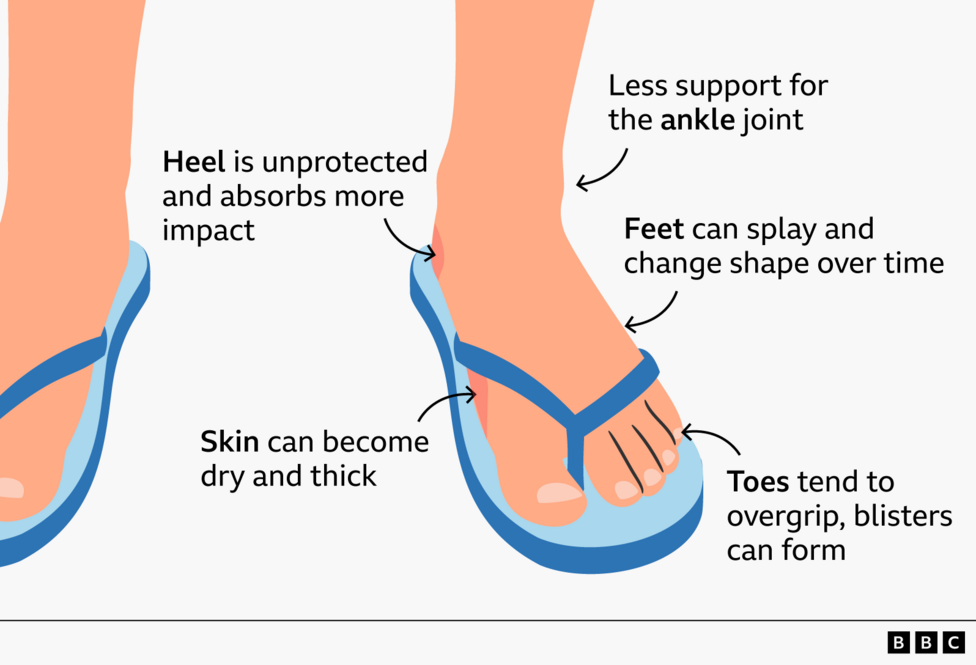
Podiatrist Dr Helen Branthwaite, who is also chief clinical adviser at the Royal College of Podiatry, says it's "not accurate" to say flip-flops are bad. The problem comes if you go straight from wearing a very structured shoe to wearing flip-flops a lot, she explains. It means your foot is under more strain than normal, which makes you more prone to injury.
"The foot does start to change shape and tends to splay a little bit over time," says Branthwaite.
"A good analogy is if you were to wear a corset all the time and then took the corset off, everything would sort of all hang out, so to speak."
So what are the stylish and comfortable alternatives?
How to find healthy sandals
Baidoo suggests a more supportive flip-flop, such as a FitFlop, which is sturdier and contoured - a world away from the flat and thin flip-flops that have been cut from a big sheet of foam.
Sliders are out and Crocs are in for Gen Z, she says. They might be "anti-fashion shoes" but they're "really comfy" and designed "orthopaedically" with footbed sandals like Birkenstocks offering the same advantages.
The wooden clog is also making a comeback. It's worn by doctors and chefs on their feet all day. Scholl slider mules are the original orthopaedic shoe, Baidoo says - and admits she once had a pair in pink suede.

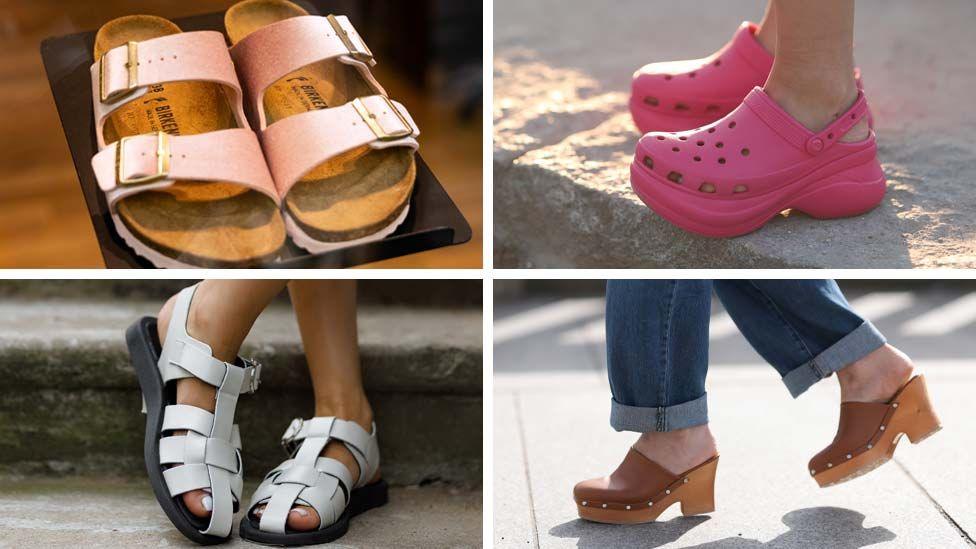
Wedges are another option in the heat. "When I speak to some of my friends and some of my clients who work in the plus-size category, the wedge actually provides a form of comfortable footwear. And it provides a nice kind of silhouette for the ankle. You've got the support all the way through the shoe."
You could always opt for the fisherman-style sandal, which looks like something a history teacher might have worn in the 1970s. With socks.
"Men can wear it as an alternative to a loafer. It's not as casual as a flip-flop, which might not be suitable for certain environments. It's a really cool kind of style to adopt for women too," Baidoo says.
So what about the trend for wearing minimalist barefoot shoes? It's all about easing into them, says Branthwaite. In other words, don't buy a pair and then decide to go on a 5-mile hike.
Expert tips for happy feet
Podiatrist Dr Helen Branthwaite's top tips for looking after your feet:
Pay close attention to the sole of the shoe and what it's made from, because that will influence how your foot moves and how you walk
If you can bend your flip-flops in two, then ask yourself if you're strong enough to take on the extra load your normal shoe would support
Don't forget to check the condition of your feet - the skin can dry out quickly in open footwear like flip-flops. You might not notice until your heel gets firmer and your toenails start to look fragile
Lather your feet in emollient, a moisturising water retention cream containing urea to hydrate the skin, every day
Your feet change constantly throughout your life, so get them measured regularly. Just because you start out being a size 6, doesn't mean you'll remain a size 6.