
Oli Coppock was a thriving digital marketing professional with plans for the future when he arrived at Warrington Hospital's emergency department in May 2024, several months after undergoing treatment for a brain tumour. He presented with severe headaches and dizziness, underwent various tests and assessments, but was discharged without receiving a brain scan. Within a week, fluid that had accumulated on his brain triggered cardiac arrest. He survived but never recovered, and now exists in almost complete paralysis at age 32.
His case represents one of an expanding body of clinical negligence claims filed against emergency departments across England. Analysis of NHS Resolution data reveals a 41% increase in A&E-related negligence claims over the past five years, climbing from 1,151 cases in 2020-21 to more than 1,623 in 2025-26. Medical professionals attribute this rise to mounting pressures and extended waiting times now endemic in emergency departments nationwide.

Why was a brain scan not ordered?
Given Oli's documented medical history—a previous brain tumour and a recent multiple sclerosis diagnosis—his father Stephen struggles to comprehend why imaging was not performed. Despite these serious conditions, Oli had remained physically active, maintained his career, and pursued hobbies including gym sessions and DJing. The omission of a scan proved catastrophic.
North Cheshire and Mersey NHS Foundation Trust, which operates Warrington's A&E, has now formally acknowledged a breach of duty for failing to order a CT brain scan. The trust stated in a formal response:
We are deeply sorry that Mr Coppock did not receive that standard of care that should be expected and we recognise the distress and lasting impact on patients and their families when harm is caused.
According to the trust's own service information, CT scanning is available 24 hours a day, seven days a week for emergencies at Warrington Hospital's Emergency Department, making the scan feasible at the time of Oli's attendance.
What is Oli's current condition?
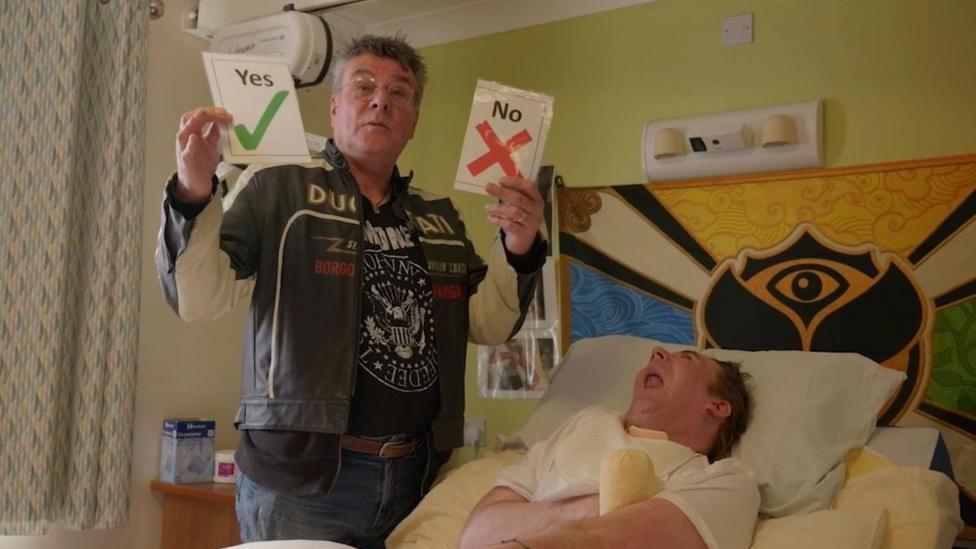
Oli's body is now severely twisted and paralysed, with no functional mobility. His breathing, feeding and toileting all depend on tubes managed at the neurological rehabilitation centre where he receives care. His only means of communication is through eye blinking, though his father believes Oli retains full cognitive awareness of his surroundings. Stephen describes his son's existence as
a permanent living nightmare, and says the entire family—including Oli's six siblings—has been left
angry and brokenby the consequences of the hospital's error.
How has the legal process unfolded?
An interim damages payment has been agreed, but the delay in reaching this point—more than two years—has compounded the original harm. Tanzeela Aslam, head of medical negligence at Express Solicitors, argues that this protracted timeline deprived Oli of funds that could have supported therapies and interventions to enhance his quality of life during those critical early months.
Aslam notes that
Oli's case illustrates how preventable errors within the NHS can have devastating and life-changing consequences for individuals and their families.She reports a marked increase in A&E-related negligence cases in her practice, attributing the trend to systemic pressures within emergency departments.
There has been an increased reliance on corridor care for patients, and we are seeing cases across A&E departments of misdiagnoses that have led to serious injury and in some cases death.

What does the data reveal about A&E negligence claims?
A&E has become the single largest source of clinical negligence claims by volume in England. The value of these claims exceeded £550 million in the most recent financial year. Not all claims result in compensation—roughly half are resolved without damages being awarded, though the NHS may still acknowledge liability in some instances.
The sustained five-year increase stands out as unusual. Other medical specialties such as maternity and orthopaedics have not experienced comparable rises. The low point recorded in 2020-21 is not believed to reflect behavioural changes during the Covid pandemic, as clinical negligence claims typically take an average of three years from incident to submission.
The Royal College of Emergency Medicine has expressed concern about the upward trajectory. Dr Adrian Boyle of RCEM told the BBC:
This is a concern. But it is not surprising when you see how busy departments are. People are staying longer and pressure on staffing is increasing.He characterised the figures as
sobering, though he noted that clinical negligence cases remain statistically rare, occurring in approximately one in every 17,000 attendances.
What systemic issues are contributing to these claims?
Over the past two years, one in ten patients attending A&E have experienced waits exceeding 12 hours before being treated or discharged. NHS Resolution, which manages clinical negligence claims on behalf of NHS trusts, has identified recurring patterns in the errors leading to claims. These include failure to recognise signs of acute patient deterioration, omission of necessary diagnostic tests and imaging, and incorrect diagnoses.
NHS Resolution has taken action in response to the high volume of claims and has published reports designed to help the NHS learn from mistakes and prevent recurrence. Matthew Hopkins of NHS Alliance, representing hospital organisations, stated that health leaders are
making every effort is made to ensure safe, high-quality care, and that lessons are learned when that falls short.
NHS England has countered that A&E waiting times show signs of improvement and that many of the claims relate to historic cases from several years prior.
What does Stephen Coppock want others to understand?
Stephen acknowledges the genuine pressures facing A&E staff but insists that fundamental standards must be maintained.
The hospital didn't get the basics right and my son has paid a terrible price – it's ruined his life. It was an awful error. He trusted the health service and believed it was there to help him, not destroy him.He spends every waking hour concerned for his son's wellbeing and remains convinced that the error was preventable.
I know staff are under pressure,he says,
but this is about doing the basics right. They failed Oli.
For those wishing to lodge formal complaints about NHS care, the trust's complaints procedure requires that formal complaints normally be made within 12 months of the event or within 12 months of becoming aware there was cause to complain.