Ten years after Prof Raphael Bengoa published his landmark review of Northern Ireland's health service, the system remains under severe strain despite initial political consensus around his recommendations for fundamental reform. Hospital waiting lists, access to general practice and the state of social care all suggest that the transformation envisioned in 2016 has fallen substantially short of its ambitions.
Bengoa famously described the health service as a "burning platform" where "standing still is no longer a viable option". His 2016 review proposed a radical shift away from hospital-centred care towards prevention, integration and community-based services supported by general practitioners. The report achieved something remarkable at the time: five political parties agreed to back the plan and committed resources to support it.
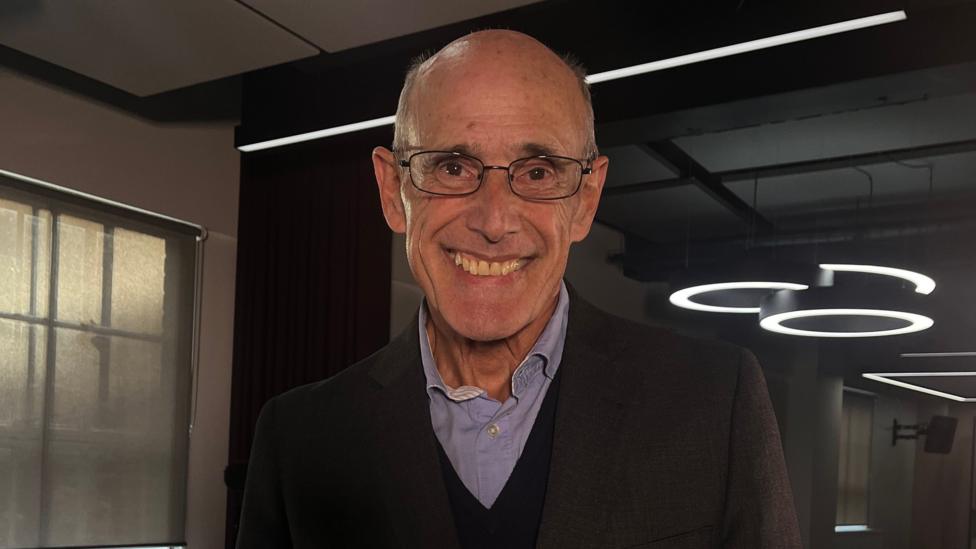
During a fourth visit to Northern Ireland, Bengoa told a national broadcaster that politicians could still embrace transformational change to create a world-leading health service.
"They have to agree there is something that is above their political parties and that is what happened 10 years ago,"he said.
"The most important green shoot 10 years ago was the political parties getting together and agreeing and putting a budget in place to support the plan. It would be great to see that consensus happening again with a budget that runs over three years to allow for long-term planning."
Bengoa emphasised that general practitioners remain critical to the success of the neighbourhood health model, which aims to deliver more care in community settings. He stressed that GPs must be recognised for their role in prevention and in reducing pressure on hospitals.
What did the original Bengoa review recommend?
The 2016 report tackled long-standing controversies that had blocked transformation for years. Bengoa argued that the system was too focused on hospitals and buildings, and that Northern Ireland could not sustain every specialist service at every hospital site. Some services, he contended, should be consolidated into single locations.
Beyond service consolidation, the review recommended accountable care systems in which providers would share responsibility for defined populations under joint budgets, and called for a ring-fenced transformation fund. The report was followed by a 10-year transformation plan called Delivering Together, based on its recommendations.
The Bengoa review itself was not the first call for such changes. Seven major health-system reviews over two decades had repeatedly called for less reliance on hospitals, some service centralisation and greater emphasis on prevention, yet progress had stalled repeatedly.
How much has actually changed since 2016?
A decade later, the health service is finally moving some services, but the political and public response has been volatile. Service consolidations have triggered significant controversy, particularly in rural areas where residents fear they are being disadvantaged and that lives are at risk.
The decision to consolidate Emergency General Surgery at Antrim Area Hospital, removing it from Causeway Hospital, became so contentious that it led to the resignation of former Health Minister Mike Nesbitt. Other examples include the transfer of services from South West Acute Hospital to Altnagelvin, and more recently, the potential relocation of Daisy Hill's maternity services to Craigavon. Public campaigns have influenced decision-making, demonstrating the political sensitivity of service changes.
The transformation has fallen well short of Bengoa's ambitions. Without a current budget in place, severe challenges persist. However, some progress is visible. The neighbourhood health model has begun shifting funding from hospitals to community services, with about 2% of the budget moved so far. This funding is being directed towards services such as community palliative care, enabling people to receive end-of-life care at home rather than in hospital.
Some elective waiting lists have started to fall, and emergency department waits have improved, although all health trusts still miss official waiting-time targets. Northern Ireland continues to have the worst hospital waiting lists across the UK, and cancer services are among those missing targets. According to health officials, the single digital record system Encompass is improving efficiency in appointments and patient records management.
What disruptions has the system faced?
Since 2016, Northern Ireland's political institutions have collapsed twice, and the Covid-19 pandemic arrived to overwhelm an already strained system. While the pandemic set progress back by approximately three years, many observers argue that politics and political decisions, rather than the pandemic alone, have been the primary obstacles to transformation.
A growing and ageing population with increasingly complex health needs has also complicated the task of reform. Despite these headwinds, the core diagnosis in Bengoa's review—that Northern Ireland needed fundamental reform to make healthcare sustainable—remains as relevant today as it was a decade ago.
How has the system affected individual patients?
Marie Holland, aged 69, has arthritis in both hips. She was classified as an urgent referral in 2025 and has already undergone replacement surgery on her right hip. Compared to many others waiting for treatment, she considers herself fortunate to have been treated quickly.
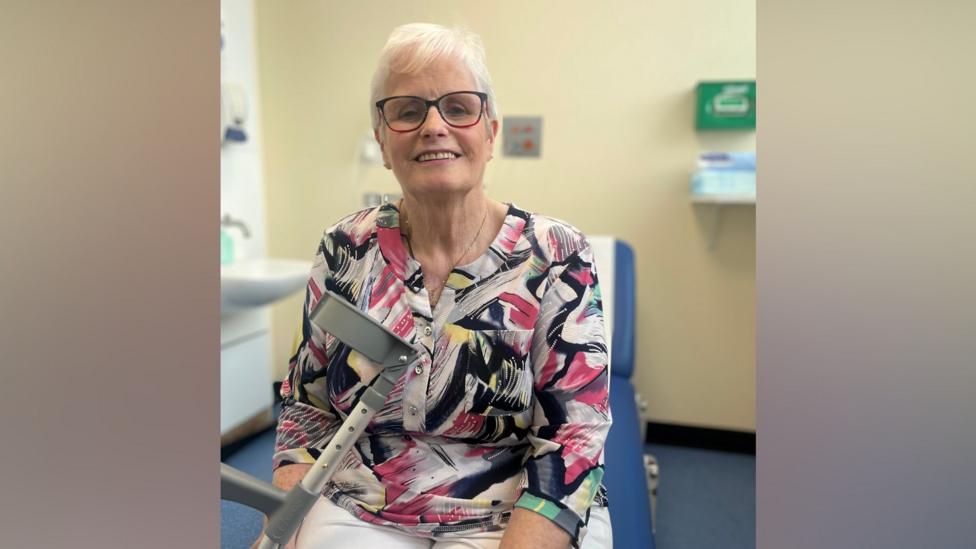
"Oh, it's brilliant. For the first week or so it was painful but after that I have been great - I have been on a cruise and more mobile,"she said.
"The only thing is I need the second hip done and that is holding me back. But this right hip is brilliant."
However, Marie's positive experience is not universal. Many patients continue to face lengthy waits for elective procedures, and the overall picture suggests that Bengoa's vision of a transformed health service has not yet materialised for the majority of those seeking care.
What do general practitioners say?
General practitioners argue that they have not been adequately integrated into the transformation process, despite Bengoa's emphasis on their central role. Dr Ursula Mason, speaking on behalf of the Royal College of General Practitioners Northern Ireland, highlighted a stark problem: the number of GP practices has fallen from over 350 in 2016 to 305 today, while the patient population has grown.
"In order for it to be easier for patients to see their GP we need more GPs and in order that for to happen we need more investment,"Mason said.
"There is a simple equation, we have had falling number of GPs - in 2016 there were over 350 practices, now there are 305 and we have a rising patient population. If we want to turn that tide, investment is the key to unlocking it."
Mason expressed support for the neighbourhood model but stressed a critical requirement.
"In order to enact Bengoa we will need to see sustained investment in general practice, because in order to take patients out of the hospital and move care into the community we need a workforce who can deliver that and that workforce is GPs."
Dr Alan Stout, who served on the expert panel that produced the Bengoa report, offered a more pessimistic assessment.
"We haven't taken those actions and we haven't made those changes that are described,"he said, adding that
"the health service is undoubtedly in a worse place now"than it was a decade ago.
"We need to do so much more than waiting lists. They are really important. But actually they are a symptom of the wider problem."
Stout attributed much of the stagnation to what he termed
"change by crisis",where
"we see the pressures, we see collapse of service, usually dictated by workforce issues."However, he identified the neighbourhood health model as an opportunity to accelerate progress.
"Northern Ireland actually sits in a better position to define that and to deliver that than anywhere else."
What do health experts and officials say?
Social policy professor Deirdre Heenan stressed that the Bengoa report remains viable but only if matched by genuine political will.
"If it isn't, you might as well bin it,"she said.
"It's absolutely pointless to have a report telling us what we need to do if we are refusing point blank to implement it. It is a good report, it remains important, but it's useless if we do not have the political will and the political courage to make these decisions."
Prof Mark Taylor, a senior surgeon and one of the five members of the original 2016 Bengoa expert panel who is now leading the waiting list initiative, reported that health trusts are working more collaboratively as a unified system. He acknowledged that while some waiting lists are beginning to improve, significant challenges remain, particularly with waiting lists.
The Department of Health itself acknowledges that the Bengoa programme has made progress but that substantial work remains incomplete. The review's central diagnosis—that Northern Ireland needed fundamental reform to make healthcare sustainable—has only become more urgent with the passage of time.
Who is Raphael Bengoa?
Bengoa is a Spanish doctor and health policy expert who worked for the World Health Organisation. He served as health minister in Spain's Basque government, where he was involved in reshaping the regional health service. Local health officials believed his combination of medical expertise and political experience made him ideally suited to lead an independent expert panel examining how Northern Ireland's health system should evolve.