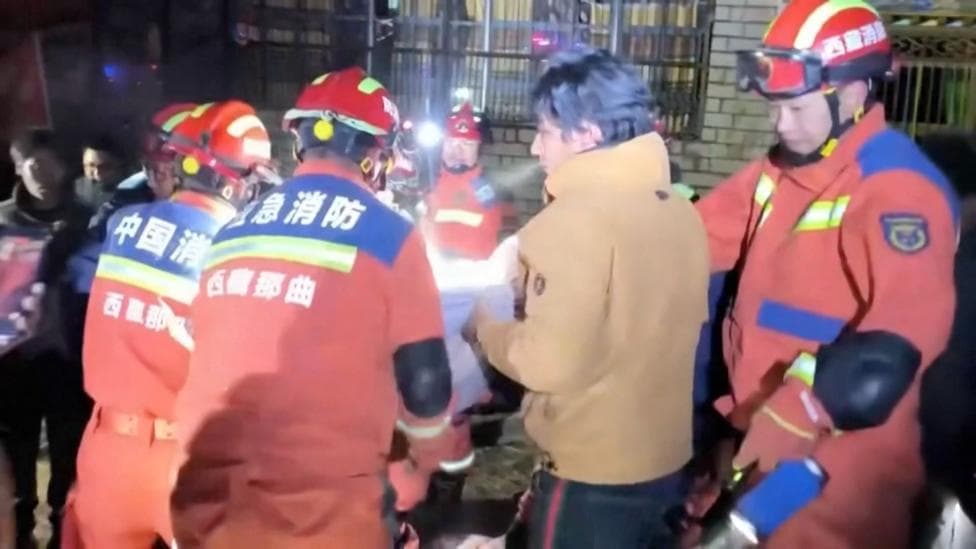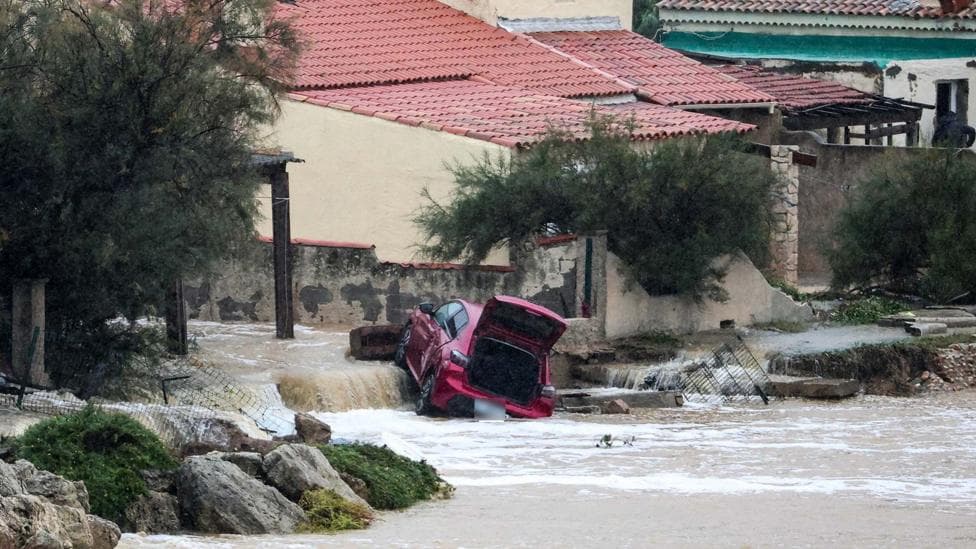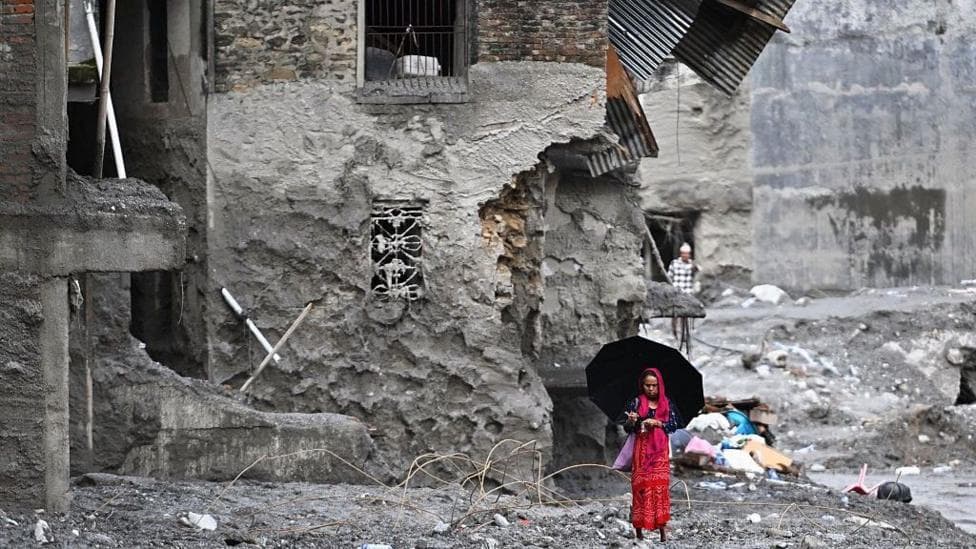
The response to catastrophic flash floods that devastated the Nepal-Tibet border region has transitioned from emergency rescue toward longer-term relief and recovery efforts, though teams continue searching for survivors who may remain trapped in wreckage and tunnels.
The focus has shifted to delivering humanitarian assistance, identifying and recovering deceased victims, locating missing relatives, and reuniting separated children, according to the United Nations' humanitarian coordination agency.
At least 1,114 people have died in Nepal, with the official missing-person count reaching 2,426, according to Nepal's disaster management authority. On the Tibetan side, Chinese state media report 16 confirmed deaths and 554 people unaccounted for, bringing the combined missing figure to nearly 3,000. Hundreds of workers, potentially in the hundreds, remain believed trapped inside Nepalese hydropower tunnels.
A massive glacial collapse triggered the catastrophic flooding on 26 August, sending a torrent of mud and rock down a Himalayan valley that obliterated villages and infrastructure. The disaster has affected an estimated 93,000 people across the border region.
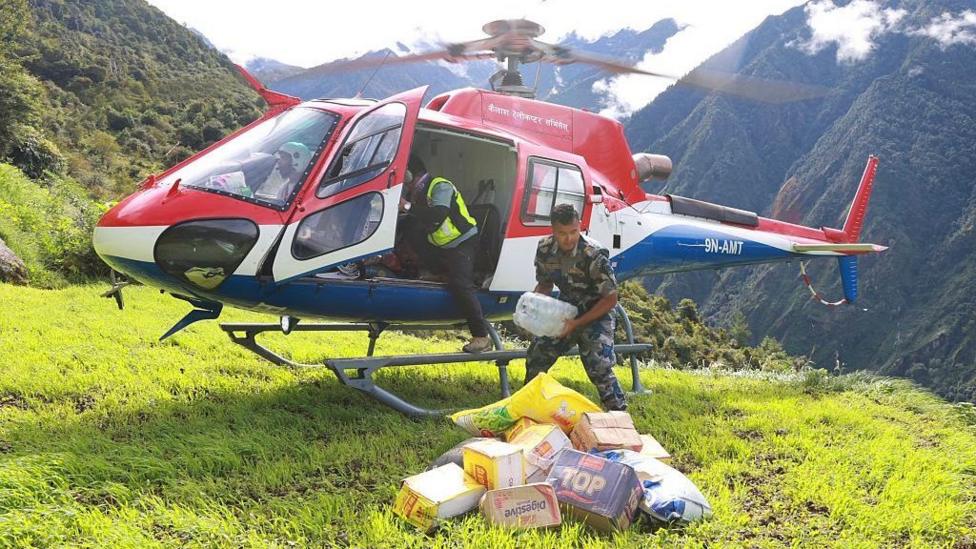
Rescue operations have achieved significant progress despite severe challenges. More than 3,700 people have been rescued in Nepal, and according to international news reports, 157 bodies had been recovered by 26 August. Chinese rescue teams have reopened the route to the Gyirong border crossing and cleared debris from the road, which is expected to accelerate the search for the missing on the Tibetan side.
The scale of the disaster extends beyond the immediate border region. Nepal's tourism ministry reported that more than 400 tourists were missing, including around 340 foreign nationals from India, the United Kingdom, Australia, the United States, Malaysia and other countries, according to international reporting.
The initial flood occurred when a massive wall of mud and rock collapsed into a river, creating a destructive wave that swept through the valley with little warning. A new report has revealed that evidence of growing instability around the glacier existed in the days before the collapse. Experts from the Asian Mountain Academic Alliance, the Stimson Centre and China's Institute of Mountain Hazards and Environment have concluded that better early-warning systems could have saved lives.
Why was there no timely warning?
Nepal's Prime Minister Balendra Shah addressed this question directly in parliament on Wednesday, stating that the disaster
was beyond predictable forecasts. He disclosed that he received notification of the flood at 08:45 local time on 26 August. Fifteen minutes later, district administrative offices issued evacuation orders to people along riverbanks, and at 09:35, precautionary warning notices were distributed via mobile phone to residents in affected areas.
However, Shah acknowledged the escalating risks facing the Himalayan region, stating that the event demonstrated
the escalating risks facing the Himalayan region due to climate change. Scientists have warned for years about melting ice and permafrost—centuries-old frozen soil—in the Himalayas as a consequence of climate change.
What is the humanitarian situation on the ground?
The immediate challenge facing relief workers is access to affected communities. More than 40 bridges have been destroyed, isolating remote villages. The most isolated communities are relying on army helicopter flights for supplies, and many villages continue to lack fuel and electricity.
Nearly 3,500 people have been displaced and are sheltering in 27 temporary sites—predominantly schools, which disrupts education—across Nuwakot and Rasuwa districts. The United Nations humanitarian agency has warned that overcrowded shelters, contaminated water supplies and damaged health facilities are placing the population at heightened risk of disease during the monsoon season.
Rescue operations are proceeding under difficult conditions, with experts from China and India constructing temporary bridges to reach remote areas. Drones are being deployed over hard-to-reach terrain to scan for survivors. The full impact of the flood in Tibet remains unclear, as China has released limited information through state media about victims or effects on local communities.
What is the government's response?
Prime Minister Shah emphasised that the priority is
protecting the lives of survivors, providing medical treatment and psychological counselling. He told parliament that the disaster
snatched away mothers, fathers, sisters, and brothers from us in an instant, but stressed that
we do not have the luxury of taking a rest simply because our bodies are exhausted. Nor is there time to wail together when our hearts break.
Nepal has declared a disaster across 15 affected areas for three months, enabling the government to provide financial assistance to families of the deceased, conduct rescue and relocation operations, and deploy military personnel. The Nepalese government and the United Nations have agreed to launch a four-month humanitarian flash appeal to coordinate international assistance.
Shah used the disaster to call for global action on climate change, stating that
Climate change is a global contribution. Mitigating and managing its impacts is a shared responsibility of the global community.He urged the international community to recognise the disproportionate burden faced by the Himalayan region.
What happens next?
Rescue teams are expected to intensify operations following the reopening of the Gyirong border crossing route, which should accelerate the search for missing persons on both sides of the border. Nepal and China have also warned of a risk of fresh flooding from water pooling in two lakes created by the disaster, requiring continued monitoring and precautionary measures.
Authorities are launching an urgent identification campaign, with police requesting blood samples and photographs from relatives of missing persons to assist in DNA identification efforts. The recovery and identification process is expected to extend over months as teams work through the massive scale of the disaster.
Key Facts
- At least 1,114 confirmed deaths in Nepal and 16 in Tibet, with nearly 3,000 people missing across both regions
- A glacial collapse on 26 August triggered the catastrophic flood, affecting an estimated 93,000 people
- More than 3,700 people have been rescued, but hundreds of workers remain trapped in hydropower tunnels
- More than 400 tourists are missing, including approximately 340 foreign nationals
- Nepal has declared a three-month disaster across 15 affected areas and launched a four-month humanitarian appeal with the United Nations