

On 4 August 2026, energy correspondent Jillian Ambrose and environment editor Damian Carrington took part in a live question-and-answer session, responding directly to reader queries about record fossil fuel profits, the climate crisis and energy policy. The session followed their investigation revealing that eight major oil companies made almost $93 billion in profits during the quarter to the end of June, a period in which the Iran conflict helped push oil prices above $126 a barrel, according to a joint newsroom investigation. Readers used the session to probe how oil markets function, why renewable investment lags behind fossil fuels, and whether industry leaders accept any responsibility for driving global heating.
Does anyone in the fossil fuel industry accept responsibility for climate change?
According to the reporters, the answer is no, and a growing wave of lawsuits targeting fossil fuel companies over their contribution to the climate crisis suggests that stance is unlikely to shift soon.
The short answer is no, and a rising tide of lawsuits against fossil fuel companies for their role in the climate crisis means that is unlikely to change anytime soon. The science is ever clearer though. An analysis published last September showed for the first time that carbon emissions from the world's biggest fossil fuel firms were directly linked to fatal spells of hot weather.
The big oil companies were among the first to realise the dangers of global warming half a century ago. But decades of denial then followed. As the reality of climate crisis has become undeniable, the arguments of the fossil fuel industry have shifted. Gas was cleaner than coal, for example, or that carbon credits from new forests could offset emissions. Today, the industry likes to tout carbon capture and storage (CCS) as a solution. But just this week, one of CCS's loudest cheerleaders, ExxonMobil, has started a process to sue the European Union which wants to make the company actually store a small amount of CO2.
Separate research strengthens the case that named companies bear direct responsibility for climate harm. Oxfam has calculated that emissions from five fossil fuel corporations were enough to cause roughly one in four heatwaves recorded between 2000 and 2023, according to an Oxfam analysis. The same analysis found that Saudi Aramco's fossil fuel production has made it responsible for more carbon emissions than any company in history, according to Carbon Majors data cited in the investigation. Oxfam separately estimates that Big Oil was responsible for $60 billion in environmental damage last year. Against this backdrop, commentator Aaron Regunberg has argued that existing laws already allow prosecutors to pursue oil companies over climate harms, ranging from reckless endangerment to involuntary manslaughter.
How much extra tax will the UK Treasury collect from higher oil and gas prices?
Early forecasts of a windfall approaching £20bn have not materialised because prices did not rise as sharply as first feared, though the Treasury is still expected to see a meaningful increase in North Sea revenue.
In the first weeks of the conflict, some predicted that the government's taxes on North Sea oil and gas would yield a £20bn tax windfall for the Treasury if surging oil and gas prices remained high over the whole year. This is because the government's windfall tax on North Sea oil and gas, known as the Energy Profits Levy, imposes an effective headline tax rate on North Sea profits of 78%, and the Treasury collects VAT from petrol and diesel sales too.
But prices have not climbed by as much as first feared. So what can we reasonably expect? Before the war, the Office for Budget Responsibility forecast that oil and gas revenues would raise £2.7bn in the 2025/26 financial year. It also suggests that for every $10 increase to the benchmark oil price, the Exchequer can expect an extra £900m in revenue. Meanwhile, every 1p increase in the price of gas hands the Treasury an extra £55m.
So here's my rough maths: the oil price has averaged around $90 a barrel this year, up from just under $70/b at the start of 2026, implying an extra £1.8bn in tax revenue. Meanwhile, the UK gas market price is expected to average around 114p per therm this year, from around 80p per therm last year which could mean almost £1.9bn.
These are ballpark figures based on a rule of thumb, of course. The actual tax bill for an oil company is much more difficult to predict. It's important to keep in mind the bigger picture too: the conflict is also raising the cost of government borrowing, and eroding profits for companies across the economy as they contend with higher energy bills. So it wouldn't be correct to view the war as a bonus for the Treasury.
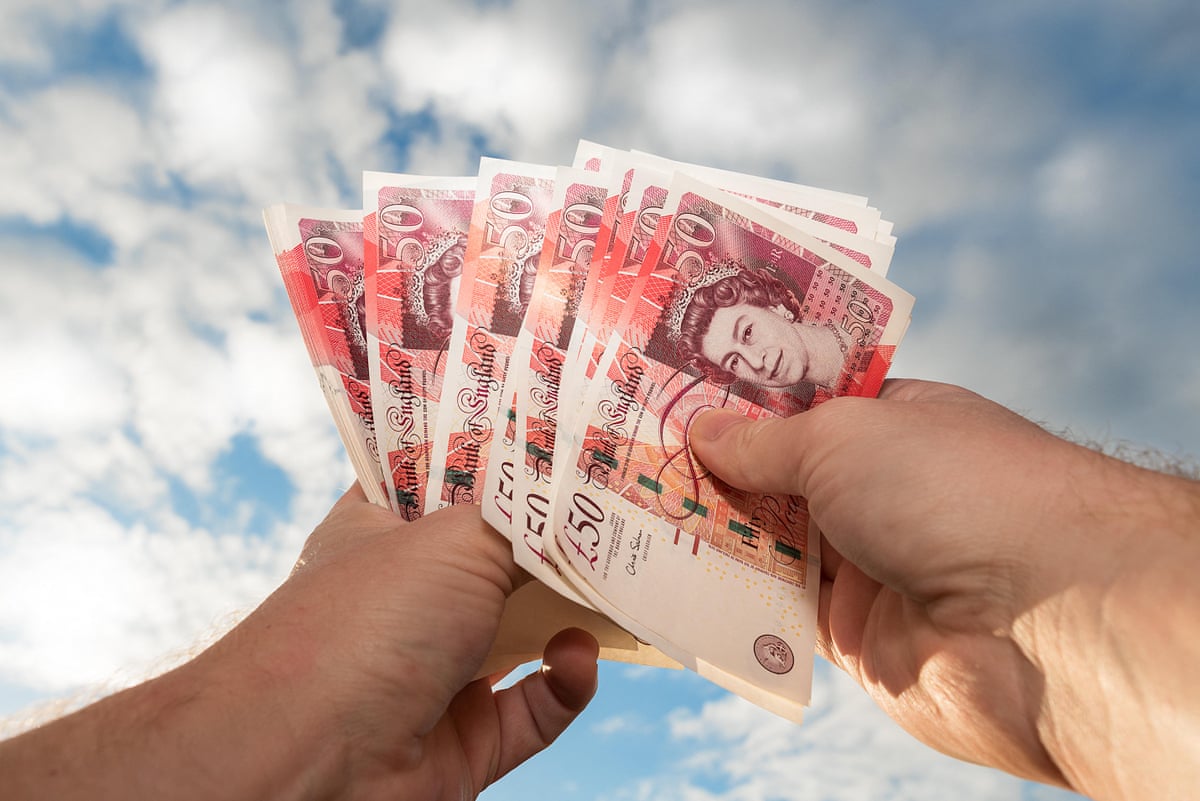
Why aren't big companies more on-board with renewables?
The reporters point to two dominant factors holding back corporate investment in clean energy: comparatively lower returns and constraints in ageing electricity grids.
This is a great question, with many answers. But the top two are: profits and grids.
Renewable energy projects may generate low-cost electricity but they are still expensive to build, and costs have climbed in recent years in line with inflation. In return for the high upfront costs, investors can expect long-term returns via steady subsidies. Major oil companies - which are used to 'boom and bust' market volatility - argue that these earnings have not been able to compete with the potential returns they can make from a fossil fuel project. If they intend to keep making the returns their shareholders expect, then they need to be quite picky about which renewable energy projects they choose.
All that said, there is no shortage of money in the green energy space. There are plenty of investors who appreciate the predictable returns of a subsidised solar farm, for example. But this is where things become tricky - the developed economies which are typically the most attractive to investors tend to have older power grids, built for fossil fuel plants. Upgrading the electricity networks to cope with a deluge of new clean energy projects (and rooftop solar, car chargers etc) requires billions in investment. And time. In the UK, this is paid for through our energy bills so the energy regulator is quite rightly careful about how great a financial burden consumers can shoulder, and realistic about the time this engineering challenge will take.
This transformation requires unprecedented co-operation between the government, regulators, investors, developers and grid companies to pull together to create something new. Could it be faster and more efficient? Absolutely. But the good news is that the pace is quickening.
That reluctance to shift capital away from fossil fuels is not confined to oil majors. Sir Paul Marshall's hedge fund, which co-owns a broadcaster known for climate-sceptic coverage, nearly tripled its fossil fuel investments during the first quarter of 2026, drawing criticism from campaigners and scientists. Separately, analysis from the TPI Global Climate Transition Centre at the London School of Economics found that major oil firms plan to increase production by 14% between 2024 and 2030, prioritising near-term profit over the emissions-reduction targets set out in the Paris Agreement.

Is it right that oil prices haven't risen because China's oil imports have dropped?
Yes: the reporters confirmed that falling Chinese demand, not just supply from the Middle East or Russia, is the main reason oil prices have not surged further despite the Iran conflict.
You are right - China is the reason the US-Israeli war on Iran has not pushed oil prices higher. This excellent article from the Economist explains:
Between February and June, China slashed its crude imports by half, or 5.5m barrels per day - enough, experts reckon, to have shaved $30 or more off Brent, the global benchmark. That is more than half of the worldwide decline during the covid-19 lockdowns … As one oil-trading boss puts it, 'China is the new OPEC'.
China uses three main levers: drawing down on its reserves, restricting exports of refined product like jet fuel, and curbing domestic demand. It's also worth remembering that China is the world's green energy superpower, rolling out (and exporting) huge amounts of solar, wind and electric cars.
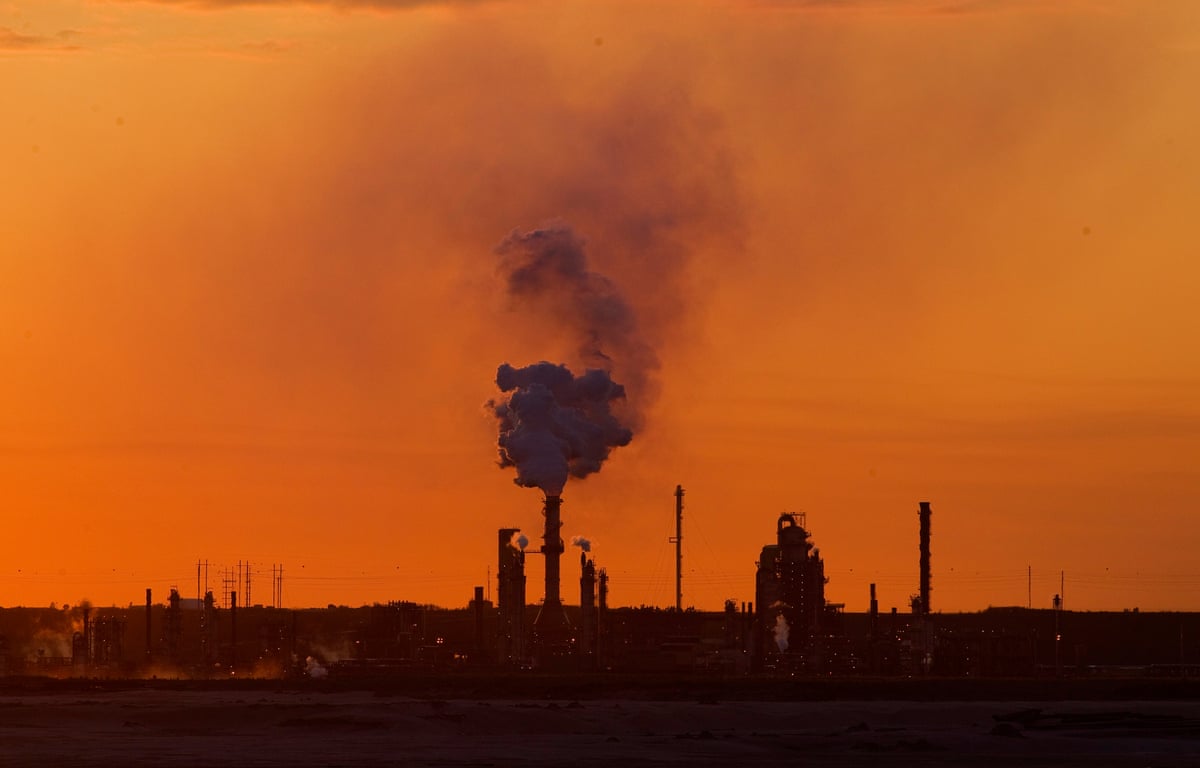
How does fossil fuel subsidy compare with profit?
Government support for fossil fuels vastly outweighs public spending on clean energy, and when indirect costs such as air pollution are included, the total subsidy figure exceeds the industry's entire annual revenue.
It is one of the craziest aspects of the climate crisis that governments provide colossal subsidies for fossil fuels - the subsidies are pouring fuel on the fire.
In 2023, the IEA reports, governments subsidised the use of fossil fuels to the tune of $620bn, far greater than the $70bn was spent on support for consumer-facing clean energy. The OECD puts the fossil fuel number at $920bn. These are direct subsidies. When you add in indirect ones - like the cost of air pollution - as the IMF does, the figure soars to $7tn a year. That is more than the estimated total revenue for the oil and gas industry alone in 2024 of about $6tn.
Why don't governments end the subsidies? It is politically extremely hard to raise energy prices unless you have low cost alternatives like solar and wind in place already. But the argument that the subsidies protect the poor is largely wrong - the better off take most of the subsidies for the simple reason they use the most energy. Help targeted at poverty specifically is a better solution.
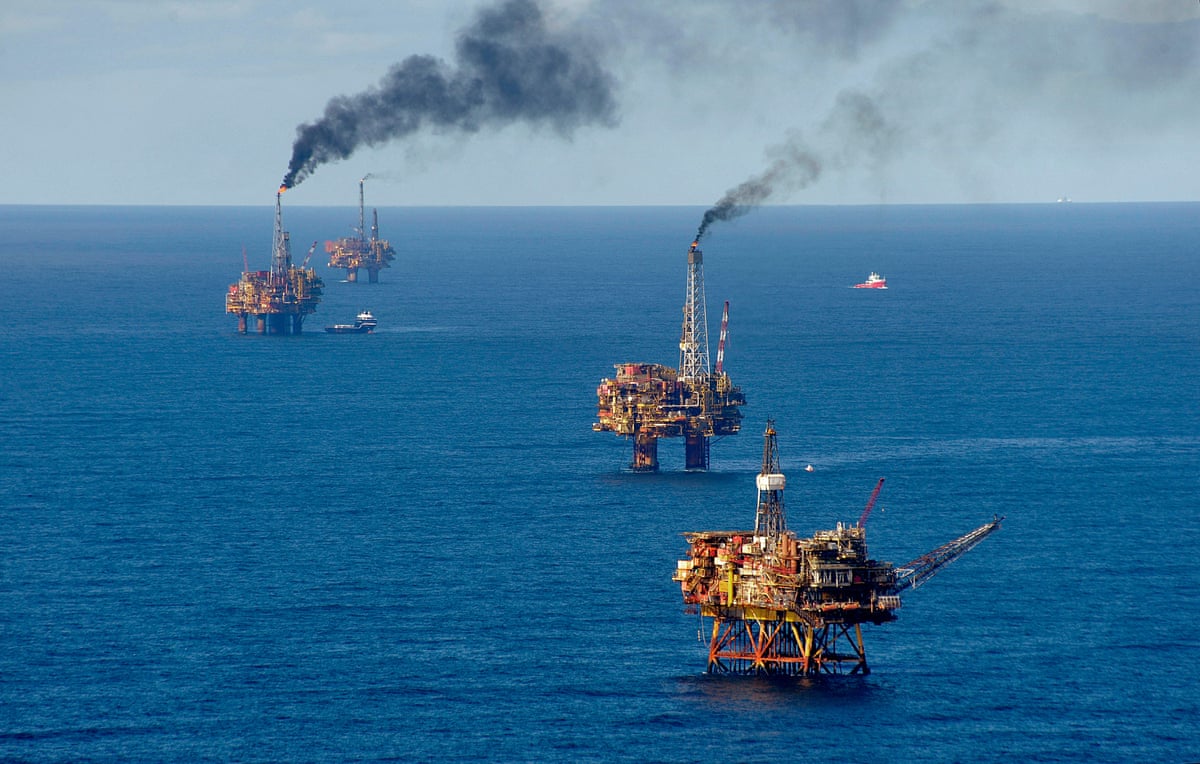
How big are the profits behind these questions?
Oxfam projects that six of the largest fossil fuel companies will earn a combined $94 billion in profits during 2026, working out to roughly $2,967 every second, according to an Oxfam press release. That projection was released to coincide with the first global conference on Transitioning Away from Fossil Fuels, held in Santa Marta, Colombia. The gathering builds on an earlier meeting in Colombia in which nearly 60 nations discussed how to accelerate a global shift toward renewable energy despite opposition from the United States. The reporters' investigation into the $93 billion quarterly profit figure and Oxfam's separate full-year projection both point toward a fossil fuel sector generating extraordinary returns even as climate-linked disasters intensify.

What happens next?
ExxonMobil has begun formal proceedings to sue the European Union over rules that would require the company to store a modest quantity of captured carbon dioxide, a move confirmed in the reporters' investigation. Oxfam has indicated that its full-year profit projections for the sector will continue to be updated as fossil fuel companies release further quarterly earnings through the remainder of 2026, meaning the $94 billion estimate could shift as more results are published.
Key Facts
- Eight major oil companies made almost $93 billion in profits in the quarter to the end of June 2026, as oil prices rose above $126 a barrel during the Iran conflict.
- Oxfam projects six top fossil fuel companies will earn $94 billion combined in 2026, equivalent to about $2,967 a second.
- Emissions from five fossil fuel corporations may have caused roughly one in four heatwaves between 2000 and 2023, according to Oxfam.
- China cut crude imports by half between February and June 2026, an action credited with keeping global oil prices from rising further.
- Global government subsidies for fossil fuels reached $620bn in 2023 according to the IEA, or $920bn according to the OECD, dwarfing the $70bn spent supporting consumer clean energy.


