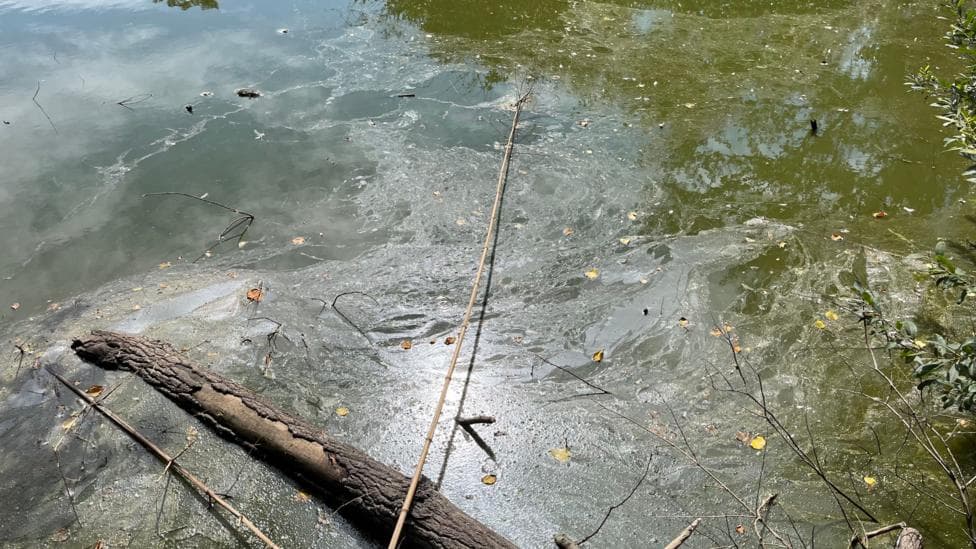
A pond at Saumarez Park covered in thick green algae will require a full restoration costing £100,000 and cannot be resolved through basic maintenance approaches, according to the island's environment director.
Residents were cautioned in August 2022 against allowing pets to enter or consume water from the pond due to elevated algae concentrations. The situation has deteriorated further, with pond maintenance specialist Daniel Lloyd recently emphasizing that authorities must "think hard about what they need to do" and "act quickly" to address the deteriorating conditions.
Jim Robinson, director of Natural Environment, acknowledged that recent rainfall would "help alleviate the immediate problem" but cautioned that undertaking a complete restoration "would impact on the other services which we deliver". He stressed that straightforward interventions would prove inadequate.
Why simple fixes won't work
Robinson explained that conventional solutions cannot resolve the underlying issues.
"Simply refilling the pond, encouraging volunteers to help or asking people not to feed the ducks wouldn't be sufficient to significantly improve the current issues with the pond following the long dry period we experienced."According to pond maintenance specialists, the water has been infiltrated by "toxins" and any dredging work would need to be conducted "with care" because sunlight, heat and lack of water movement had contributed to creating the problem.

What would full restoration involve?
A local contractor has estimated that comprehensive restoration would exceed £100,000.
"A local firm has indicated that the restoration of the pond would cost over £100,000, which would include dredging a large amount of silt, improving the surrounding drainage and installing devices to improve aeration, but instigating this would impact on the other services which we deliver."The scope of work reflects the severity of degradation accumulated during the extended dry period.
What budget pressures are affecting the park?
Robinson noted that sustained constraints on government finances have resulted in real-term reductions to Saumarez Park's budget allocation in recent years, with a "significant reduction" scheduled for 2026. These financial limitations mean that committing substantial resources to pond restoration would necessarily divert funding from other environmental and park management services.
What are the next steps?
According to recent reporting on the issue, Lloyd has indicated he would welcome the States to contact him to arrange a "serious" meeting about the pond's future direction. He has previously proposed alternative approaches, including reducing the pond's size and creating a nature reserve area for ducks, though these suggestions have not yet been formally pursued.
The pond's deterioration reflects broader challenges facing water bodies across the region. Similar restoration efforts have shown positive results elsewhere: two historic farmland ponds near Clavering in Hertfordshire and Essex held water all summer for the first time in over a decade after restoration work, with wildlife including breeding smooth newts returning to the sites. However, such projects require sustained investment and planning.
Key Facts
- The pond at Saumarez Park has been covered in green algae and poses a health risk to pets
- Full restoration is estimated to cost over £100,000 and would include dredging, drainage improvements and aeration devices
- Budget constraints on Saumarez Park have resulted in real-term cuts, with a significant reduction planned for 2026
- Pond maintenance experts have proposed alternative solutions including reducing the pond's size and creating a nature reserve area
- Simple maintenance measures such as refilling or volunteer efforts cannot adequately address the underlying contamination